KJ Apa’s “Jimmy” Captures Drawl, Not Inner Life
The 30-Second Skim
- What happened: Aaron Burns’s “Jimmy” offers a polished, conservative account of James Stewart’s wartime service, but the review finds its details hollow, KJ Apa’s performance shallow and its treatment of trauma, faith and Hollywood overly generic.
- Key facts & numbers: KJ Apa plays James Stewart in Aaron Burns’s “Jimmy,” reproducing the actor’s drawl and “aw-shucks” persona, but the review calls the performance thin and its suggestion of a soul merely sentimental. Jimmy concentrates on Stewart’s World War II service rather than his artistry and frames the late actor in a “glowingly conservative” light; the review argues that one-size-fits-all virtue leaves the portrait superficial. Affirm Films produced Aaron Burns’s two previous features through its streaming arm, a background the review connects to “Jimmy” being faith-adjacent, with emphasis on Stewart’s Presbyterian background and religious epiphanies.
- What happens next: No cross-outlet consensus here: “Soul Patrol” covers a different film, while the buried angle in “Jimmy” is its faith-adjacent Presbyterian material.
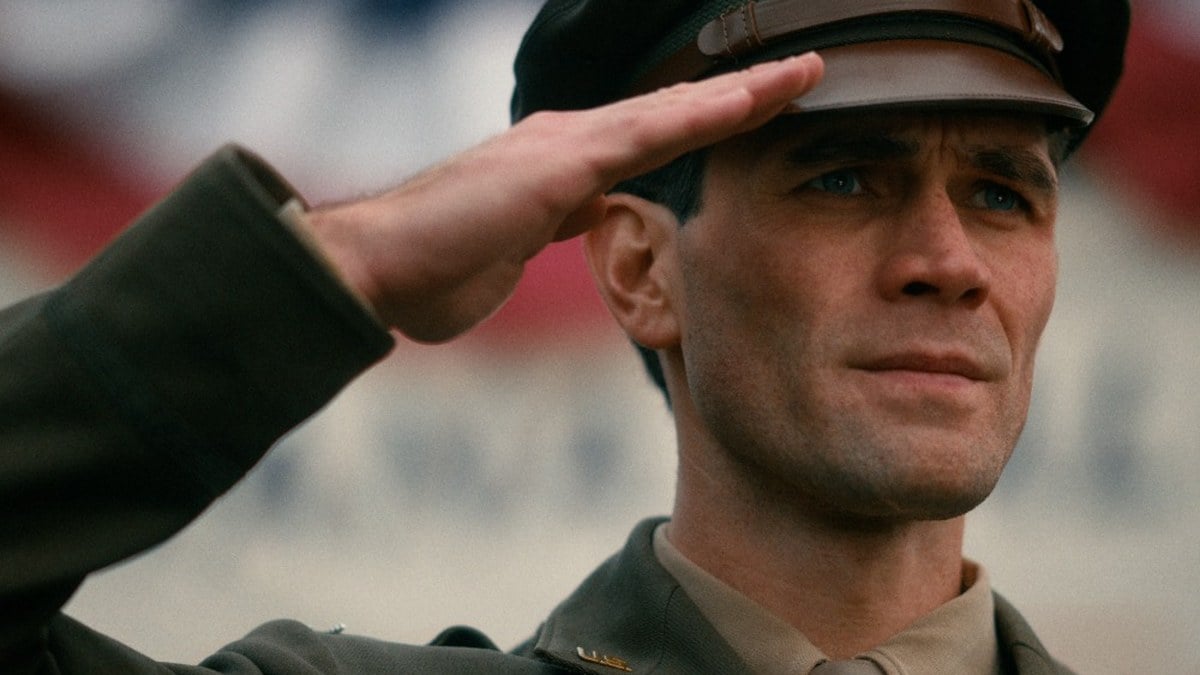
- KJ Apa plays James Stewart in Aaron Burns’s “Jimmy,” reproducing the actor’s drawl and “aw-shucks” persona, but the review calls the performance thin and its suggestion of a soul merely sentimental.
- Jimmy concentrates on Stewart’s World War II service rather than his artistry and frames the late actor in a “glowingly conservative” light; the review argues that one-size-fits-all virtue leaves the portrait superficial.
- Affirm Films produced Aaron Burns’s two previous features through its streaming arm, a background the review connects to “Jimmy” being faith-adjacent, with emphasis on Stewart’s Presbyterian background and religious epiphanies.
- Jimmy opens with Frank Capra pitching Stewart the idea for “It’s a Wonderful Life,” then rewinds five years to 1941, when Stewart receives a U.S. Army draft letter immediately after his Academy Award win for “The Philadelphia Story.”
Why It Matters
Stewart’s 1941 draft and resulting five-year screen hiatus form the biopic’s central structure, yet the review says they are reduced to platitudes and generic PTSD. The result offers fans of Stewart and “It’s a Wonderful Life” polished patriotic virtue, but little of the artistic or psychological tension surrounding his public and private identities.
Sources Cited
Related Coverage
Ask SkimNews