Project Hail Mary VFX: Zero-G Wires and Real-Star Skies
The 30-Second Skim
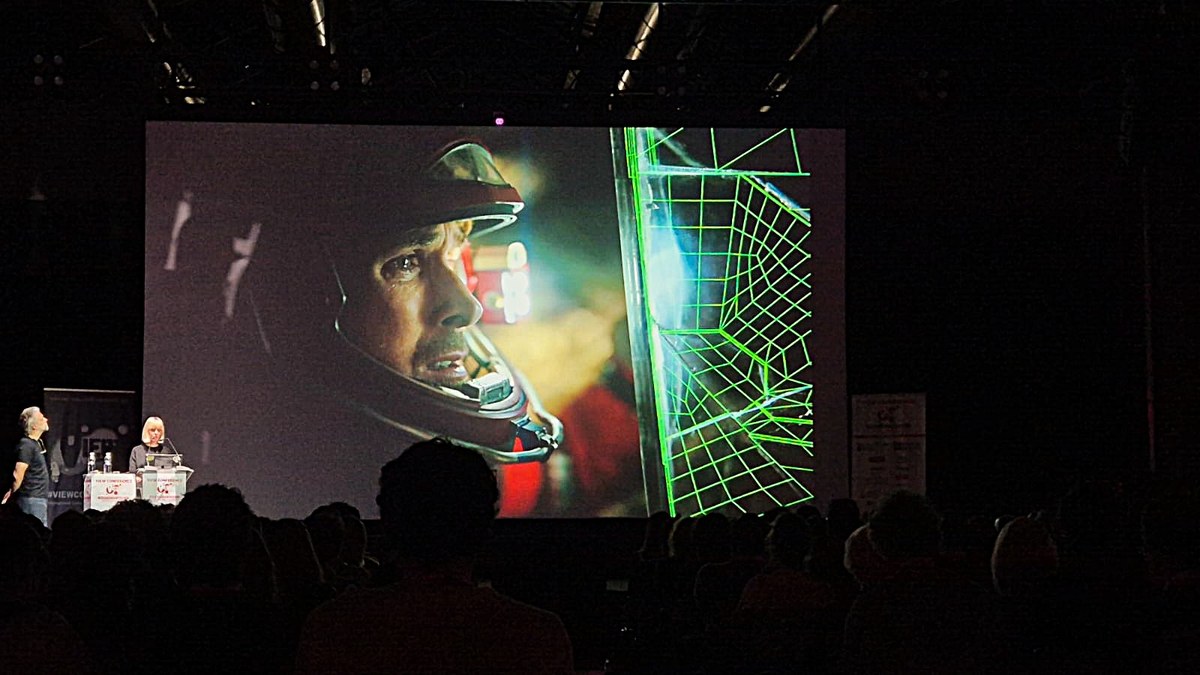
- What happened: At View Conference in Turin, 'Project Hail Mary' VFX supervisors Paul Lambert and Mag Sarnowska detailed how they simulated zero-G for Ryan Gosling, mapped realistic stars using European Space Agency data, and split alien companion Rocky's shots evenly between puppetry and CG.
- Key facts & numbers: Ryan Gosling performed his own zero-G stunts on wire rigs — including a rotating harness — after the team failed to convince production to use a "vomit comet" aircraft, whose cabin couldn't accommodate the film's elaborate spacecraft sets. Paul Lambert and Mag Sarnowska mapped the film's star fields using data from the European Space Agency's Gaia mission, charting the path between Earth and Tau Ceti (11.9 light-years away) and choosing to keep skies realistic rather than fill them with colorful nebulae. After removing the wires, VFX artists still found Gosling appearing to hang rather than float; they adjusted the position of his arms, legs or torso and added drifting objects to reinforce the weightless illusion.
- What happens next: The zero-G trick: even after the wires came off, Gosling still looked like he was hanging — so they literally repositioned his limbs frame-by-frame and added drifting objects.
- Ryan Gosling performed his own zero-G stunts on wire rigs — including a rotating harness — after the team failed to convince production to use a "vomit comet" aircraft, whose cabin couldn't accommodate the film's elaborate spacecraft sets.
- Paul Lambert and Mag Sarnowska mapped the film's star fields using data from the European Space Agency's Gaia mission, charting the path between Earth and Tau Ceti (11.9 light-years away) and choosing to keep skies realistic rather than fill them with colorful nebulae.
- After removing the wires, VFX artists still found Gosling appearing to hang rather than float; they adjusted the position of his arms, legs or torso and added drifting objects to reinforce the weightless illusion.
- DP Greig Fraser shot Earth footage on Kodak 5254 with silver retention for a subdued look and grainier 5203 for space, and returned during postproduction with ILM's Helios virtual-camera system to reposition shots near planet Adrian without losing Gosling's original performance.
Why It Matters
The VFX on 'Project Hail Mary' leaned heavily on practical anchors — Gosling's wire stunts, Fraser's matched Kodak stocks, and three Rocky puppets — while layering digital tools like Gaia star-field data and ILM's Helios to manage what cameras could not capture. Roughly half of Rocky's shots stayed as physical puppetry, a split that shows how prestige sci-fi now blends analog craft with invisible CG rather than choosing one over the other.
Sources Cited
Related Coverage
Ask SkimNews