AMT TW Electric Rail Excavator Hot-Swaps Batteries Mid-Job
The 30-Second Skim
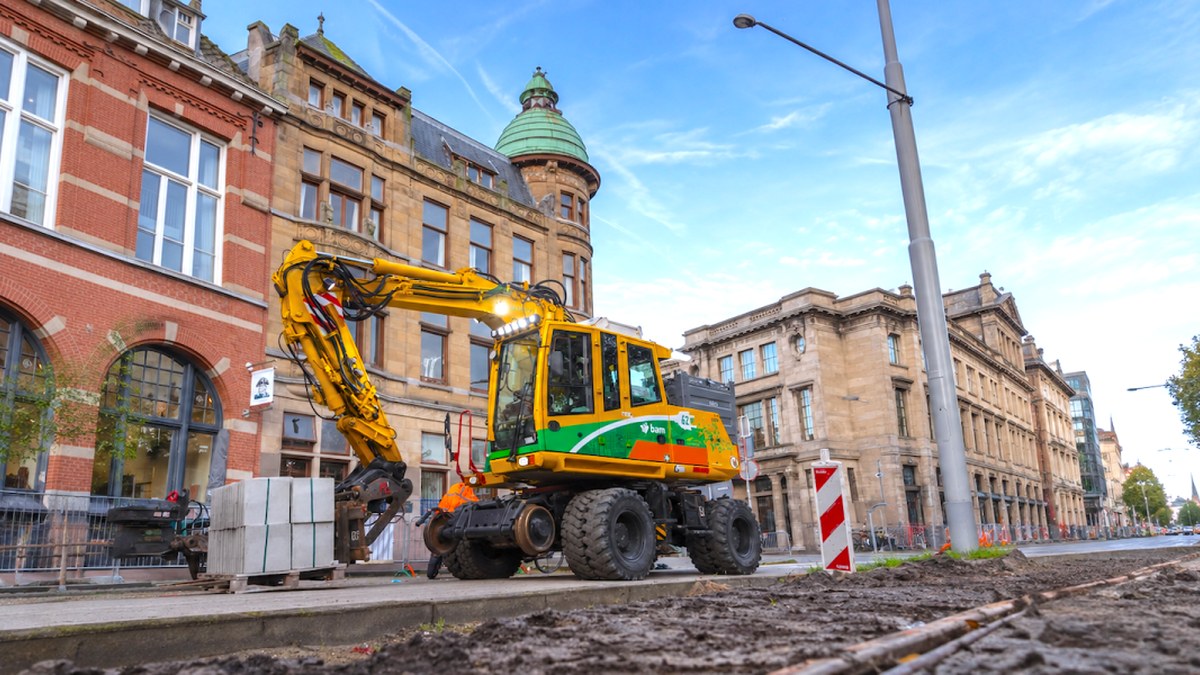
- What happened: Dutch equipment maker AMT and construction firm Royal BAM have co-developed the TW series of all-electric rail road excavators featuring modular, hot-swappable 90 kWh battery packs that let the machines keep working while a second excavator swaps in fresh power.
- Key facts & numbers: AMT and Royal BAM co-developed the TW series of electric rail road excavators, available in 150, 160, and 180 sizes spanning 18–24 metric tonne classes, with each machine packing a 600V electrical system and a water-cooled permanent-magnet motor producing 121 kW (~160 hp). The TW excavator runs on four 90 kWh battery packs totaling 360 kWh, delivering 8–16 hours of continuous operation on a single charge cycle. The battery packs are hot-swappable, allowing a second AMT machine to pull a depleted pack and slot in a fresh one while the working excavator keeps operating on its remaining two or three packs — eliminating downtime for charging.
- What happens next: The real flex isn't the excavator, it's that AMT made the packs interchangeable across its whole machine lineup — your batteries finally multitask.
- AMT and Royal BAM co-developed the TW series of electric rail road excavators, available in 150, 160, and 180 sizes spanning 18–24 metric tonne classes, with each machine packing a 600V electrical system and a water-cooled permanent-magnet motor producing 121 kW (~160 hp).
- The TW excavator runs on four 90 kWh battery packs totaling 360 kWh, delivering 8–16 hours of continuous operation on a single charge cycle.
- The battery packs are hot-swappable, allowing a second AMT machine to pull a depleted pack and slot in a fresh one while the working excavator keeps operating on its remaining two or three packs — eliminating downtime for charging.
- AMT designed the same modular 90 kWh packs to be shared across its broader equipment lineup, preventing energy from sitting stranded in idle machines and reducing the total battery and machinery investment per job site.
Why It Matters
By making the batteries hot-swappable AND cross-compatible across multiple AMT machines, the company turns a single battery fleet into shared infrastructure rather than per-machine sunk cost — a direct response to the downtime problem that has stalled heavy-equipment electrification. Operators gain continuous rail-side work capability (8–16 hours per charge cycle) without waiting on a charger, which matters because rail maintenance windows are notoriously tight.
Sources Cited
Related Coverage
Ask SkimNews