Rewetted Peatland Solar Farms Host Diverse Bird Species
The 30-Second Skim
- What happened: A 30-hectare Wattmanufactur solar park built on rewetted German peatland hosts more types of birds — including wetland and woodland species absent from nearby mown hay fields — than surrounding drained farmland, in the first study of its kind.
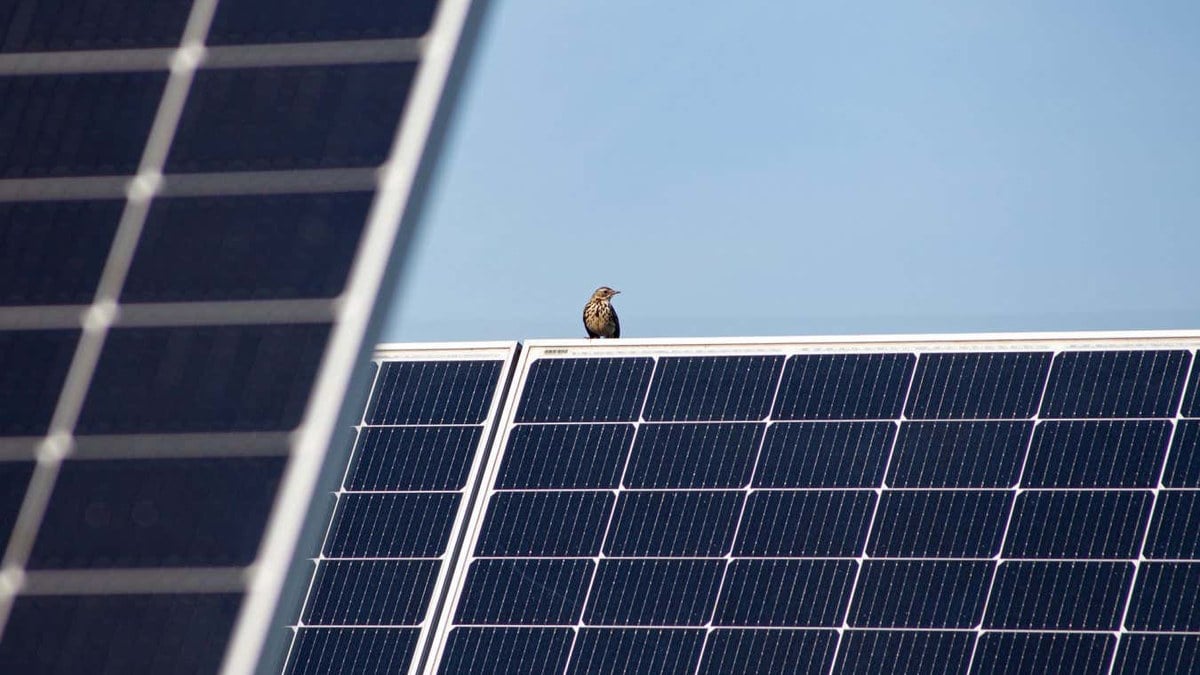
- Key facts & numbers: Wattmanufactur's 30-hectare solar park on rewetted peatland hosts wetland species like white wagtails, reed buntings and grey herons, plus woodland species such as tree pipits and Eurasian tree sparrows — while two nearby regularly mown hay fields contain only grassland birds like the European goldfinch. The solar company built sand-and-gravel roads in 2020 that blocked water flow to existing drainage ditches, allowing the former farm field to accumulate water and revert to peatland; the park is one of only five solar installations on rewetted peatland worldwide. Solar panels served as perches for buzzards and kestrels hunting mice in the grass below, and researchers photographed the meadow pipit — a small grassland species threatened in Germany — on the panels.
- What happens next: Buried past the win-win headlines: those 165 German solar farms on drained peat may be net GHG-positive, and developers don't have to tell you so.
- Wattmanufactur's 30-hectare solar park on rewetted peatland hosts wetland species like white wagtails, reed buntings and grey herons, plus woodland species such as tree pipits and Eurasian tree sparrows — while two nearby regularly mown hay fields contain only grassland birds like the European goldfinch.
- The solar company built sand-and-gravel roads in 2020 that blocked water flow to existing drainage ditches, allowing the former farm field to accumulate water and revert to peatland; the park is one of only five solar installations on rewetted peatland worldwide.
- Solar panels served as perches for buzzards and kestrels hunting mice in the grass below, and researchers photographed the meadow pipit — a small grassland species threatened in Germany — on the panels.
- Of 165 solar farms built on degraded peatland in Germany, some are releasing more greenhouse gases than they displace with carbon-free electricity, because drained peat continues emitting CO2 for decades or centuries after drainage.
Why It Matters
Germany's 165 solar farms on degraded peatland illustrate the policy gap the study exposes: some still emit more greenhouse gases than they offset because drained peat releases CO2 for decades. Germany barred them from guaranteed prices in 2023 but doesn't require peatland-siting disclosure — leaving a rare triple-win concept undertested and underregulated.
Sources Cited
- New Scientist — Wildlife thrives in solar farm built on restored peatland
Related Coverage
Ask SkimNews