Data Centers Turn to Onsite Power to Calm Opposition
The 30-Second Skim
- What happened: Community pushback against data centers is mounting, with billions of dollars in projects stalled across the United States. In response, developers are turning to flexible onsite power—especially natural‑gas engines—to cut grid costs, ease local concerns, and even support the broader electricity system.
- Key facts & numbers: Community opposition to data centers has grown across Indiana, New York, and Georgia, with residents citing noise, emissions, water use, visual impact, land use, and grid‑cost concerns. $64 billion in data‑center projects were blocked or delayed nationwide between 2023 and Q1 2025, and the backlog surged to $162 billion in Q2 2025 alone. Developers are adopting “bring‑your‑own‑power” (BYOP) strategies, installing onsite generation to reduce reliance on the grid and address ratepayer cost worries.
- What happens next: Data centers are fighting community pushback by installing on‑site gas generators that can also help the grid—big win for developers, relief for locals.
- Community opposition to data centers has grown across Indiana, New York, and Georgia, with residents citing noise, emissions, water use, visual impact, land use, and grid‑cost concerns.
- $64 billion in data‑center projects were blocked or delayed nationwide between 2023 and Q1 2025, and the backlog surged to $162 billion in Q2 2025 alone.
- Developers are adopting “bring‑your‑own‑power” (BYOP) strategies, installing onsite generation to reduce reliance on the grid and address ratepayer cost worries.
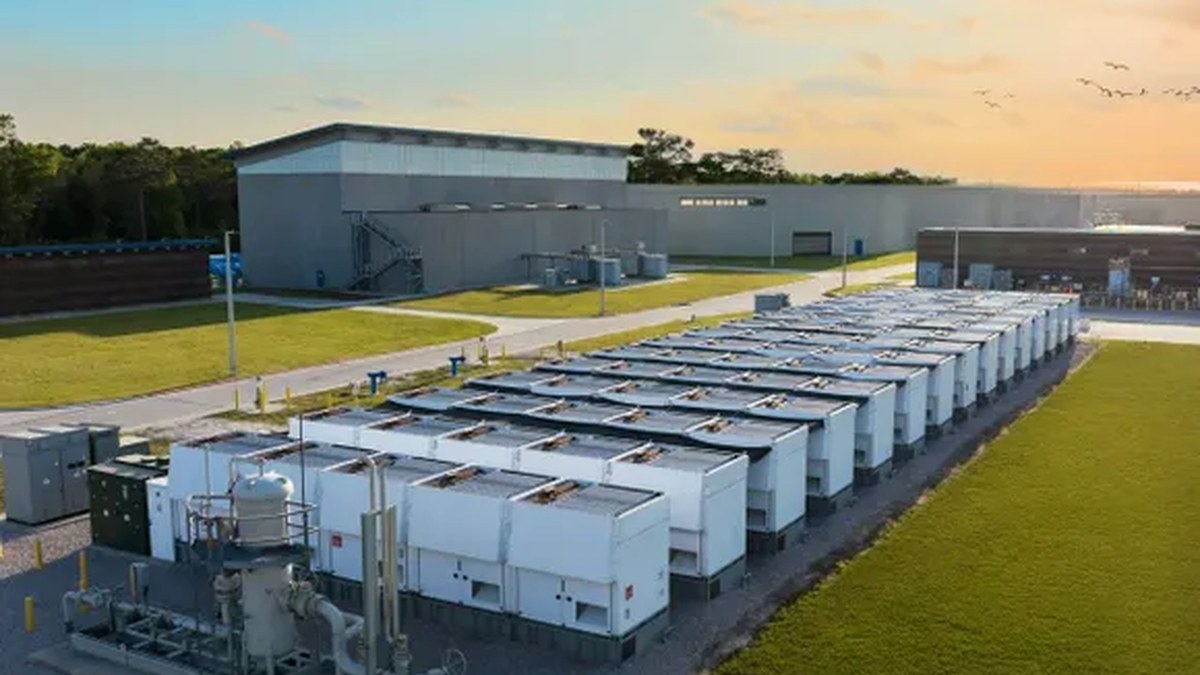
- Flexible onsite generation, especially pipeline‑connected natural‑gas reciprocating engines, can act as bridge power, join demand‑response and energy markets, and export power after interconnection.
Why It Matters
Local ratepayers gain relief from grid‑cost burdens while developers avoid costly delays; the $162 billion Q2‑2025 project backlog underscores the economic stakes at play.
Background & Timeline
- Editor context: Onsite generation allows data centers to internalize some grid costs and capacity concerns, shifting the burden of infrastructure expansion away from the local utility and potentially easing community resistance to new development.
Sources Cited
Related Coverage
Ask SkimNews