Europe Can Cut Jet Fuel Imports with 9 e-SAF Plants
The 30-Second Skim7 points
- What happenedScaling up e-SAF production in Europe could cut jet fuel import dependence, reduce emissions, and create jobs, according to a report commissioned by Transport & Environment and conducted by ERM.
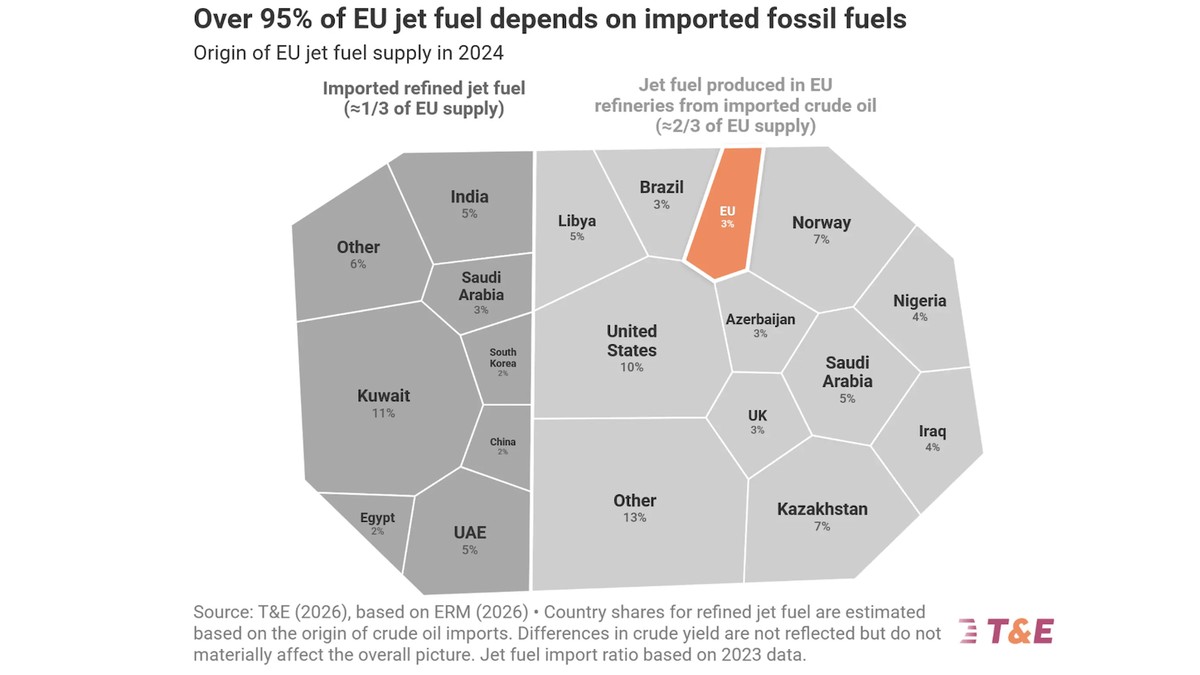
- Key facts & numbersEuropean Union relies on imports for over 95% of its jet fuel, primarily from the Middle East, exposing it to price volatility linked to regional crises. ERM conducted a report finding that scaling up domestic e-SAF production could strengthen Europe’s energy sovereignty and reduce emissions. Europe would need to build approximately nine e-SAF plants, each with 75 kt annual capacity, to meet 2030 ReFuelEU and UK SAF mandates through domestic production.
- What happens nextEveryone’s talking energy independence, but the real play is in who builds the e-SAF plants—Europe’s jet fuel future hinges on policy choices buried in ReFuelEU.
- European Union relies on imports for over 95% of its jet fuel, primarily from the Middle East, exposing it to price volatility linked to regional crises.
- ERM conducted a report finding that scaling up domestic e-SAF production could strengthen Europe’s energy sovereignty and reduce emissions.
- Europe would need to build approximately nine e-SAF plants, each with 75 kt annual capacity, to meet 2030 ReFuelEU and UK SAF mandates through domestic production.
- e-SAF production requires significant upfront investment but could deliver substantial long-term economic and social returns if the supply chain is localized in Europe.
Why It Matters
Meeting 2030 SAF targets through domestic e-SAF plants would require building nine facilities, a move that shifts value from foreign suppliers to European industry and workers—making energy security and job creation dependent on policy decisions now.
Sources Cited
Related Coverage
Ask SkimNews