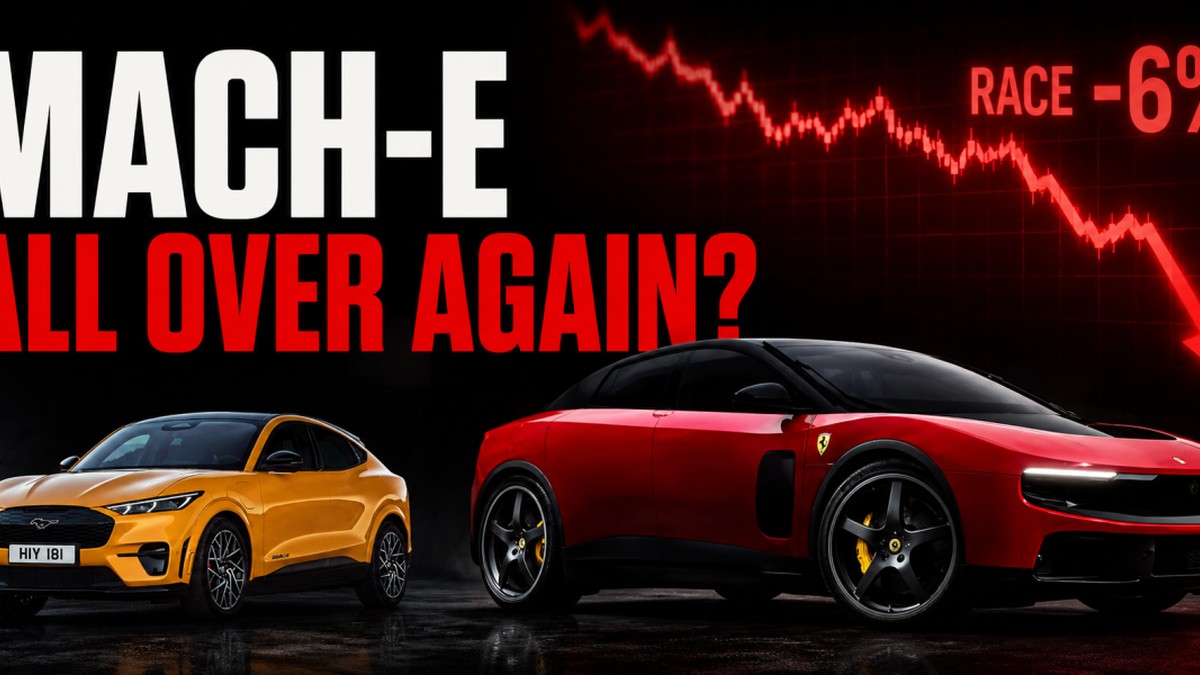
Ferrari shares tumble 6% after Luce EV design criticism
The 30-Second Skim7 points
- What happenedFerrari’s shares plunged over 6% after the debut of its Luce electric sedan sparked a wave of design criticism, while the car’s cutting‑edge powertrain and limited production remain largely overlooked.
- Key facts & numbersFerrari shares fell 6.27% in Milan trading to €290.55, erasing about £3 billion in market value a day after the Luce EV unveiling. Luce attracted a flood of negative online commentary, with critics likening its styling to a Honda Accord, an Apple Store minivan, and a luxury toaster. Ford faced a similar backlash when it launched the Mustang Mach‑E in 2019, yet the EV later outsold the gas Mustang by 17.6% in 2024 and became the best‑selling Mustang.
- What happens nextThe design hate train the buzz, but the Luce’s 1,050 hp specs and replaceable battery are the real story most media missed.
- Ferrari shares fell 6.27% in Milan trading to €290.55, erasing about £3 billion in market value a day after the Luce EV unveiling.
- Luce attracted a flood of negative online commentary, with critics likening its styling to a Honda Accord, an Apple Store minivan, and a luxury toaster.
- Ford faced a similar backlash when it launched the Mustang Mach‑E in 2019, yet the EV later outsold the gas Mustang by 17.6% in 2024 and became the best‑selling Mustang.
- Luce is powered by four bespoke permanent‑magnet synchronous motors delivering 1,050 hp, 0‑100 km/h in 2.5 s, a top speed of 310 km/h, and a 122 kWh battery with 530 km WLTP range.
Why It Matters
Investors lost roughly £3 billion in market value as the share dip reflects market skepticism over Ferrari’s design direction, while the engineering team’s ambitious EV specs could position the brand for future performance leadership if the backlash subsides and may influence board decisions on further EV investments.
Background & Timeline
- Editor contextThe market reaction suggests that even luxury brands face significant challenges in translating their established identity into the nascent EV market, where consumer expectations for design and performance may differ from traditional internal combustion engine vehicles.
Sources Cited
Related Coverage
Ask SkimNews