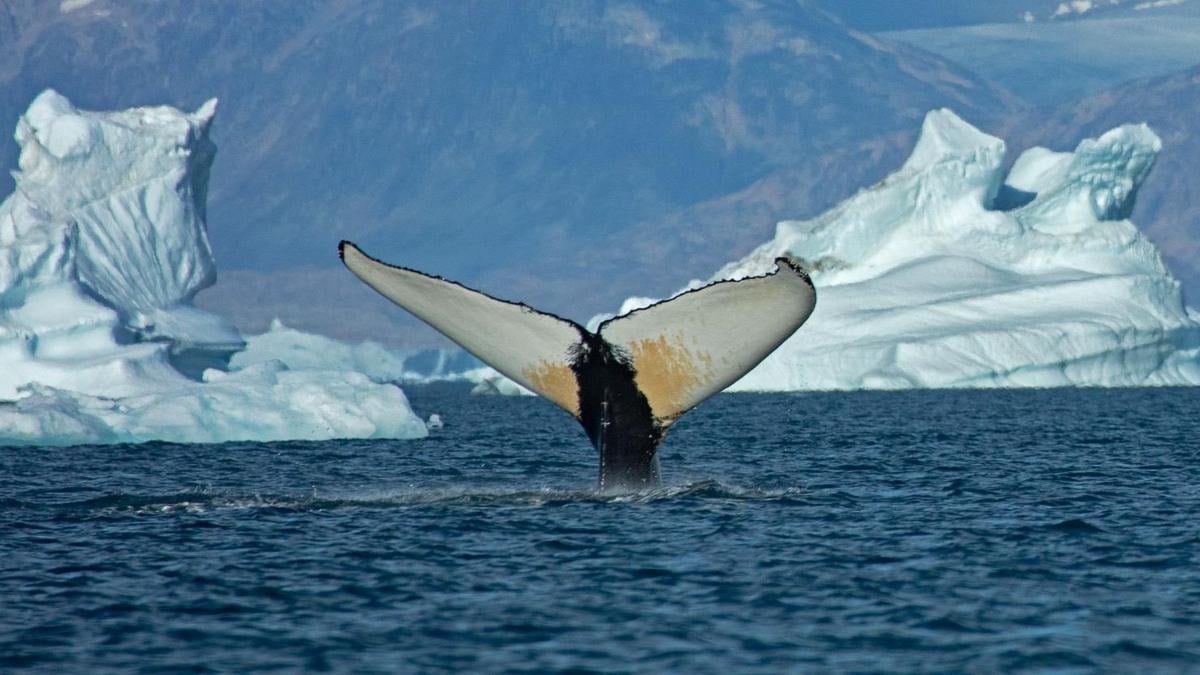
Giant whales move into Greenland waters as ice disappears
The 30-Second Skim7 points
- What happenedA decades-long study finds that vanishing sea ice has unlocked East Greenland's coast to humpback, fin, and minke whales, with an estimated 16,000 baleen whales feeding there in summer 2024 in what researchers call a major ecological regime shift.
- Key facts & numbersResearchers documented a 'major ecological regime shift' off East Greenland, where sea ice loss has opened coastal waters to humpback, fin, and minke whales historically locked out by ice — no humpback sightings were recorded in ship-based surveys there until 2006. Population surge: From zero humpback sightings before 2006 to seven in 2007 to 150 ship-based sightings by 2024, with an estimated 4,000 humpback whales, 6,000 fin whales, and 6,000 minke whales visiting the Greenland Sea in summer 2024. The three whale species would consume at least 800,000 tonnes of fish and krill during a single summer feeding season, according to the study published in the journal Frontiers in Marine Science.
- What happens nextHeadline frames this as a whale win. Buried: narwhals and belugas are the ones getting shoved off their habitat by the new arrivals.
- Researchers documented a 'major ecological regime shift' off East Greenland, where sea ice loss has opened coastal waters to humpback, fin, and minke whales historically locked out by ice — no humpback sightings were recorded in ship-based surveys there until 2006.
- Population surge: From zero humpback sightings before 2006 to seven in 2007 to 150 ship-based sightings by 2024, with an estimated 4,000 humpback whales, 6,000 fin whales, and 6,000 minke whales visiting the Greenland Sea in summer 2024.
- The three whale species would consume at least 800,000 tonnes of fish and krill during a single summer feeding season, according to the study published in the journal Frontiers in Marine Science.
- Prof Mads Peter Heide-Jørgensen of the Greenland Institute of Natural Resources called the regional changes 'probably the most radical we can see anywhere in the subarctic,' combining ship and aerial surveys (2015 and 2024), satellite tracks from 15 tagged whales, and Inuit hunter testimony.
Why It Matters
Climate-driven ice loss has turned East Greenland into a seasonal buffet for at least 16,000 baleen whales, but the same shift is squeezing out narwhals and belugas. With the three whale species projected to consume 800,000 tonnes of fish and krill per summer, Arctic fisheries and Greenland's whale-hunting communities face a fundamentally reshaped competitive and political landscape.
Background & Timeline
- ContextLoss of sea ice is reshaping access to entire feeding grounds, turning physical habitat change into a broader redistribution of baleen whales along Greenland’s coast.
Sources Cited
- BBC EnvironmentGiant whales move into Greenland waters as ice disappears
- The Times of IndiaGigantic whales move towards Greenland waters after the glacier melts
Related Coverage
Ask SkimNews
The day’s news in one short email, every morning.
Free. One email a day. Unsubscribe in one click.