Real-time data overtakes hardening in wildfire fight
The 30-Second Skim
- What happened: Utilities are shifting wildfire-mitigation strategy from capital-heavy physical grid hardening — undergrounding, covered conductor, vegetation management — to real-time sensor analytics and risk-targeted spending, as territory-wide infrastructure upgrades hit their economic ceiling.
- Key facts & numbers: North American wildfires are burning across hundreds of incidents this summer, drawing scrutiny onto whether utilities had and acted on early warning before each ignition. The previous decade of utility mitigation centered on physical grid hardening — vegetation management, covered conductor, sectionalizing devices, undergrounding, and faster protection settings — at a cost of billions of dollars, with undergrounding alone running several million dollars per mile. Grid infrastructure already functions as a continuous sensing network: metering, line sensors, distribution automation, weather networks, and communications systems detect voltage anomalies, loading patterns, momentary faults, and equipment behavior before failures occur.
- What happens next: The buried human stakes: people on oxygen and well pumps lose power today to protect a few miles of line. Reading sensors in real time changes who's spared.
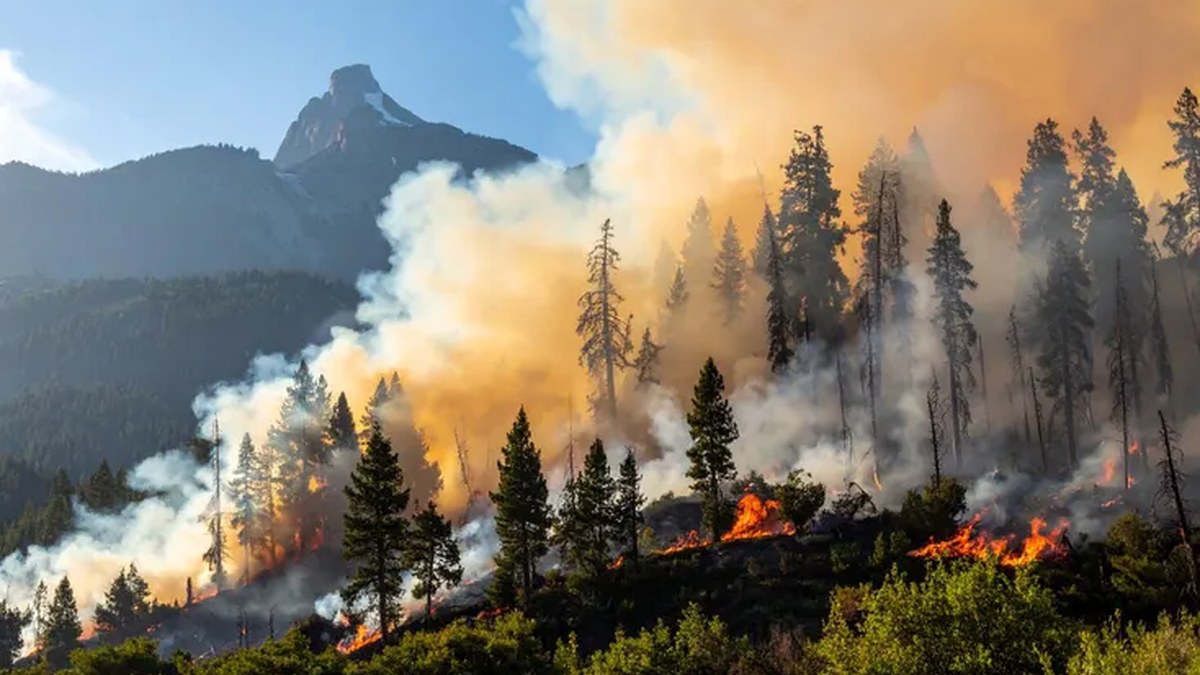
- North American wildfires are burning across hundreds of incidents this summer, drawing scrutiny onto whether utilities had and acted on early warning before each ignition.
- The previous decade of utility mitigation centered on physical grid hardening — vegetation management, covered conductor, sectionalizing devices, undergrounding, and faster protection settings — at a cost of billions of dollars, with undergrounding alone running several million dollars per mile.
- Grid infrastructure already functions as a continuous sensing network: metering, line sensors, distribution automation, weather networks, and communications systems detect voltage anomalies, loading patterns, momentary faults, and equipment behavior before failures occur.
- Public safety power shutoffs can become more surgical once operators can identify the actual problem segment — cutting only high-risk miles rather than whole circuits and sparing customers on oxygen concentrators, well pumps, and medical baseline service.
Why It Matters
Ratepayers and regulators are choosing between two wildfire-spending models: continued territory-wide hardening — which the source says spends most of its billions where risk is not — and data-driven, risk-weighted spending that retires more hazard per dollar and keeps power flowing to medical-baseline, oxygen, and well-pump households during fire weather. Boards and commissions now have a sourced argument for prioritizing which miles get undergrounded rather than spreading capital evenly.
Background & Timeline
- Editor context: As utilities prioritize sensor analytics over uniform infrastructure upgrades, wildfire resilience becomes an ongoing operating practice whose effectiveness depends on converting real-time risk signals into timely, location-specific investment and response.
Sources Cited
- Utility Dive — From grid hardening to grid intelligence: The next era of wildfire resilience
- Tomorrow's World Today — A New Tool Prepares Power Grids for Extreme Weather
- J.P. Morgan — Grid Resilience: Neglected No More
- National Academies of Sciences, Engineering, and Medicine — As Electricity Demand Grows and Risks Increase, Experts Examine How the Grid Can Keep Up
- POWER Magazine — How Artificial Intelligence Can Accelerate Power Delivery to the U.S. Grid
Related Coverage
Ask SkimNews