Nepal Glacier Collapse Kills 160 as Warming Destabilizes Ice
The 30-Second Skim
- What happened: A flash flood on the Nepal-Tibet border killed roughly 160 people after a massive glacier fragment collapsed into the valley below, with scientists linking the disaster to warming-driven glacier instability.
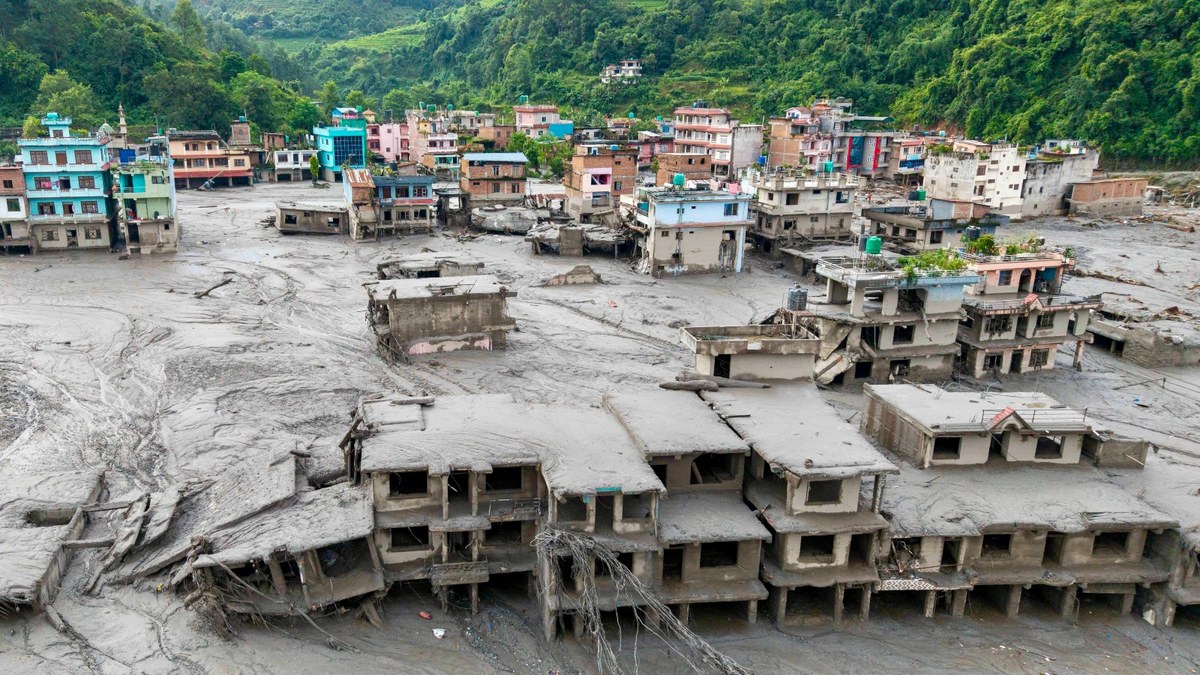
- Key facts & numbers: Flash floods on the Nepal-Tibet border killed roughly 160 people and left hundreds missing, including dozens of international tourists, after a glacial collapse on Wednesday. Satellite imagery suggests a 2,000-foot-wide piece of ice fell nearly 4,000 feet into the valley below, "pulverizing the ice into water," according to University of Calgary geologist Daniel Shugar, who cautioned the cause is still being confirmed. The collapse registered as a magnitude 5.2 seismic event, according to the U.S. Geological Survey.
- What happens next: 2,000-foot ice slab fell 4,000 feet and registered as a 5.2 quake. Textbook warm-season cascade: permafrost thaw + meltwater = collapsing ice.
- Flash floods on the Nepal-Tibet border killed roughly 160 people and left hundreds missing, including dozens of international tourists, after a glacial collapse on Wednesday.
- Satellite imagery suggests a 2,000-foot-wide piece of ice fell nearly 4,000 feet into the valley below, "pulverizing the ice into water," according to University of Calgary geologist Daniel Shugar, who cautioned the cause is still being confirmed.
- The collapse registered as a magnitude 5.2 seismic event, according to the U.S. Geological Survey.
- Nepal's glaciers have lost nearly a quarter of their area between 1970 and 2010, with more than 160 smaller glaciers vanishing entirely, while the world's glaciers have shed 5% of their ice since 2000.
Why It Matters
Roughly 160 people died in a single event tied to glacier instability in a warming climate, and Nepal's glaciers have lost nearly a quarter of their area since 1970. With glacial lake outburst floods already striking Nepal twice last year and 40% of the world's glacial ice threatened above 1.5°C of warming, each warm season now poses escalating hazard to downstream mountain communities and the tourists who travel through them.
Sources Cited
Related Coverage
- What we know about the link between Nepal’s flash floods and our climate crisisThe Guardian Environment
- Climate Weakened Glacier Behind Nepal-Tibet Floods: StudyThe Guardian Environment
- ‘The world needs to pay attention’: Nepalis and Tibetans in New York City respond to the Himalayan disasterThe Guardian Environment
- Dozens of US and Canadian citizens missing after flash flooding in NepalBBC Environment
Ask SkimNews