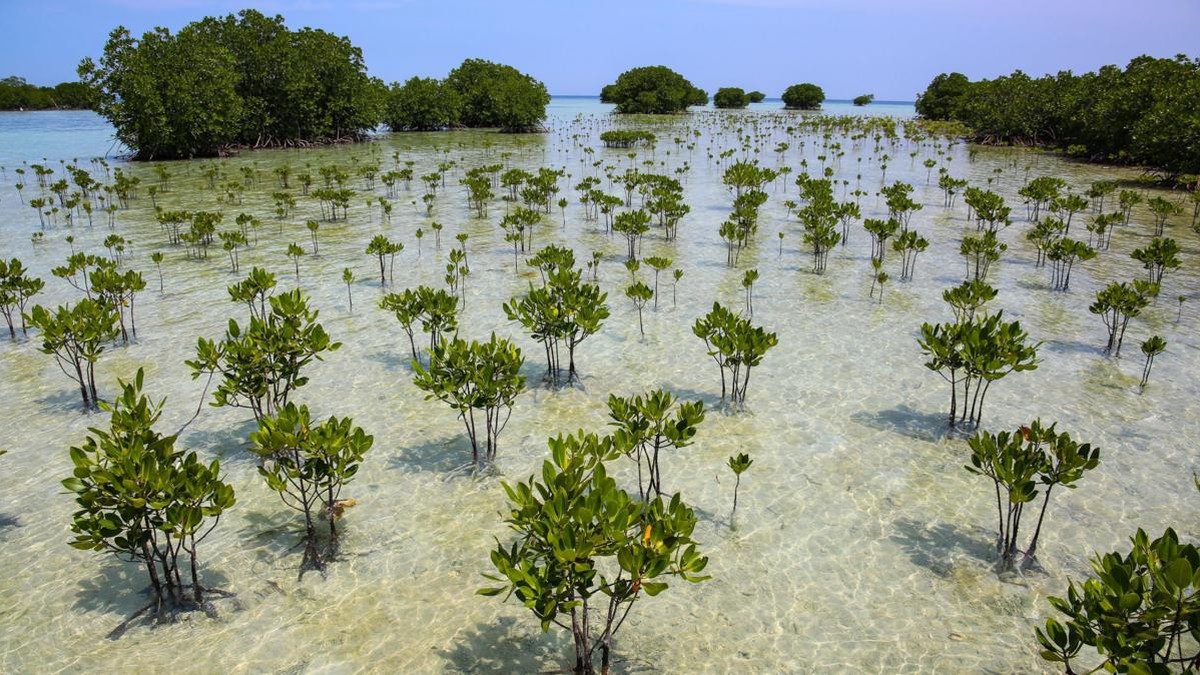
Mangrove forests are healing after decades of human destruction
The 30-Second Skim7 points
- What happenedScientists report that mangrove forests worldwide are now gaining area, with net losses shrinking dramatically since 2010 thanks to stronger legal protections and heightened public awareness after disasters. Natural regeneration has helped stabilize mangroves in Indonesia and spur growth in Myanmar, while high‑resolution Landsat imagery revealed far more new trees than earlier studies.
- Key facts & numbersMangrove forests have been expanding globally since 2010, with net gains now outweighing losses, according to a new study. Net loss of mangrove area worldwide has fallen from over 12,000 sq km (1980s‑2010) to about 849 sq km. Indonesia halted mangrove clearing after the 2004 Indian Ocean tsunami raised public awareness, and fish‑farm conversion has slowed.
- What happens nextTurns out the world finally decided to stop chopping mangroves – now the trees are bouncing back and shielding coastlines.
- Mangrove forests have been expanding globally since 2010, with net gains now outweighing losses, according to a new study.
- Net loss of mangrove area worldwide has fallen from over 12,000 sq km (1980s‑2010) to about 849 sq km.
- Indonesia halted mangrove clearing after the 2004 Indian Ocean tsunami raised public awareness, and fish‑farm conversion has slowed.
- Myanmar saw mangrove cover grow after Cyclone Nargis in 2008 and a 2016 national logging ban.
Why It Matters
Coastal communities and fisheries worldwide benefit from the 849 sq km reduction in mangrove loss, which boosts carbon sequestration and storm protection, while developers lose land‑clearance opportunities.
Sources Cited
Related Coverage
The day’s news in one short email, every morning.
Free. One email a day. Unsubscribe in one click.