Wind Tests Show Federal Rules Fail Manufactured Homes
The 30-Second Skim7 points
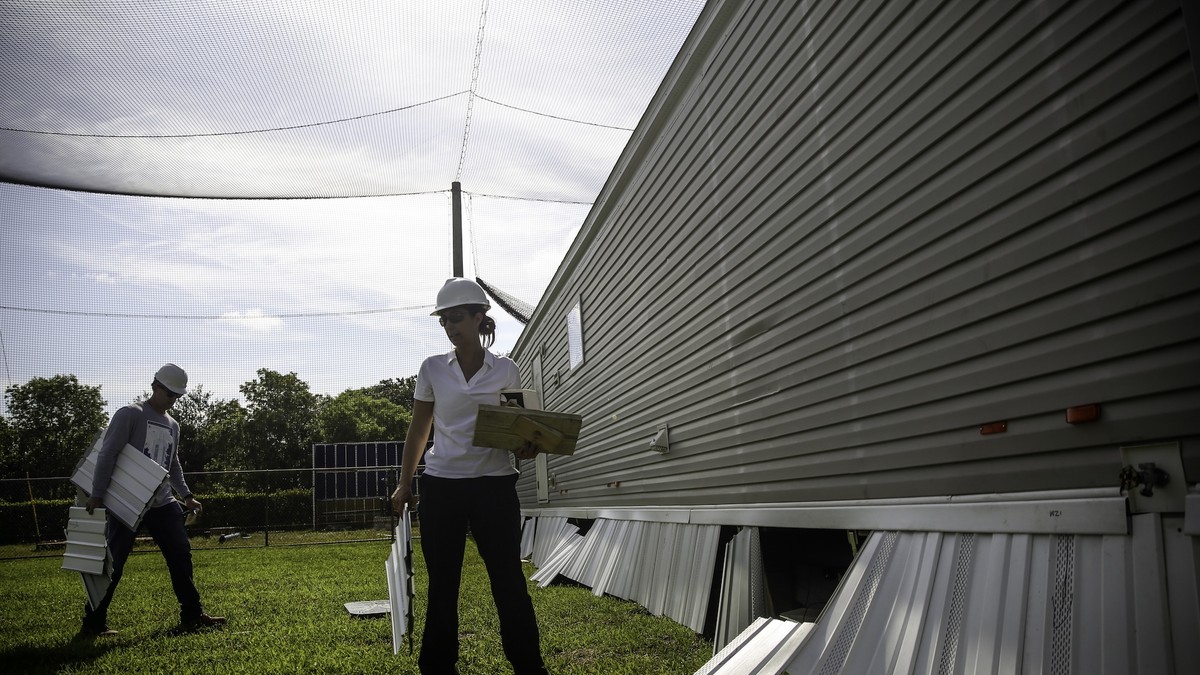
- What happenedEngineers at Florida International University are deliberately destroying manufactured homes in hurricane-force winds to test whether stronger, inexpensive anchoring systems can prevent them from being toppled, a finding that could influence federal safety standards for millions of vulnerable homes.
- Key facts & numbersElaina Sutley and her team are testing manufactured homes at the Wall of Wind facility to see where they fail under winds up to 157 mph, with the goal of determining if simple installation changes can improve resilience. The federal HUD code divides the U.S. into three wind zones, with Zone 1 requiring homes to withstand only 70 mph winds and not requiring vertical tie-down straps, a standard Sutley's preliminary findings suggest is inadequate. Regina Blanchard, a mobile home transport owner, noted that modern vertical tie installations are often just riveted tabs, which she calls 'horrifying' because they concentrate uplift stress on weak points prone to breakage.
- What happens nextThe dominant 'engineers blow up homes' framing overlooks the core policy angle: this isn't just about science, it's a direct test of outdated federal rules that leave millions in flimsy homes. Cheaper straps could fix it.
- Elaina Sutley and her team are testing manufactured homes at the Wall of Wind facility to see where they fail under winds up to 157 mph, with the goal of determining if simple installation changes can improve resilience.
- The federal HUD code divides the U.S. into three wind zones, with Zone 1 requiring homes to withstand only 70 mph winds and not requiring vertical tie-down straps, a standard Sutley's preliminary findings suggest is inadequate.
- Regina Blanchard, a mobile home transport owner, noted that modern vertical tie installations are often just riveted tabs, which she calls 'horrifying' because they concentrate uplift stress on weak points prone to breakage.
- Andrew Rumbach of the Urban Institute points out that over 5 million manufactured homes are in areas prone to severe climate disasters, and that while upgrades may raise upfront costs, poor performance in disasters is far more costly to homeowners.
Why It Matters
More than 20 million Americans live in 6.7 million manufactured homes, a housing type disproportionately exposed to hurricanes and tornadoes. Federal rule changes prompted by this research could directly lower the risk of catastrophic failure for millions of units, potentially saving billions in annual storm damage while addressing a critical equity issue in climate resilience.
Sources Cited
Related Coverage
Ask SkimNews
The day’s news in one short email, every morning.
Free. One email a day. Unsubscribe in one click.