New self-loading tech for bulk cargo vessels cuts freight emissions in HALF
The 30-Second Skim7 points
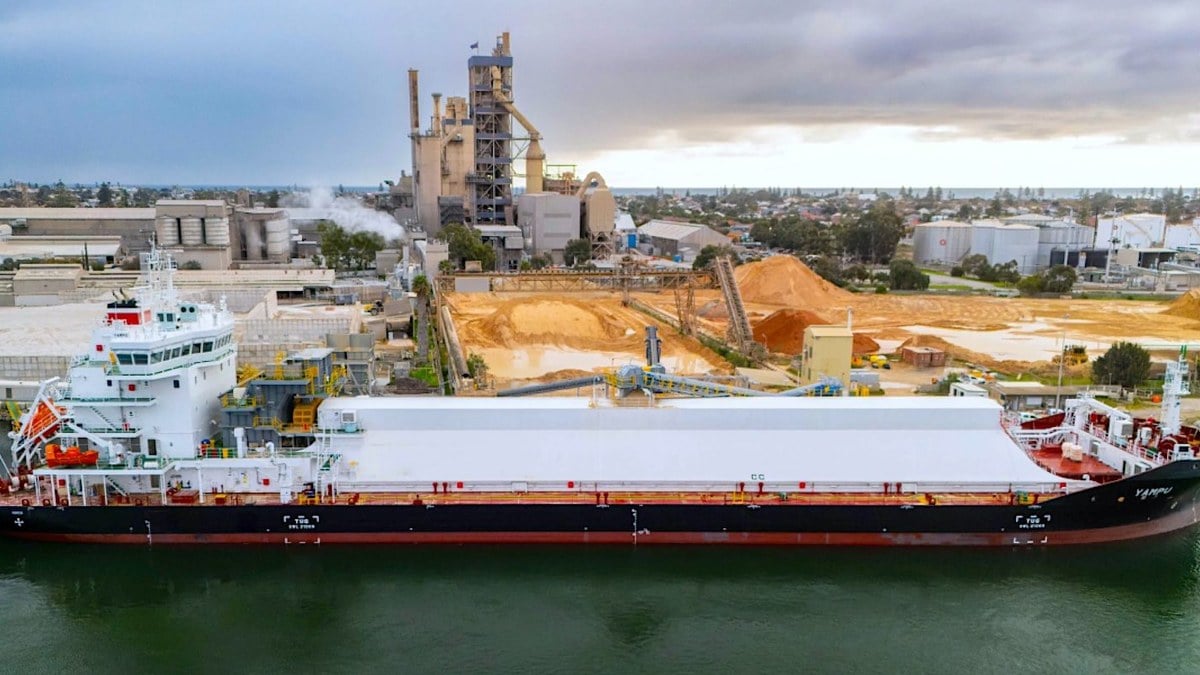
- What happenedCSL Group has launched the MV Yampu, the world's first self-loading and -unloading hybrid bulk cargo vessel, cutting fuel use 25% and Scope 1 emissions over 40% on Adbri's annual 2.7-million-tonne limestone route across Australia's Gulf St. Vincent.
- Key facts & numbersMV Yampu is a 125-meter self-loading bulk carrier built by CSL Group for Adbri, powered by a diesel-electric drive backed by a 131-ton, 6,758 kWh Wärtsilä marine battery capable of over 600 kW output. The vessel ferries 2.7 million tonnes of limestone annually across 42 miles of Gulf St. Vincent between Klein Point quarry and Adbri's Birkenhead cement plant, replacing an older ship and reducing fuel use 25% and Scope 1 emissions over 40%. Each voyage replaces what would otherwise be a 300-mile diesel truck round trip.
- What happens nextFirst self-loading bulk carrier in the world, 40% emissions cut, and the 2031 full-electric target is being whispered very cautiously. The battery spec alone is wild.
- MV Yampu is a 125-meter self-loading bulk carrier built by CSL Group for Adbri, powered by a diesel-electric drive backed by a 131-ton, 6,758 kWh Wärtsilä marine battery capable of over 600 kW output.
- The vessel ferries 2.7 million tonnes of limestone annually across 42 miles of Gulf St. Vincent between Klein Point quarry and Adbri's Birkenhead cement plant, replacing an older ship and reducing fuel use 25% and Scope 1 emissions over 40%.
- Each voyage replaces what would otherwise be a 300-mile diesel truck round trip.
- The same battery-electric system that drives the ship also powers its self-loading and unloading equipment, eliminating the need for diesel generators or shore-based mobile conveyors during cargo handling, with electric-only propulsion available for up to 40% of the journey.
Why It Matters
Adbri locks in a 40%-plus Scope 1 emissions cut on a mission-critical 2.7-million-tonne annual limestone run without disrupting cement supply to South Australia and Victoria — and CSL's battery-electric self-loading model gives other bulk operators a working template for tackling cargo-handling emissions, the segment's hardest decarbonization nut.
Sources Cited
Related Coverage
Ask SkimNews
The day’s news in one short email, every morning.
Free. One email a day. Unsubscribe in one click.