Fires, Heat, Drought Weaken Amazon Carbon Sink
The 30-Second Skim5 points
- What happenedNew research finds ozone pollution from fires, compounded by extreme heat and drought, is further degrading the Amazon rainforest's capacity to absorb carbon dioxide, even as tropical forests still absorb more than 11 billion metric tons of human-caused CO2 annually.
- Key facts & numbersOzone pollution from fires, combined with extreme heat and drought, is further weakening the Amazon rainforest's ability to absorb carbon dioxide, according to new research. The Amazon and other tropical forests absorb more than a quarter of human-caused CO2 emissions each year — more than 11 billion metric tons — underscoring the scale of what compounding climate stress could erode.
- What happens nextCompounding stressors — ozone + heat + drought — hitting the same forest at once is the part most coverage glosses over.
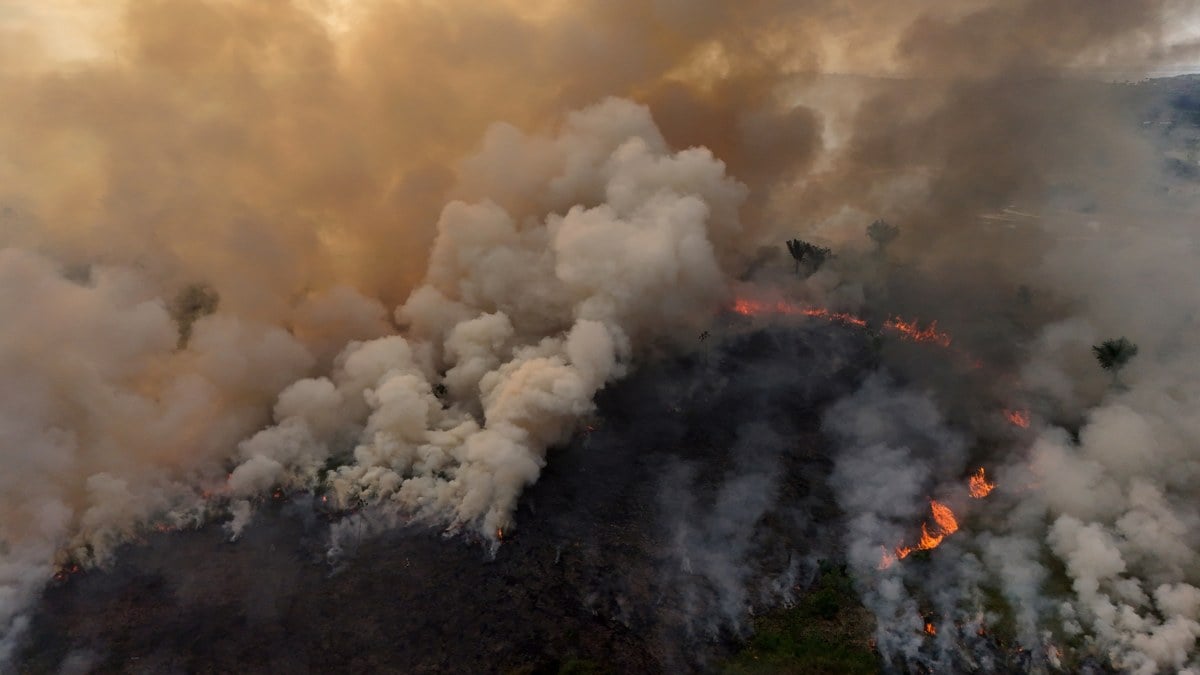
- Ozone pollution from fires, combined with extreme heat and drought, is further weakening the Amazon rainforest's ability to absorb carbon dioxide, according to new research.
- The Amazon and other tropical forests absorb more than a quarter of human-caused CO2 emissions each year — more than 11 billion metric tons — underscoring the scale of what compounding climate stress could erode.
Why It Matters
If the Amazon's carbon sink is being further degraded by compounding ozone, heat, and drought stressors, the global carbon budget loses a buffer that currently absorbs over 11 billion metric tons of CO2 annually. That makes every ton of new emissions harder to offset and shifts more warming pressure onto the atmosphere.
Sources Cited
- Inside Climate NewsCompounding Climate Impacts Drive Tropical Forest Decline
- Environmental Health NewsStudy finds wireless EMF exposure disrupts bat behavior for hours
- World Wildlife FundProtecting forests for our future
Related Coverage
Ask SkimNews