Scientists Race to Decode Disappearing Alpine Ice Cores
The 30-Second Skim7 points
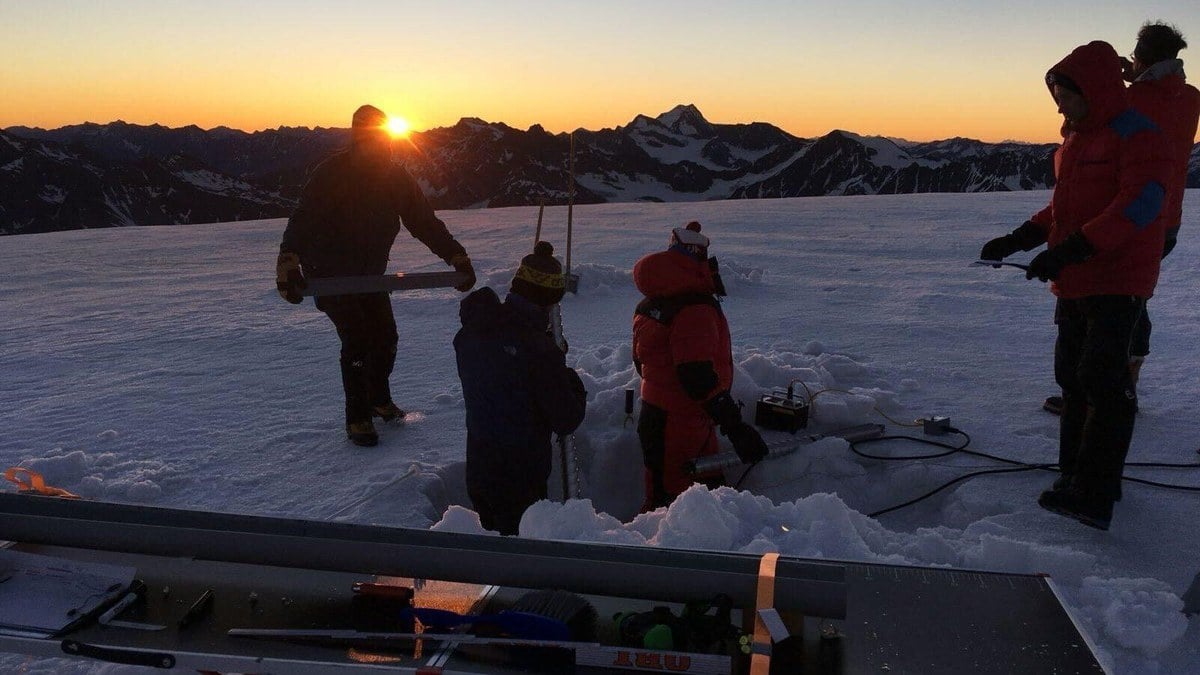
- What happenedScientists are racing to drill and analyze ice cores from the Weißseuspitze glacier in the Ötztal Alps before it disappears, preserving a high-resolution record of European pollution, volcanic eruptions, and ancient climate events spanning the 2nd to 17th centuries CE.
- Key facts & numbersAzzurra Spagnesi, a paleoclimatologist at the University Ca' Foscari of Venice, led a study analyzing a 30-foot ice core drilled to bedrock from the Weißseespitze glacier in the Ötztal Alps, preserving a continuous record from the 2nd to 17th centuries CE. The Weißseespitze core revealed lead from human activities detectable a millennium ago, plus spikes of arsenic and copper in the 13th and 16th centuries CE that researchers linked to major volcanic eruptions. Ice and peat samples from layers dated to around 1000 CE showed matching spikes in levoglucosan and charcoal, indicating a century-long drought drove widespread wildfires — a 'weather whiplash' pattern the article draws a direct line to in today's American West.
- What happens nextBuried gem: the 1000 CE ice+peat wildfire signal isn't nostalgia — Spagnesi explicitly frames it as a climate analog for today's American West 'weather whiplash.' Past and present, frozen together.
- Azzurra Spagnesi, a paleoclimatologist at the University Ca' Foscari of Venice, led a study analyzing a 30-foot ice core drilled to bedrock from the Weißseespitze glacier in the Ötztal Alps, preserving a continuous record from the 2nd to 17th centuries CE.
- The Weißseespitze core revealed lead from human activities detectable a millennium ago, plus spikes of arsenic and copper in the 13th and 16th centuries CE that researchers linked to major volcanic eruptions.
- Ice and peat samples from layers dated to around 1000 CE showed matching spikes in levoglucosan and charcoal, indicating a century-long drought drove widespread wildfires — a 'weather whiplash' pattern the article draws a direct line to in today's American West.
- The Alpine cores offer higher-resolution European atmospheric data than remote Greenland or Antarctica ice sheets because the Alps sit amid densely populated, historically industrialized Europe, as geoscientist Paul Bierman of the University of Vermont noted.
Why It Matters
Alpine glaciers hold a high-resolution archive of European pollution and climate history that remote ice sheets can't match, but roughly 30% of Ötztal glaciers may disappear within five years — meaning pre-industrial atmospheric records could vanish before scientists finish reading them. The 2019-to-2025 shrinkage from 30 feet to 18 feet of coreable ice quantifies just how quickly that archive is being lost.
Sources Cited
Related Coverage
Ask SkimNews
The day’s news in one short email, every morning.
Free. One email a day. Unsubscribe in one click.