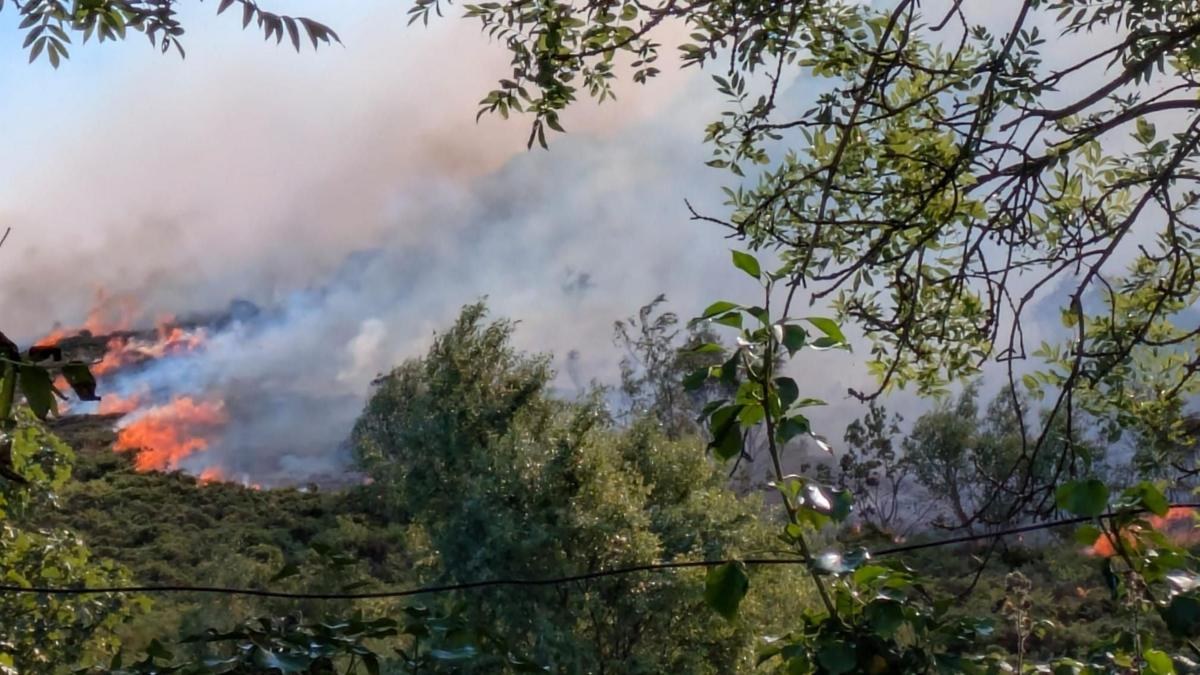
Summer wildfires caused catastrophic hidden damage, scientists warn
The 30-Second Skim
- What happened: Scientists at Bangor University warn that this summer's Welsh wildfires caused catastrophic soil damage invisible to the eye, with roughly 10cm of topsoil — and 4,000 years of stored carbon — lost in days at sites like Sychnant Pass.
- Key facts & numbers: Prof Davey Jones is leading a Bangor University survey of Welsh wildfire sites and found the damage extends far below the visible blackened vegetation, including an estimated 10cm of soil lost at Sychnant Pass in Conwy county, representing 4,000 years of accumulated organic matter and carbon gone in a single fire event July's wildfire peak scorched approximately 2,760 acres of north Wales countryside — the equivalent of more than 1,500 football pitches — with the Sychnant Pass blaze alone forcing 36 home evacuations and burning around 200 acres Jones described a self-reinforcing climate cycle: drier soils produce more fires, which release stored carbon, nitrogen and sulphur back into the atmosphere, worsening the dry conditions that drive the next burn
- What happens next: The headline says 'catastrophic damage' but the actual jaw-dropper is buried mid-story: 4,000 years of carbon, gone in five days. BBC is on the same beat.
- Prof Davey Jones is leading a Bangor University survey of Welsh wildfire sites and found the damage extends far below the visible blackened vegetation, including an estimated 10cm of soil lost at Sychnant Pass in Conwy county, representing 4,000 years of accumulated organic matter and carbon gone in a single fire event
- July's wildfire peak scorched approximately 2,760 acres of north Wales countryside — the equivalent of more than 1,500 football pitches — with the Sychnant Pass blaze alone forcing 36 home evacuations and burning around 200 acres
- Jones described a self-reinforcing climate cycle: drier soils produce more fires, which release stored carbon, nitrogen and sulphur back into the atmosphere, worsening the dry conditions that drive the next burn
- Dr Kara Marsden cautioned that the green shoots now visible at recovery sites are misleading, since bracken resprouts from deep rhizomes while shallower-rooted heather and gorse are 'completely gone,' with their dependent soil potentially needing thousands of years to reform
Why It Matters
Wales's 2,760-acre fire season did not just blacken vegetation — it vaporised 10cm of irreplaceable peat-style soil at sites like Sychnant Pass, releasing 4,000-year-old carbon stores and triggering a feedback loop where drier, carbon-depleted ground invites the next fire. Researchers will track recovery over the next two years to determine whether artificial soils built from organic waste can substitute for what was lost.
Sources Cited
Related Coverage
Ask SkimNews