SCOTUS Wrestles With Boulder Climate Case Against Exxon, Suncor
The 30-Second Skim
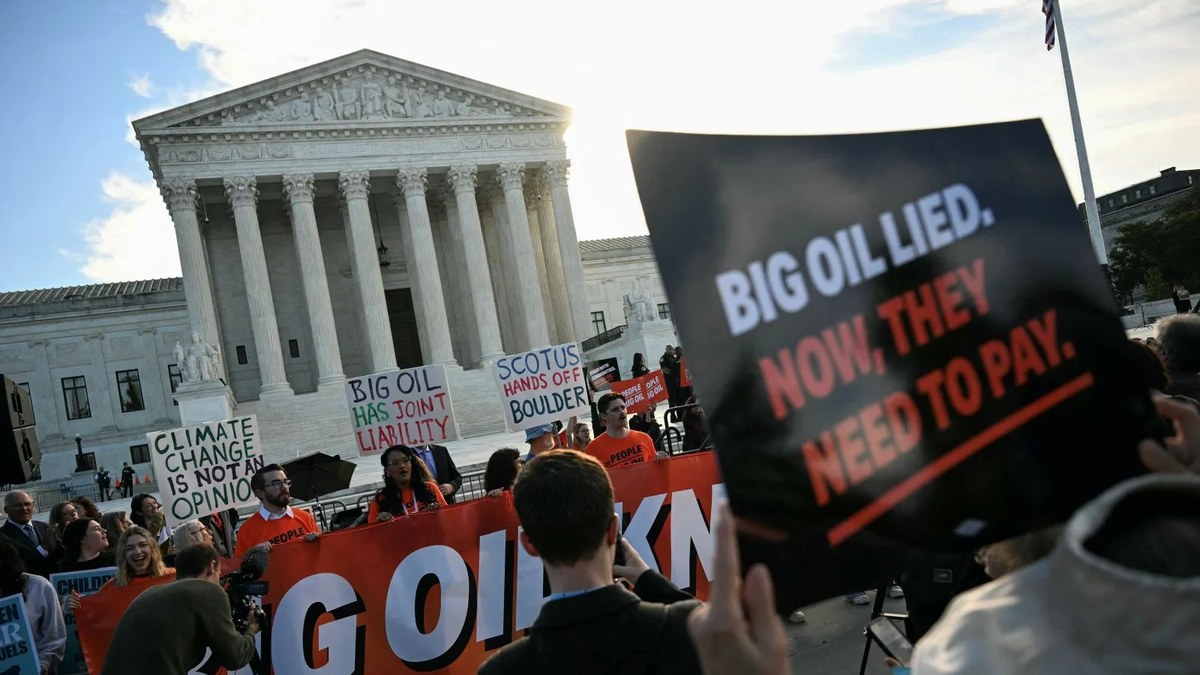
- What happened: The Supreme Court opened its 2026-2027 term by hearing Boulder's lawsuit against Exxon Mobil and Suncor over climate damages, with eight justices (Alito recused) struggling to determine whether state courts can hold fossil fuel companies liable for the costs of a warming planet.
- Key facts & numbers: Boulder, Colorado urged the Supreme Court to allow its case against Exxon Mobil and Suncor to proceed in state court, framing the suit around the companies' alleged deception of the public rather than an effort to curb fossil fuel production or emissions. Justice Elena Kagan analogized Boulder's case to the 1990s wave of state lawsuits against tobacco companies, in which cigarette makers were forced to fund healthcare costs and anti-smoking campaigns without being barred from selling their products. Justice Brett Kavanaugh warned that allowing the suit to proceed in Colorado could "bankrupt" oil and gas companies and called Boulder's framing of the financial stakes "cavalier"; Suncor has told shareholders that mounting climate litigation could hit its bottom line.
- What happens next: Boulder's case is actually about corporate deception, not emissions — closer to tobacco than to pollution law. Most coverage buries that distinction.
- Boulder, Colorado urged the Supreme Court to allow its case against Exxon Mobil and Suncor to proceed in state court, framing the suit around the companies' alleged deception of the public rather than an effort to curb fossil fuel production or emissions.
- Justice Elena Kagan analogized Boulder's case to the 1990s wave of state lawsuits against tobacco companies, in which cigarette makers were forced to fund healthcare costs and anti-smoking campaigns without being barred from selling their products.
- Justice Brett Kavanaugh warned that allowing the suit to proceed in Colorado could "bankrupt" oil and gas companies and called Boulder's framing of the financial stakes "cavalier"; Suncor has told shareholders that mounting climate litigation could hit its bottom line.
- Justice Samuel Alito recused himself without explanation after facing accusations that his oil and gas investments made his participation inappropriate — a move that opens the door to a 4-4 split that would let Boulder's state-court case continue.
Why It Matters
Boulder wants fossil fuel companies to pay for deceiving the public, not to stop producing oil — a distinction the oil industry spent two hours urging justices to blur. The court's framing will ripple through dozens of pending climate suits seeking billions in damages, and a 4-4 split is now a real possibility after Alito's recusal.
Sources Cited
Related Coverage
- Boulder, Colorado, and Big Oil Prepare for High-Stakes Clash in Supreme CourtInside Climate News
- Ranchers, conservatives back Boulder in SCOTUS oil caseGrist
- Middlesex County, NJ Sues Big Oil Over Climate DamagesInside Climate News
- Suncor v Boulder: Justices Press Big Oil on PreemptionThe Guardian Environment
Ask SkimNews