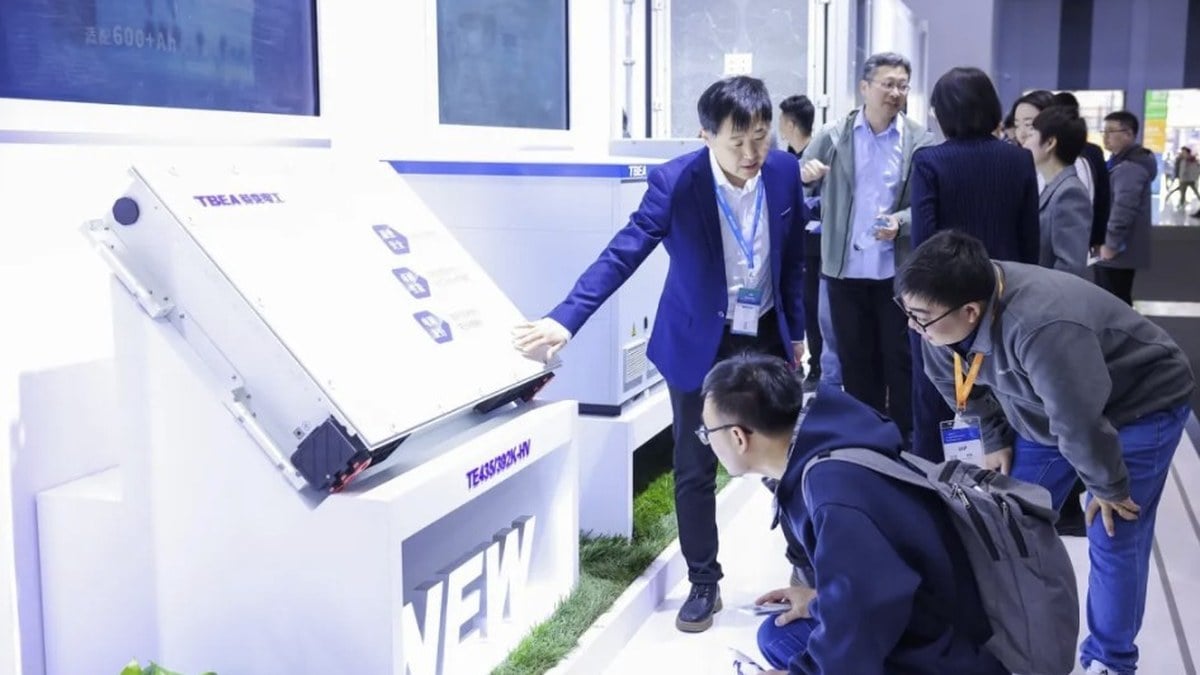
TBEA launches 435 kW grid‑forming converter for storage
The 30-Second Skim
- What happened: Chinese transformer maker TBEA unveiled its TE435/392K-HV‑BL grid‑forming converter, promising up to 78% higher volumetric power density, 32% greater gravimetric density and enhanced grid‑support functions for utility‑scale storage and renewable projects.
- Key facts & numbers: TBEA introduced a grid‑forming string power conversion system (PCS) for utility‑scale storage, renewable energy base projects, and weak‑grid applications. TE435/392K-HV‑BL converter’s fully integrated liquid‑cooling design raises volumetric power density by 78% and gravimetric power density by 32% versus the previous generation, cutting plant footprint by about 10%. TE‑PowerHUB 3.0 high‑speed control platform lets the PCS switch between grid‑following and grid‑forming modes within milliseconds and operate across a short‑circuit ratio (SCR) range of 1‑40.
- What happens next: TBEA’s 435 kW grid‑forming converter packs 78% more power per cubic meter, letting solar‑plus‑storage farms shrink while keeping the grid stable.
- TBEA introduced a grid‑forming string power conversion system (PCS) for utility‑scale storage, renewable energy base projects, and weak‑grid applications.
- TE435/392K-HV‑BL converter’s fully integrated liquid‑cooling design raises volumetric power density by 78% and gravimetric power density by 32% versus the previous generation, cutting plant footprint by about 10%.
- TE‑PowerHUB 3.0 high‑speed control platform lets the PCS switch between grid‑following and grid‑forming modes within milliseconds and operate across a short‑circuit ratio (SCR) range of 1‑40.
- PCS can deliver inertia response, fast frequency regulation, reactive power and voltage support, and black‑start capability, acting as a grid‑support asset.
Why It Matters
Utility‑scale storage developers gain smaller, more efficient plants that can operate in weak or high‑altitude grids, while grid operators receive faster inertia, frequency and voltage support, potentially lowering infrastructure costs and expanding renewable integration. The higher power density also reduces plant footprints by about 10%, freeing up land for additional projects.
Sources Cited
Related Coverage
Ask SkimNews