Tesla FSD v14 Lite Overheats HW3 Computers
The 30-Second Skim
- What happened: Tesla's FSD v14 Lite update is triggering Autopilot computer overheating alerts and full hardware failures on Hardware 3 vehicles, weeks after the wide release. The timing compounds Tesla's existing exposure on roughly 4 million HW3 cars it sold on an undelivered self-driving promise.
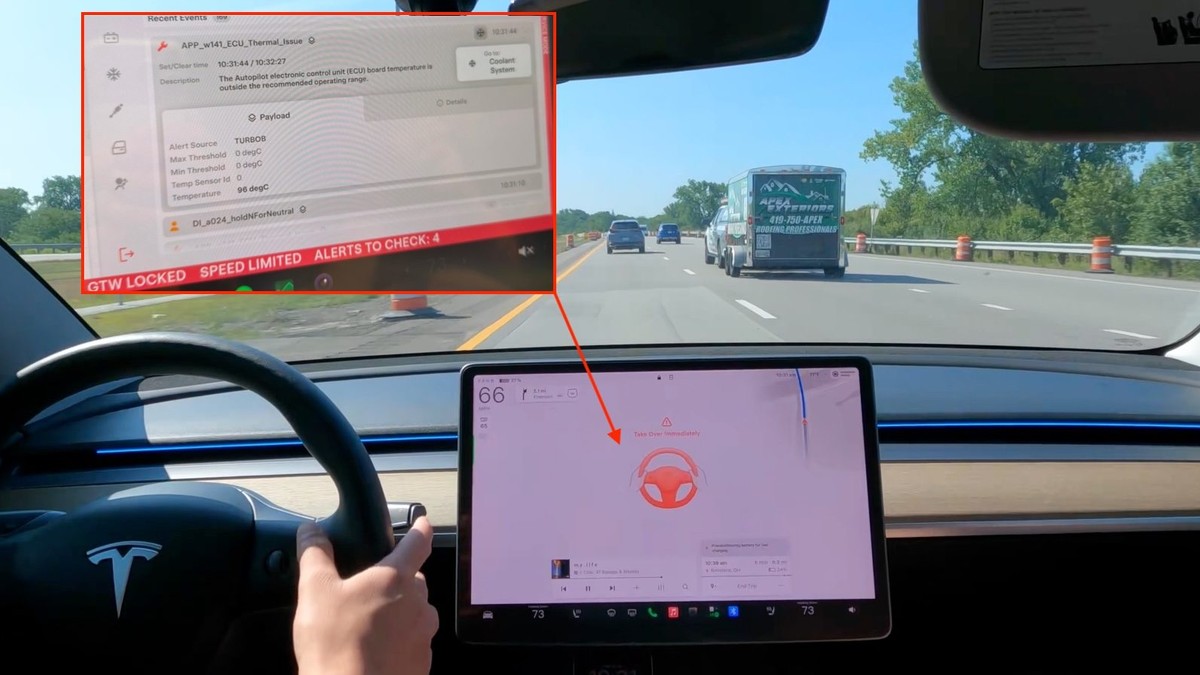
- Key facts & numbers: Tesla pushed FSD v14 Lite to wide release for HW3 vehicles on July 21 via software 2026.20.6.11 (FSD v14.3.6), a distilled version of the HW4 v14 model running on the memory-constrained 8GB AI3 computer. HW3 owners are reporting Autopilot ECU thermal alerts triggering the APP_w141_ECU_Thermal_Issue fault above 90°C, with multiple owners measuring 96°C, alongside broader regressions including phantom braking, hesitation, and brake stuttering. Tesla Service has told some owners that their Autopilot computers fully shut down and require replacement, a scenario beyond thermal throttling into outright hardware failure.
- What happens next: 7-year-old hardware, heavier software, exactly the failures you'd expect. The 4M-vehicle liability Tesla already owes makes this way worse than a normal bug report.
- Tesla pushed FSD v14 Lite to wide release for HW3 vehicles on July 21 via software 2026.20.6.11 (FSD v14.3.6), a distilled version of the HW4 v14 model running on the memory-constrained 8GB AI3 computer.
- HW3 owners are reporting Autopilot ECU thermal alerts triggering the APP_w141_ECU_Thermal_Issue fault above 90°C, with multiple owners measuring 96°C, alongside broader regressions including phantom braking, hesitation, and brake stuttering.
- Tesla Service has told some owners that their Autopilot computers fully shut down and require replacement, a scenario beyond thermal throttling into outright hardware failure.
- Tesla is already on the hook to replace the self-driving computer in roughly 4 million HW3 cars or compensate their owners after admitting the hardware cannot deliver the unsupervised self-driving it was sold.
Why It Matters
Tesla is pushing a heavier v14 model onto 7-year-old hardware it has already admitted cannot deliver unsupervised self-driving, with owners now reporting full computer failures. If v14 Lite shortens HW3 computer lifespans, a routine software rollout becomes a warranty and goodwill problem at the scale of an existing 4 million-vehicle liability, just as those vehicles approach warranty expiration.
Sources Cited
Related Coverage
Ask SkimNews