Tesla starts Cybercab production tests in Austin
The 30-Second Skim
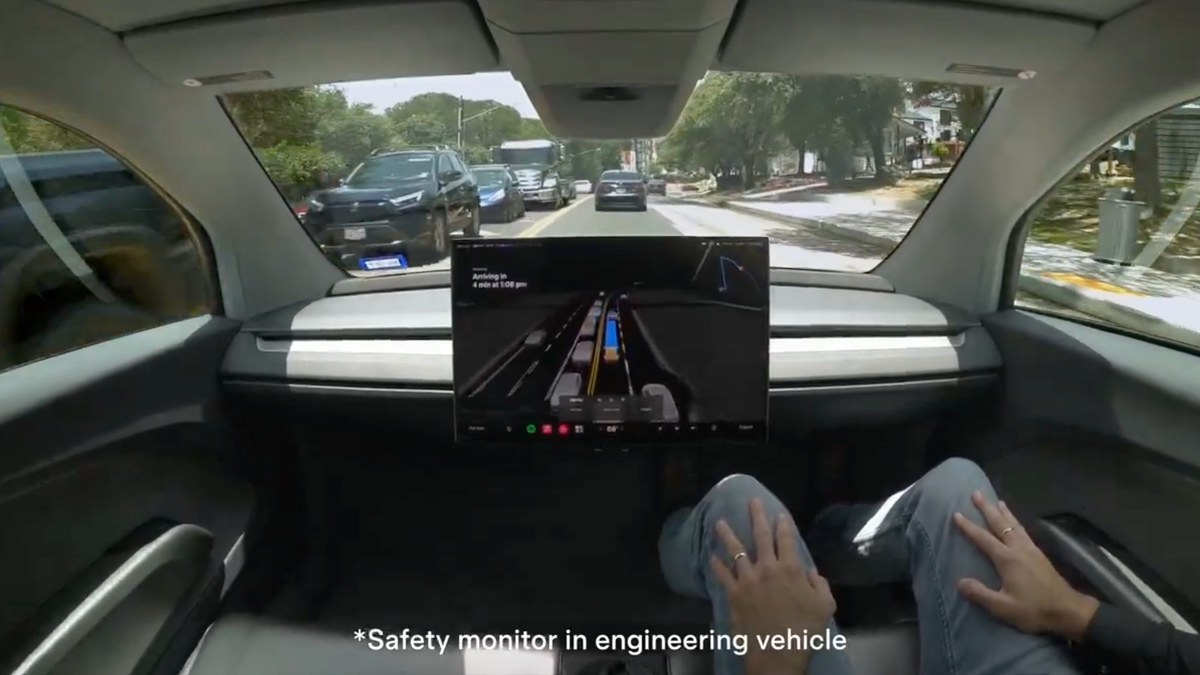
- What happened: Tesla has begun engineering tests of its first production Cybercab on Austin public roads, but a safety monitor still rides in the passenger seat and the company's paid robotaxi service continues to run on retrofitted Model Y SUVs.
- Key facts & numbers: Tesla began engineering tests of its first production Cybercab on Austin public roads, with a safety monitor in the front passenger seat — a meaningful step, but not yet a driverless operation. The production-intent Cybercab rolled off Gigafactory Texas on February 17, with Tesla confirming production start during its Q1 earnings call in April, making this public-road validation the next milestone toward fare-paying rides. Tesla's Robotaxi service in Austin still runs on Model Y SUVs with Full Self-Driving software, not Cybercabs — the service launched in June 2025, moved monitors from passenger to driver seat in September, and only recently began removing in-car monitors for some rides, with 'unsupervised' vehicles reportedly trailed by chase cars carrying safety monitors.
- What happens next: Austin's paid robotaxi service still uses Model Ys, not Cybercabs. And the 'unsupervised' Model Ys are reportedly trailed by chase cars — the human just moved seats, didn't leave.
- Tesla began engineering tests of its first production Cybercab on Austin public roads, with a safety monitor in the front passenger seat — a meaningful step, but not yet a driverless operation.
- The production-intent Cybercab rolled off Gigafactory Texas on February 17, with Tesla confirming production start during its Q1 earnings call in April, making this public-road validation the next milestone toward fare-paying rides.
- Tesla's Robotaxi service in Austin still runs on Model Y SUVs with Full Self-Driving software, not Cybercabs — the service launched in June 2025, moved monitors from passenger to driver seat in September, and only recently began removing in-car monitors for some rides, with 'unsupervised' vehicles reportedly trailed by chase cars carrying safety monitors.
- Waymo already delivers roughly 500,000 paid fully driverless rides per week across the US, targeting 1 million weekly by end of 2026 — a commercial benchmark Tesla is chasing with no in-car or trailing human supervisors.
Why It Matters
Tesla's Cybercab is now on public roads, but the passenger-seat safety monitor and the fact that its paid Austin service still runs on Model Ys with human monitors show the FSD software — not the hardware — is the bottleneck. Waymo's 500,000 weekly fully driverless rides set the bar a sub-$25,000 Cybercab must clear to matter commercially.
Sources Cited
Related Coverage
Ask SkimNews