Tesla's Rare-Earth-Free Motor: Real Win or Hype?
The 30-Second Skim7 points
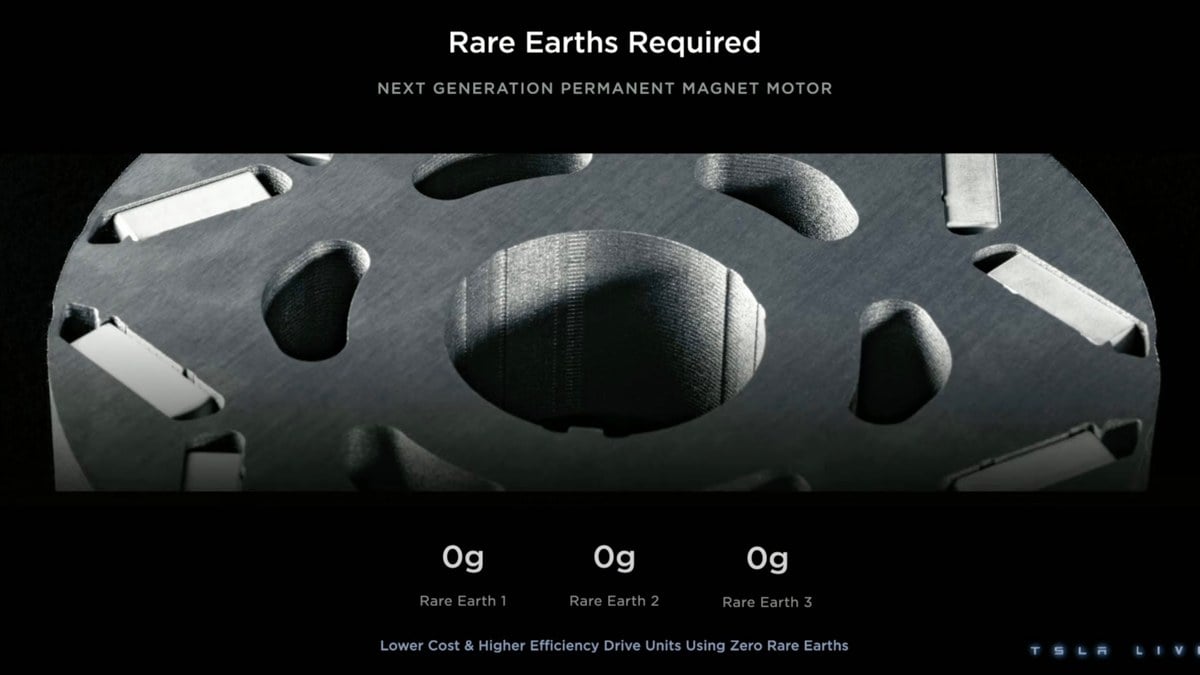
- What happenedTesla unveiled a rare-earth-free permanent magnet motor for its Cybercab at this week's event, claiming it's 18% smaller and 25% lighter than prior drive units—but the deeper significance lies in reducing supply chain dependence on China's rare earth processing monopoly.
- Key facts & numbersTesla unveiled a rare-earth-free permanent magnet motor for the Cybercab, claiming it is 18% smaller, 25% lighter, and more efficient than prior top-performing drive units Elon Musk confirmed via Twitter (not attending the event in person) that the new Cybercab motor uses no rare earth metals Tesla originally used AC induction motors—named after inventor Nikola Tesla—before switching to permanent magnet motors with the Model 3, and announced in 2023 a push to eliminate rare earths from those magnets, likely using iron ferrite or aluminum-nickel-cobalt
- What happens nextMusk hyped 18% smaller and 25% lighter. Real story: China's rare earth export controls forced Tesla to redesign its supply chain, not just its motor.
- Tesla unveiled a rare-earth-free permanent magnet motor for the Cybercab, claiming it is 18% smaller, 25% lighter, and more efficient than prior top-performing drive units
- Elon Musk confirmed via Twitter (not attending the event in person) that the new Cybercab motor uses no rare earth metals
- Tesla originally used AC induction motors—named after inventor Nikola Tesla—before switching to permanent magnet motors with the Model 3, and announced in 2023 a push to eliminate rare earths from those magnets, likely using iron ferrite or aluminum-nickel-cobalt
- The Cybercab is certified at 165 Wh/mi, described in the source as the most efficient electric car on the road, aided by small size, aerodynamic design, light weight, and the new motor
Why It Matters
Tesla's rare-earth-free motor delivers measurable packaging and efficiency gains, but the deeper shift is supply-chain-driven: China's tightening grip on rare earth processing gives automakers an urgent reason to redesign motors. With only ~45 Cybercabs registered in Texas, this is still a pilot-scale bet, not yet a fleet-scale material break from China's rare earth dominance.
Sources Cited
Related Coverage
Ask SkimNews
The day’s news in one short email, every morning.
Free. One email a day. Unsubscribe in one click.