The US added a record 20.2 GWh of battery storage in just 3 months
The 30-Second Skim
- What happened: US battery storage installations surged to a record 20.2 GWh in Q2 2026 — more than 10% of all currently operating capacity came online in a single quarter, driven almost entirely by utility-scale grid projects.
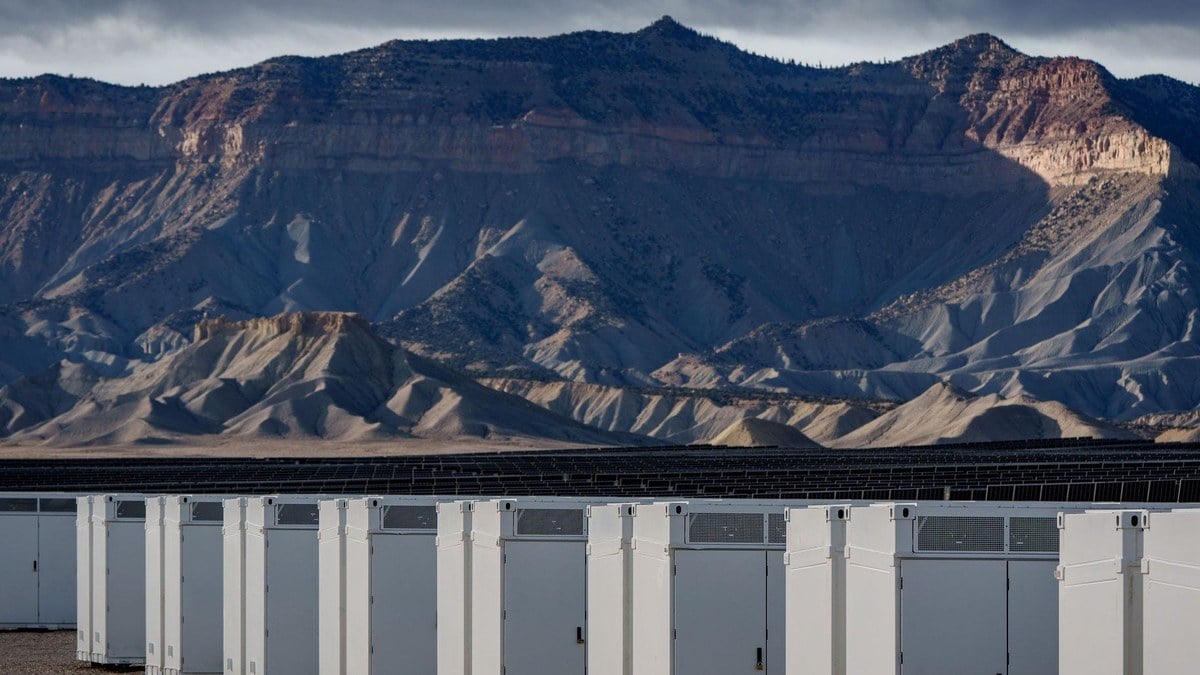
- Key facts & numbers: US battery storage added a record 20.2 GWh in Q2 2026, bringing H1 2026 totals to 30.8 GWh (up 23% YoY), according to the Solar Energy Industries Association and Benchmark Mineral Intelligence. Utility-scale projects accounted for nearly all growth at ~18 GWh, including seven gigawatt-hour-scale installations — four in Arizona, two in California, and one in Utah. Arizona posted a single-state record 6.2 GWh in Q2, outpacing Texas (3.8 GWh) and California (3.6 GWh); 44% of utility-scale capacity was paired with solar and 56% was standalone.
- What happens next: 10% of ALL US battery storage capacity came online in one quarter. Meanwhile your home battery is getting pricier because the 25D tax credit just died.
- US battery storage added a record 20.2 GWh in Q2 2026, bringing H1 2026 totals to 30.8 GWh (up 23% YoY), according to the Solar Energy Industries Association and Benchmark Mineral Intelligence.
- Utility-scale projects accounted for nearly all growth at ~18 GWh, including seven gigawatt-hour-scale installations — four in Arizona, two in California, and one in Utah.
- Arizona posted a single-state record 6.2 GWh in Q2, outpacing Texas (3.8 GWh) and California (3.6 GWh); 44% of utility-scale capacity was paired with solar and 56% was standalone.
- Residential battery storage fell 27% YoY to just 657 MWh, with SEIA and Benchmark citing the removal of the federal 25D clean energy tax credit and a 2025 installation rush ahead of the incentive change.
Why It Matters
Utility-scale storage scaled so fast that the first eight months of 2026 already delivered more grid electricity from batteries than all of 2025, and 74% of Q2 installs landed in states Trump won in 2024 — growth is concentrated in red-state grids. The flip side: residential storage dropped 27% with the 25D tax credit gone, meaning homeowners and small businesses are being priced out while utilities and data-center developers capture the surge.
Sources Cited
Related Coverage
Ask SkimNews