Solrite launches 60 kWh solar-battery deal in Illinois
The 30-Second Skim
- What happened: Solrite Energy launched a $0-down solar-plus-storage program for Illinois homeowners featuring a 60 kWh battery—more than four times the Tesla Powerwall 3's capacity—designed around the state's January 2025 shift away from full-retail net metering.
- Key facts & numbers: Solrite Energy launched a no-money-down solar-plus-storage program for Illinois homeowners in ComEd and Ameren territories, financing and owning systems while customers pay 12¢/kWh under a 25-year agreement that can rise up to 2.9% annually. The Duracell Power Center packs a 60 kWh capacity—more than four times the Tesla Powerwall 3's 13.5 kWh—across 12 stackable 5 kWh LFP modules with 15 kW of continuous output. Illinois switched new rooftop solar customers from full-retail net metering to supply-only credits on January 1, 2025, making exported electricity less valuable and pushing homeowners toward larger on-site storage.
- What happens next: 60 kWh is 4x a Powerwall 3—but the 25-year deal at 12¢/kWh with a 2.9% annual escalator is the real story.
- Solrite Energy launched a no-money-down solar-plus-storage program for Illinois homeowners in ComEd and Ameren territories, financing and owning systems while customers pay 12¢/kWh under a 25-year agreement that can rise up to 2.9% annually.
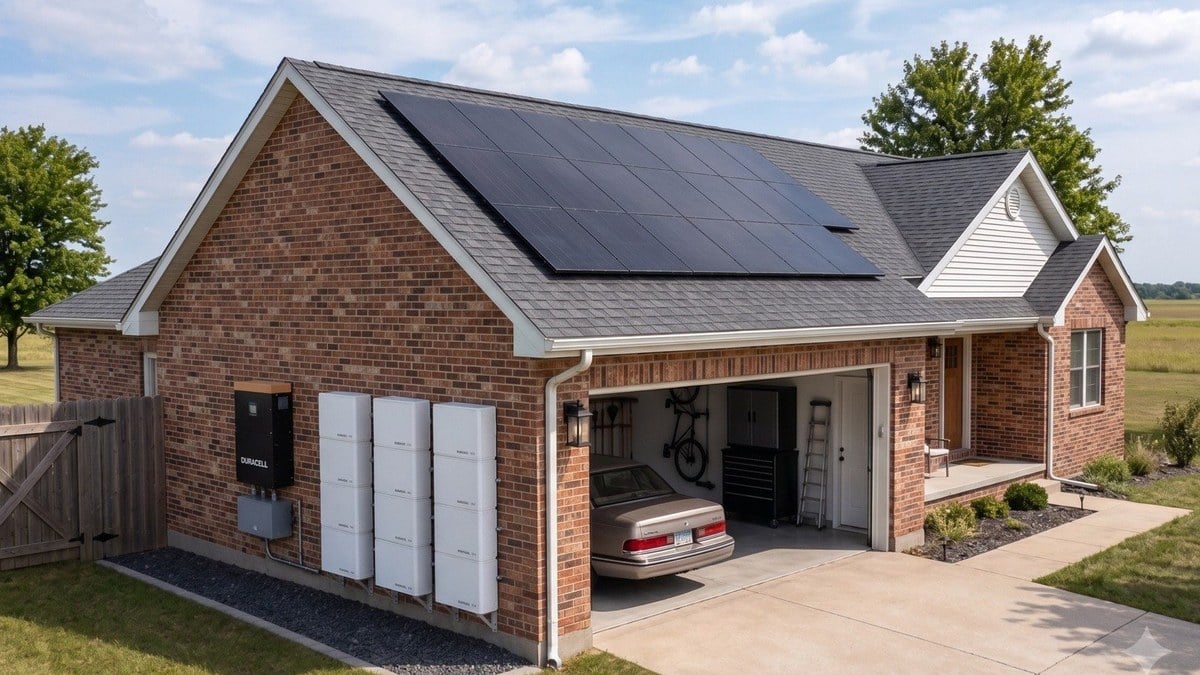
- The Duracell Power Center packs a 60 kWh capacity—more than four times the Tesla Powerwall 3's 13.5 kWh—across 12 stackable 5 kWh LFP modules with 15 kW of continuous output.
- Illinois switched new rooftop solar customers from full-retail net metering to supply-only credits on January 1, 2025, making exported electricity less valuable and pushing homeowners toward larger on-site storage.
- Solrite aggregates the home batteries into a virtual power plant that can begin charging or discharging in as little as 30 seconds to respond to grid conditions, acting like a distributed power plant during peak periods.
Why It Matters
Homeowners pay 12¢/kWh under a 25-year deal that can escalate 2.9% annually while still owing a separate utility bill, so the no-money-down pitch masks compounding long-term costs. Solrite captures the federal tax credits, Illinois Shines RECs, and grid-services revenue, meaning the homeowner carries the rate risk while the financier harvests the incentives and VPP income.
Background & Timeline
- Editor context: With full-retail net metering gone, oversized storage becomes the substitute mechanism for capturing the value homeowners previously earned by exporting solar — making battery sizing, not panel count, the central economic lever in the post-2025 Illinois rooftop market.
Sources Cited
Related Coverage
Ask SkimNews