Hormuz Chokepoint Outlives Oil Era, IEA Data Shows
The 30-Second Skim
- What happened: The Strait of Hormuz will remain a strategic vulnerability in a decarbonized world, but the dominant failure mode shifts from maritime fuel chokepoints to grid-adequacy shortfalls depending on which energy transition path countries take, IEA and IRENA data show.
- Key facts & numbers: The Strait of Hormuz carried ~25% of global seaborne oil trade and over 110 bcm of LNG in 2025, remaining the primary export route for Saudi Arabia, the UAE, Kuwait, Qatar, Iraq, Bahrain, and Iran, per the IEA's current assessment. IRENA's 1.5°C scenario projects ~25% of global hydrogen demand internationally traded by 2050 (vs. ~74% for oil today), with ~45% moving by ship as ammonia and global ammonia demand rising to ~690 million tons per year, of which ~80% feeds chemicals, shipping, and power. Bypass capacity around the Strait is limited: the IEA says only Saudi Arabia and the UAE have crude pipelines with 3.5–5.5 mb/d of rerouting capacity, while no alternative route exists for Qatar's and the UAE's LNG exports at current scale.
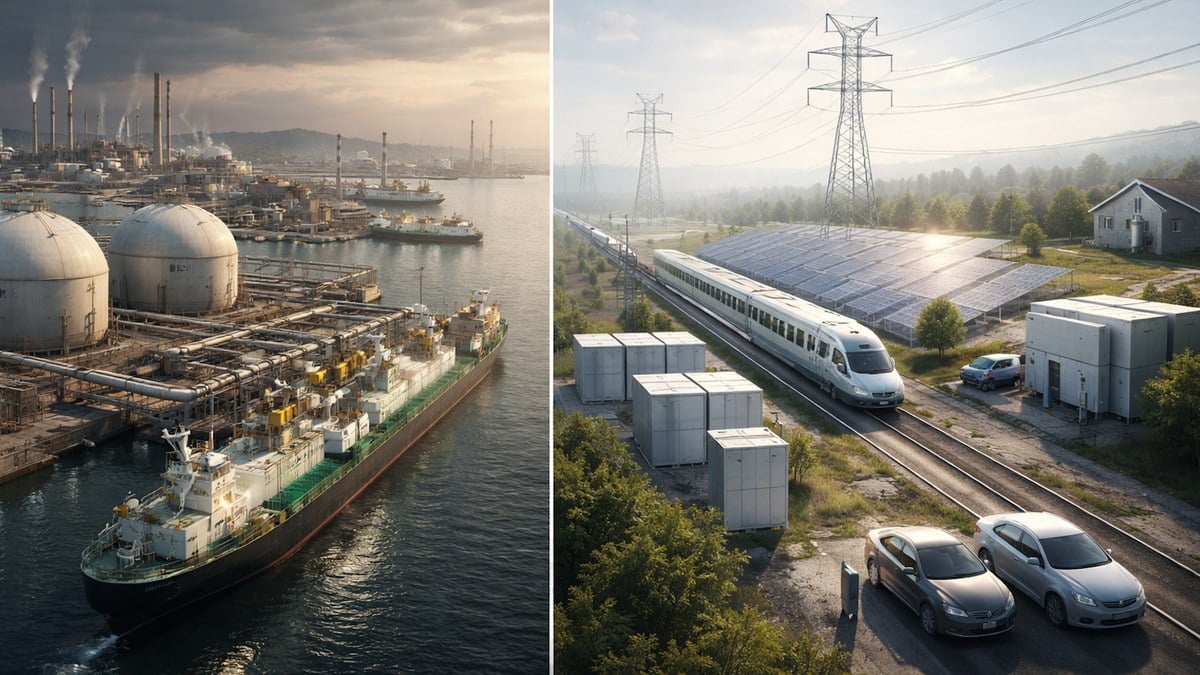
- What happens next: The buried insight: Hormuz isn't oil's problem to solve. ~70% of ammonia is fertilizer — the molecule that doesn't electrify — and Gulf states are already building green ammonia export hubs in the same exposed complexes.
- The Strait of Hormuz carried ~25% of global seaborne oil trade and over 110 bcm of LNG in 2025, remaining the primary export route for Saudi Arabia, the UAE, Kuwait, Qatar, Iraq, Bahrain, and Iran, per the IEA's current assessment.
- IRENA's 1.5°C scenario projects ~25% of global hydrogen demand internationally traded by 2050 (vs. ~74% for oil today), with ~45% moving by ship as ammonia and global ammonia demand rising to ~690 million tons per year, of which ~80% feeds chemicals, shipping, and power.
- Bypass capacity around the Strait is limited: the IEA says only Saudi Arabia and the UAE have crude pipelines with 3.5–5.5 mb/d of rerouting capacity, while no alternative route exists for Qatar's and the UAE's LNG exports at current scale.
- Hormuz-linked fertilizer flows exceed 30% of global urea trade, ~20% of ammonia and phosphate, and ~50% of seaborne sulphur, and Reuters reported the current war has shut fertilizer plants, driven up urea prices, and strained farmers from Ontario to Kashmir before planting.
Why It Matters
Gulf states are positioning to be the exporters of green ammonia, hydrogen derivatives, and synthetic fuels, meaning the Hormuz geometry persists even after oil demand falls — and the IEA finds no LNG-scale bypass for Qatar or the UAE. Countries that electrify deeply but underinvest in grid equipment may simply swap fuel-flow fragility for transformer-and-cable bottlenecks, with lead times now stretching to four years.
Sources Cited
- CleanTechnica — Two Options for the Strait of Hormuz in a Decarbonized World
Related Coverage
- Oil Shock Accelerates Global Shift to EVs and Solar PowerElectrek
- Oil exports through the Strait of Hormuz might not return to levels seen before the Iran warCNBC
- Ships passing through Hormuz hover in single digits, data showsGoogle News World
- Hormuz Blockade Supercharges China's Clean Energy ExportsOilPrice.com
Ask SkimNews