Urgent climate finance pleas at COP31 face a non-urgent response
The 30-Second Skim7 points
- What happenedPoor and vulnerable nations at COP31 urgently demand climate financing to recover from disasters, but Western governments are deprioritizing climate aid amid security spending and cost-of-living pressures, risking a gap of $840 billion from the $1.3 trillion annual target.
- Key facts & numbersRich countries committed in 2024 to triple climate finance to $300 billion annually by 2035 and mobilize $1.3 trillion from all sources, but are falling short as geopolitical and domestic pressures divert funds. Solomon Islands Prime Minister Matthew Wale stated his nation remains in 'perpetual climate disaster recovery mode' and pledged $400,000 domestically to urge richer nations to follow with matching contributions. Marshall Islands President Hilda Heine challenged global priorities at COP31, arguing that military spending—$2.89 trillion globally in 2025—undermines funding for the 'greatest security threat': climate change.
- What happens nextRich nations preach climate action but fund war instead—Heine’s 'money for life, not death' plea cuts through the hypocrisy at COP31.
- Rich countries committed in 2024 to triple climate finance to $300 billion annually by 2035 and mobilize $1.3 trillion from all sources, but are falling short as geopolitical and domestic pressures divert funds.
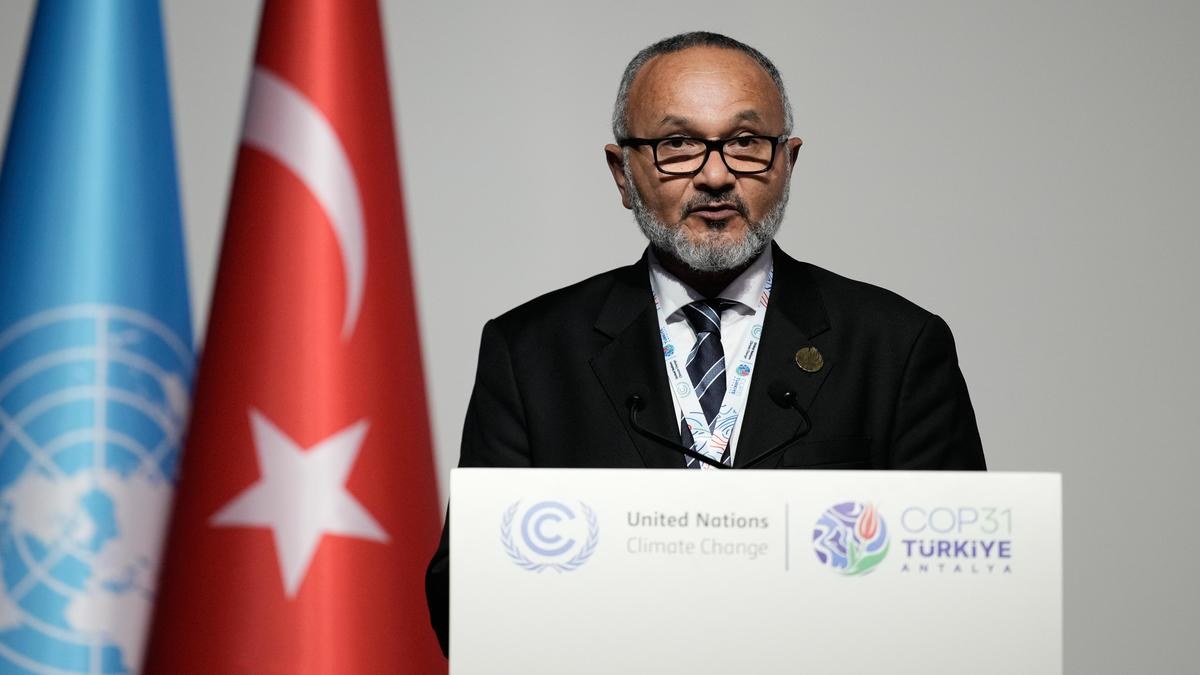
- Solomon Islands Prime Minister Matthew Wale stated his nation remains in 'perpetual climate disaster recovery mode' and pledged $400,000 domestically to urge richer nations to follow with matching contributions.
- Marshall Islands President Hilda Heine challenged global priorities at COP31, arguing that military spending—$2.89 trillion globally in 2025—undermines funding for the 'greatest security threat': climate change.
- Multilateral development banks reached record climate lending in 2025, but recipients and the Center for Global Development say access remains too complex and slow for vulnerable nations.
Why It Matters
Developing nations face shrinking fiscal space while climate disasters escalate, and the $840 billion shortfall from the $1.3 trillion goal means adaptation and resilience projects will stall—undermining global climate stability even as military budgets grow and private investors await clearer signals.
Sources Cited
Related Coverage
Ask SkimNews
The day’s news in one short email, every morning.
Free. One email a day. Unsubscribe in one click.