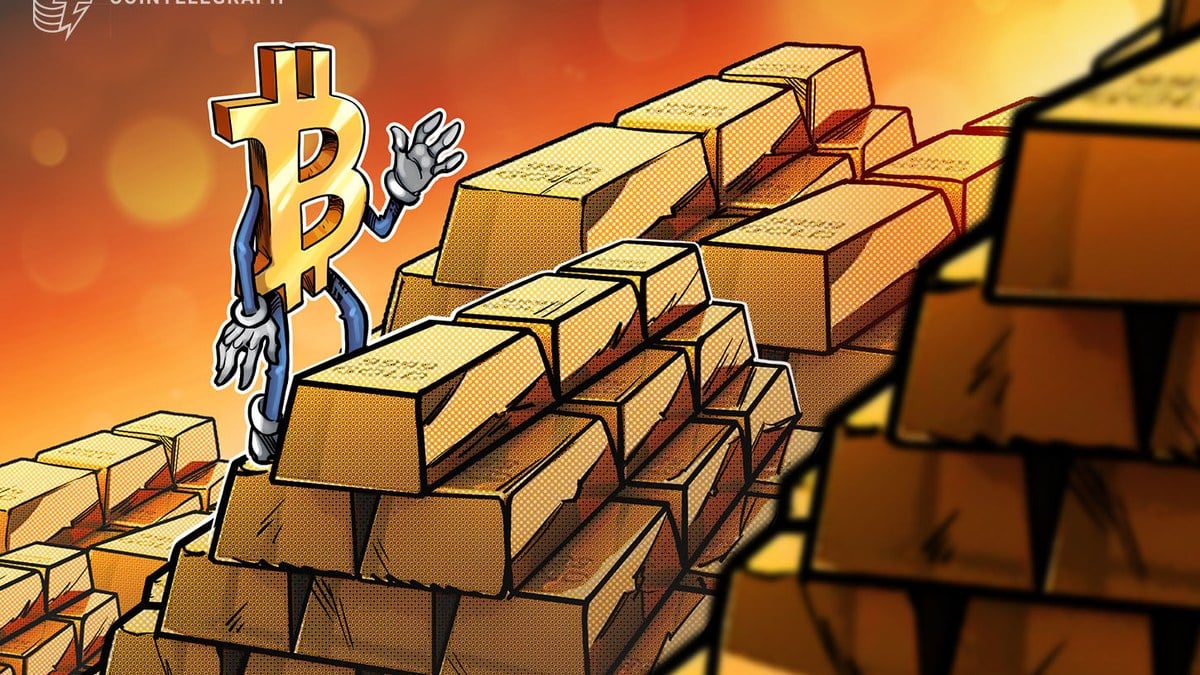
Bitcoin drops to one-week low as gold hits nine-week highs
The 30-Second Skim7 points
- What happenedBitcoin sank to one-week lows below $64,000 on Tuesday as investors rotated into gold, which climbed to nine-week highs of $4,435 per ounce amid escalating US-Iran tensions and a fresh 5% surge in oil prices.
- Key facts & numbersBitcoin fell back below $64,000 on Tuesday, hitting one-week lows and finishing Monday down 1.5% as US-Iran tensions and a 5% surge in oil prices weighed on risk appetite. Gold prices climbed to $4,435 per ounce, their highest level since June 5, as safe-haven demand accelerated and Chinese appetite for the metal was already on the radar in August. SPDR Gold Shares (GLD) attracted $50 million in retail inflows on Aug. 5 — the largest single-day retail haul since mid-March — while total inflows that day reached $637 million versus $244.4 million into US spot Bitcoin ETFs.
- What happens nextThe 'Bitcoin loses to gold' framing misses it: BTC-gold correlation just hit digital-gold-era highs — they're moving together, not against each other.
- Bitcoin fell back below $64,000 on Tuesday, hitting one-week lows and finishing Monday down 1.5% as US-Iran tensions and a 5% surge in oil prices weighed on risk appetite.
- Gold prices climbed to $4,435 per ounce, their highest level since June 5, as safe-haven demand accelerated and Chinese appetite for the metal was already on the radar in August.
- SPDR Gold Shares (GLD) attracted $50 million in retail inflows on Aug. 5 — the largest single-day retail haul since mid-March — while total inflows that day reached $637 million versus $244.4 million into US spot Bitcoin ETFs.
- The Kobeissi Letter noted GLD is on track for its first monthly inflow since February, with investors adding over $1.4 billion to the ETF so far in August.
Why It Matters
The Aug. 5 flow split — $637 million into GLD versus $244.4 million into spot Bitcoin ETFs — quantifies how retail is favoring traditional safe havens over crypto during the US-Iran flare-up, even though Bitcoin-gold correlation has snapped back to digital-gold-era levels, suggesting both are now hedging in tandem rather than competing.
Sources Cited
Related Coverage
Ask SkimNews