Dow Soars 1,330 Points on Iran Ceasefire Hopes
The 30-Second Skim7 points
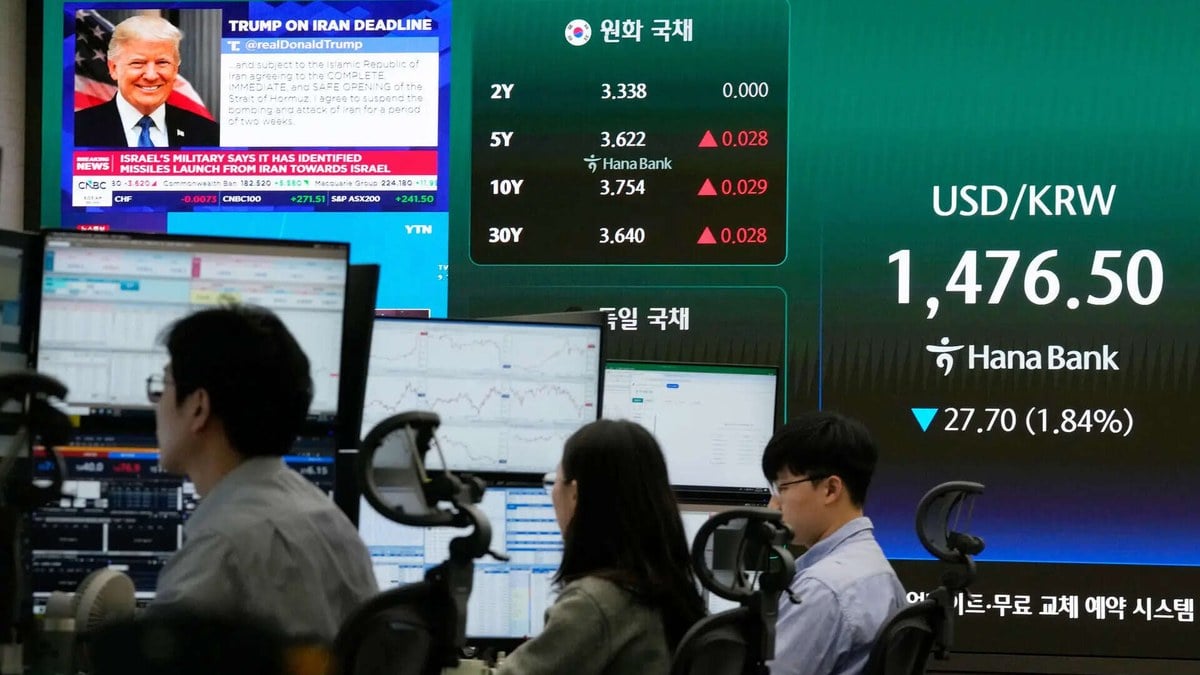
- What happenedU.S. stocks surged Wednesday with the Dow jumping nearly 1,330 points after a senior Iranian official signaled the Strait of Hormuz could reopen this week, triggering a relief rally that pulled crude below $100, sent European shares to their biggest one-day gain in a year, and bounced war-battered sectors like airlines and cruise operators.
- Key facts & numbersThe Dow Jones Industrial Average rose 1,329.56 points (2.85%) to 47,914.02, with the S&P 500 gaining 2.52% to 6,783.48 and the Nasdaq Composite climbing 2.82% to 22,637.90. Crude oil futures collapsed as a senior Iranian official told Reuters the Strait of Hormuz — through which one-fifth of the world's oil flows — could reopen Thursday or Friday if countries agreed on a ceasefire framework; front-month WTI fell 16.4% and Brent 13.3%, both settling below $100 per barrel. International equities outperformed the U.S., with European shares up 3.9% and the MSCI World index gaining over 3% — both logging their biggest one-day percentage gains in a year, since other economies were more exposed to the energy and food shocks.
- What happens nextCheck the fine print: the Fed just signaled MORE openness to rate hikes, not less, blaming inflation from the very war that's now de-escalating. Relief rally today, headache tomorrow.
- The Dow Jones Industrial Average rose 1,329.56 points (2.85%) to 47,914.02, with the S&P 500 gaining 2.52% to 6,783.48 and the Nasdaq Composite climbing 2.82% to 22,637.90.
- Crude oil futures collapsed as a senior Iranian official told Reuters the Strait of Hormuz — through which one-fifth of the world's oil flows — could reopen Thursday or Friday if countries agreed on a ceasefire framework; front-month WTI fell 16.4% and Brent 13.3%, both settling below $100 per barrel.
- International equities outperformed the U.S., with European shares up 3.9% and the MSCI World index gaining over 3% — both logging their biggest one-day percentage gains in a year, since other economies were more exposed to the energy and food shocks.
- War-battered sectors including commercial airlines, travel and leisure, and homebuilders posted robust bouncebacks; the CBOE Market Volatility index dropped to its lowest level since the war began, and the Dow Transports touched an all-time high.
Why It Matters
The 16%+ oil price collapse directly eases cost pressures on airlines, cruise lines, and consumers — the sectors hardest hit since the war began also bounced hardest. But the Fed's same-day minutes reveal policymakers now lean more toward rate hikes because of the oil shock, meaning the rate path depends on whether this de-escalation actually holds through the Thursday-Friday Hormuz reopening window.
Background & Timeline
- Editor contextThe speed and magnitude of this rally on a single official's statement reveals how asymmetrically positioned markets had become toward escalation, making even tentative de-escalation headlines sufficient to trigger forced covering across oil-sensitive sectors.
Sources Cited
- Economic Times MarketsUS stocks today: Dow Jones surges 1,300 points, S&P, Nasdaq 2% on U.S.-Iran ceasefire
- MarketWatch BulletinsMarketWatch Bulletins
Related Coverage
Ask SkimNews