Nasdaq drops into correction territory — here’s what typically happens next
The 30-Second Skim
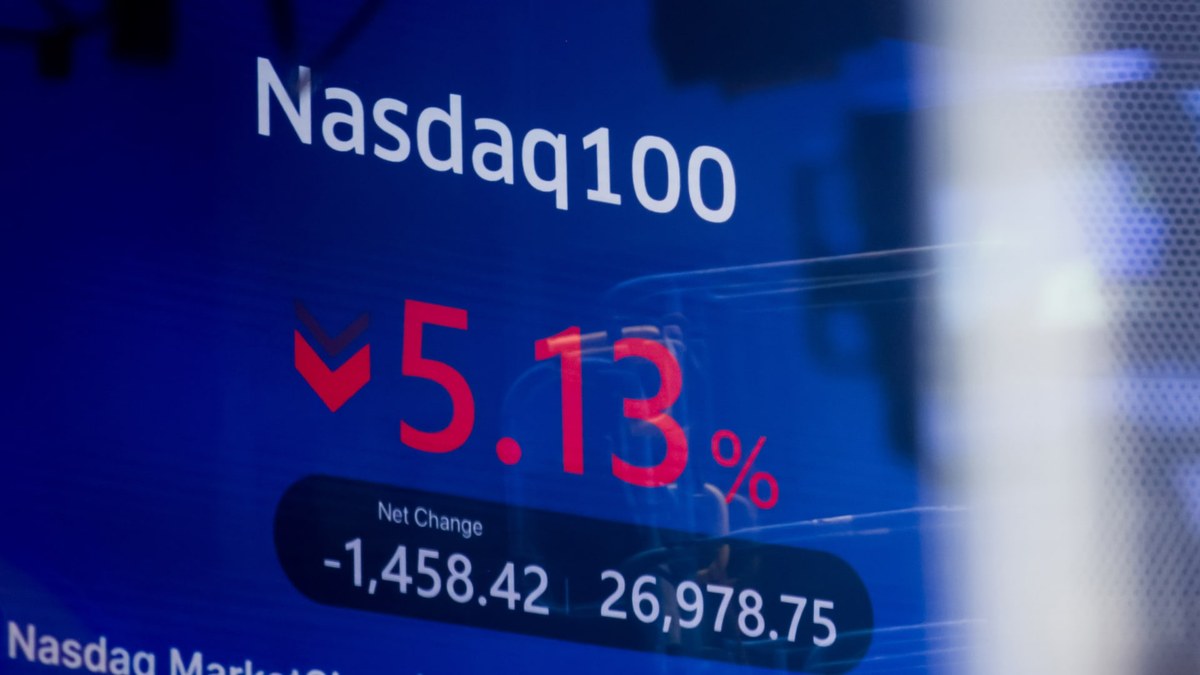
- What happened: The Nasdaq Composite plunged more than 5% into correction territory after Tuesday’s midterm results, as a 12% semiconductor ETF rout and state data-center restrictions became central to the AI trade debate.
- Key facts & numbers: Nasdaq Composite slid more than 5% Thursday and closed more than 11% below last month’s record, crossing Wall Street’s 10% correction threshold; a 20% decline would qualify as a bear market. Nasdaq Composite history across 10 corrections over the past decade shows further one-month selling in the 2025, 2022, 2020 and 2018 episodes, followed by a return to rally mode after six months in all but 2022. Nasdaq Composite gained an average of 9.41% from the correction bottom over the following three months and 17.03% over six months, while the 2022 correction brought another 18.3% six-month drop and left the index down 24.3% a year later.
- What happens next: Buried angle: a Texas governor-elect campaigned for a data-center moratorium as SOXX logged its worst day since March 2020.
- Nasdaq Composite slid more than 5% Thursday and closed more than 11% below last month’s record, crossing Wall Street’s 10% correction threshold; a 20% decline would qualify as a bear market.
- Nasdaq Composite history across 10 corrections over the past decade shows further one-month selling in the 2025, 2022, 2020 and 2018 episodes, followed by a return to rally mode after six months in all but 2022.
- Nasdaq Composite gained an average of 9.41% from the correction bottom over the following three months and 17.03% over six months, while the 2022 correction brought another 18.3% six-month drop and left the index down 24.3% a year later.
- Democrats swept the House and Senate in Tuesday’s midterms and made significant gains in Texas, where Gina Hinojosa won the governor’s race after campaigning for an immediate moratorium on data-center development.
Why It Matters
For AI-linked companies and chip investors, the immediate change is concrete: SOXX lost 12% while data-center restrictions entered the investment debate. Yet the Nasdaq’s historical record is not uniformly reassuring: its typical three-month recovery averaged 9.41%, but the 2022 episode produced another 18.3% decline over six months.
Sources Cited
Related Coverage
Ask SkimNews