Bangladesh's China Policy Survives Three Governments
The 30-Second Skim
- What happened: An analysis of joint statements from Hasina's 2024 visit, Yunus's 2025 visit, and Rahman's 2026 visit shows Bangladesh-China ties have remained remarkably consistent across three sharply different political eras, with the latest visit institutionalizing rather than reshaping the relationship.
- Key facts & numbers: Tarique Rahman made Kuala Lumpur — not Beijing or New Delhi — his first overseas stop as prime minister, focusing on labor migration and trade, before traveling to China for Summer Davos and a bilateral visit in June 2026. Sheikh Hasina's July 2024 visit elevated Bangladesh-China ties to a Comprehensive Strategic Cooperative Partnership covering Belt and Road, infrastructure, defense, and digital economy, though Dhaka reportedly sought more financial support than Beijing ultimately offered. Muhammad Yunus's March 2025 visit, conducted from an interim administration after Hasina's ouster, reaffirmed rather than redefined the partnership, keeping Belt and Road cooperation, Mongla Port, and the Teesta project on the agenda.
- What happens next: Three Dhaka governments, one Beijing playbook. Rahman skipped both capitals for KL first — that sequencing says something.
- Tarique Rahman made Kuala Lumpur — not Beijing or New Delhi — his first overseas stop as prime minister, focusing on labor migration and trade, before traveling to China for Summer Davos and a bilateral visit in June 2026.
- Sheikh Hasina's July 2024 visit elevated Bangladesh-China ties to a Comprehensive Strategic Cooperative Partnership covering Belt and Road, infrastructure, defense, and digital economy, though Dhaka reportedly sought more financial support than Beijing ultimately offered.
- Muhammad Yunus's March 2025 visit, conducted from an interim administration after Hasina's ouster, reaffirmed rather than redefined the partnership, keeping Belt and Road cooperation, Mongla Port, and the Teesta project on the agenda.
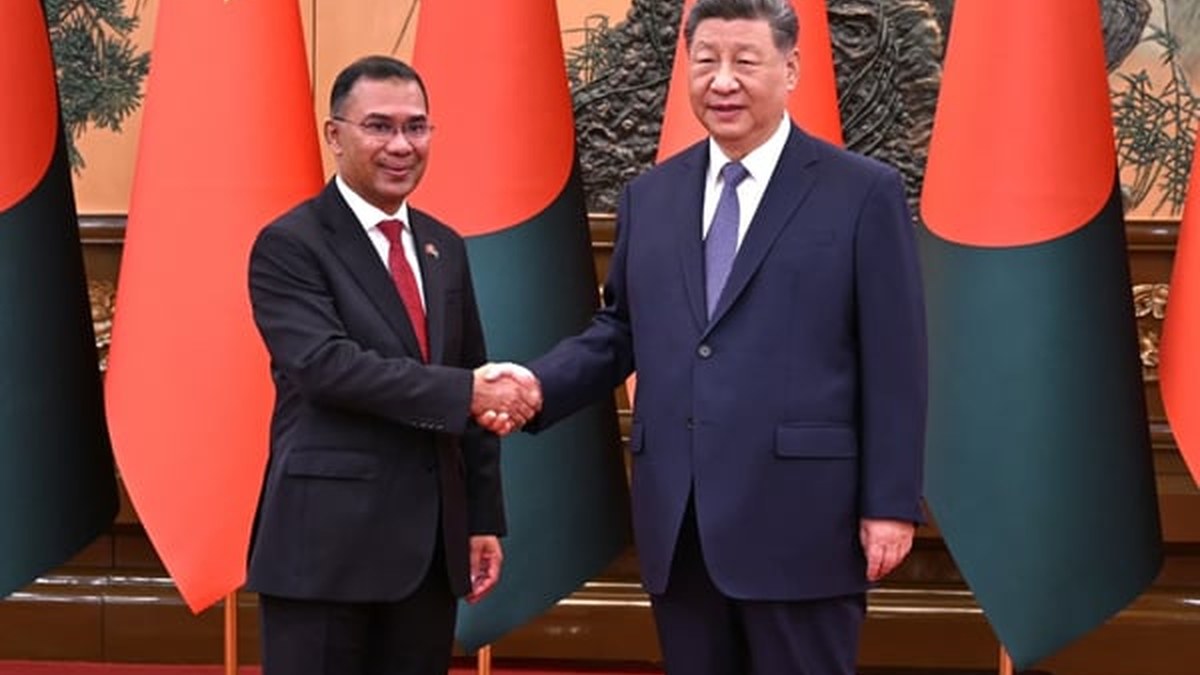
- Rahman's 2026 communiqué introduced a proposed China-Myanmar-Bangladesh Economic Corridor (notably excluding India, reviving the stalled BCIM concept in new form), a new foreign-minister strategic dialogue, a "2+2" diplomacy-defense mechanism, and the first MOU between the BNP and the Communist Party of China.
Why It Matters
Three very different Dhaka governments — Hasina's Awami League, the Yunus interim administration, and Rahman's BNP — have produced remarkably similar joint statements with Beijing, maintaining continuity on Belt and Road, Mongla Port, and the Teesta project through one of Bangladesh's most dramatic political transitions. Rahman institutionalizes that partnership through new dialogue mechanisms and party-level ties, while the economic agenda shifts toward supply chains and export upgrading ahead of Bangladesh's LDC graduation (2026, with deferral talks to 2029).
Sources Cited
- The Diplomat — 3 Governments, 1 China Policy? Dhaka’s Evolving Engagement With Beijing
- The Diplomat – Asia-Pacific — 3 Governments, 1 China Policy? Dhaka’s Evolving Engagement With Beijing
- Mercator Institute for China Studies (MERICS) — China-Bangladesh relations: A three way balance between China, India and the US
Related Coverage
Ask SkimNews