China, India-Linked Hackers Hit Pakistani Police
The 30-Second Skim
- What happened: SentinelOne researchers revealed that suspected Chinese and Indian state-aligned hackers ran simultaneous espionage campaigns against Pakistani police between February 2024 and April 2026, weaponizing citizen-facing complaint portals to deploy malware.
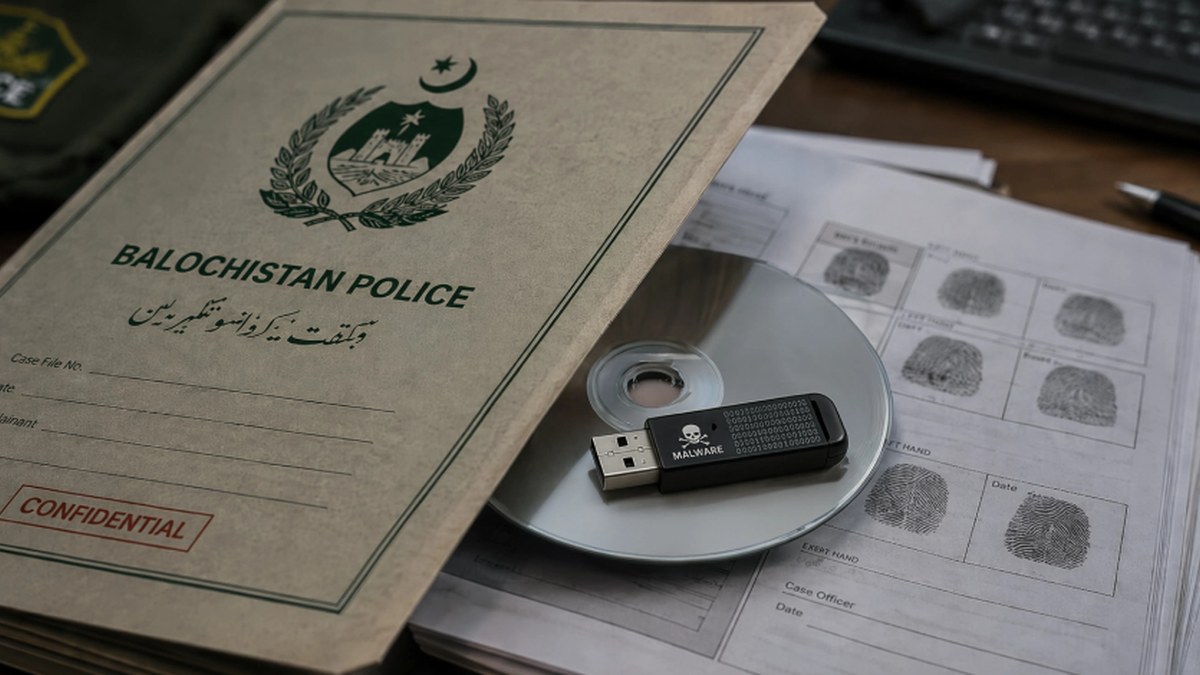
- Key facts & numbers: SentinelOne SentinelLABS disclosed that China- and India-aligned threat actors conducted sustained cyber espionage against multiple Pakistani law enforcement organizations between February 2024 and April 2026, with researcher Aleksandar Milenkoski noting the convergence signals high target value. Balochistan Police suffered the deepest compromise — two network appliances, web servers tied to the Smart Police Station initiative, and a Fortinet FortiMail email gateway were breached between June 2, 2024, and April 9, 2026. The Complaint Management System (cms.balochistanpolice.gov[.]pk) was weaponized with two implants — a Rust stager and a .NET executable disguised as "360Safe.exe" — turning a citizen-facing portal into a malware delivery mechanism for both police staff and civilians.
- What happens next: When your citizen complaint portal becomes the malware delivery system — both your allies and your rivals are inside it at the same time.
- SentinelOne SentinelLABS disclosed that China- and India-aligned threat actors conducted sustained cyber espionage against multiple Pakistani law enforcement organizations between February 2024 and April 2026, with researcher Aleksandar Milenkoski noting the convergence signals high target value.
- Balochistan Police suffered the deepest compromise — two network appliances, web servers tied to the Smart Police Station initiative, and a Fortinet FortiMail email gateway were breached between June 2, 2024, and April 9, 2026.
- The Complaint Management System (cms.balochistanpolice.gov[.]pk) was weaponized with two implants — a Rust stager and a .NET executable disguised as "360Safe.exe" — turning a citizen-facing portal into a malware delivery mechanism for both police staff and civilians.
- Four malware families were deployed: PlugX and ShadowPad (linked to China-nexus groups based on victimology spanning South, Southeast, and East Asia), Cobalt Strike (China-aligned based on C2 traffic to 142.171.183[.]8), and Remcos RAT (tied to India's Mysterious Elephant group, also known as APT-C-08).
Why It Matters
Pakistan's law enforcement databases hold biometric records, criminal files, and internal security intelligence — exactly the kind of cross-border intelligence asset that draws both a partner (China) and an adversary (India) to the same target. By injecting malware into a citizen-facing complaint portal, attackers weaponized a public accountability tool to reach both police and civilians, expanding the blast radius beyond the original network compromise.
Sources Cited
Related Coverage
Ask SkimNews