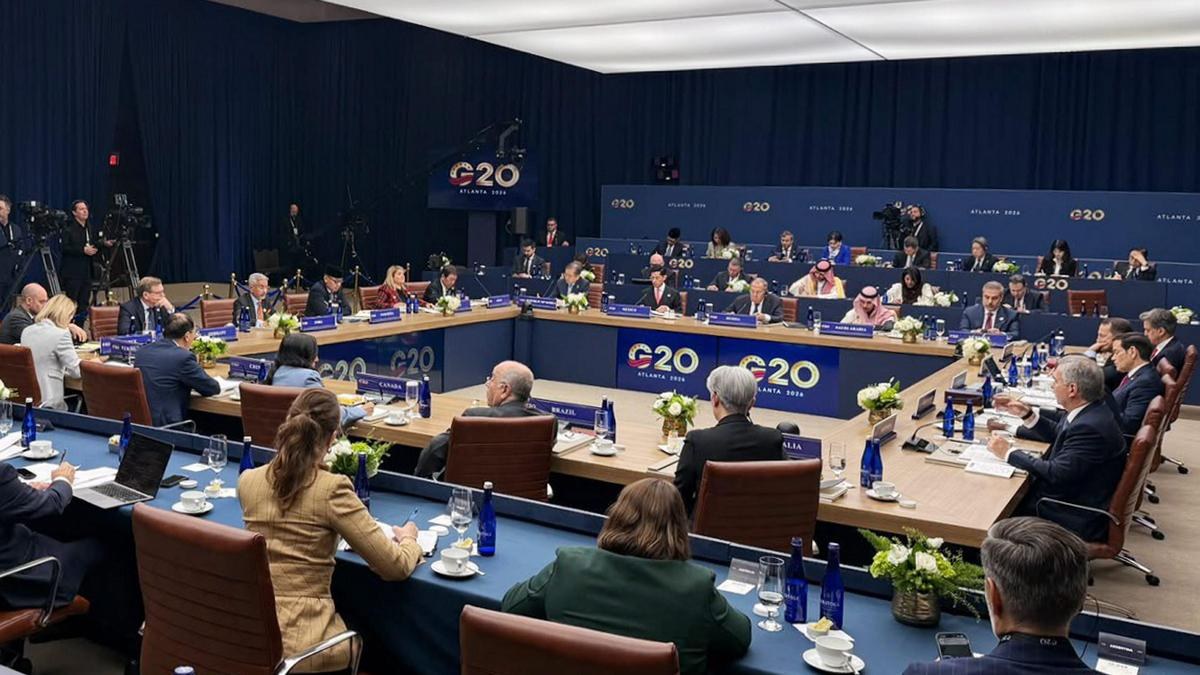
G20 foreign ministers to end Atlanta meeting without consensus on key issues
The 30-Second Skim
- What happened: G20 foreign ministers concluded talks in Atlanta without consensus, abandoning a joint communique due to deep divisions over Russia’s war in Ukraine and U.S. tensions with Iran, as diplomatic friction spilled into symbolic gestures like the canceled group photo.
- Key facts & numbers: G20 foreign ministers wrapped up talks in Atlanta on October 31, 2026 without issuing a joint communique, relying instead on a chairman’s statement due to unresolved disagreements on major global conflicts. U.S. Secretary of State Marco Rubio canceled the traditional G20 group photo after European diplomats objected to Russian Foreign Minister Sergey Lavrov’s inclusion, threatening to boycott the event. Russian Foreign Minister Sergey Lavrov maintained Moscow’s unyielding stance on Ukraine, asserting Russia would not allow Ukraine to pose a military threat to its security interests.
- What happens next: No group photo, no joint statement—just Lavrov in the room and Europe walking a diplomatic tightrope. The G20 is functionally split, and the next test is Trump’s Miami summit.
- G20 foreign ministers wrapped up talks in Atlanta on October 31, 2026 without issuing a joint communique, relying instead on a chairman’s statement due to unresolved disagreements on major global conflicts.
- U.S. Secretary of State Marco Rubio canceled the traditional G20 group photo after European diplomats objected to Russian Foreign Minister Sergey Lavrov’s inclusion, threatening to boycott the event.
- Russian Foreign Minister Sergey Lavrov maintained Moscow’s unyielding stance on Ukraine, asserting Russia would not allow Ukraine to pose a military threat to its security interests.
- Polish Foreign Minister Radoslaw Sikorski said he was not surprised by the lack of consensus, citing the presence of warring nations at the table as a fundamental obstacle to unity.
Why It Matters
The failure to issue a joint communique signals a breakdown in multilateral coordination at a time of overlapping global crises, making coordinated responses to conflicts or trade disruptions less likely. With the next summit hosted by Trump in December, the lack of consensus now raises the stakes for U.S. diplomatic leadership amid rising military and economic tensions.
Sources Cited
Related Coverage
Ask SkimNews