G7 Presses Rubio on Iran War Plans
The 30-Second Skim
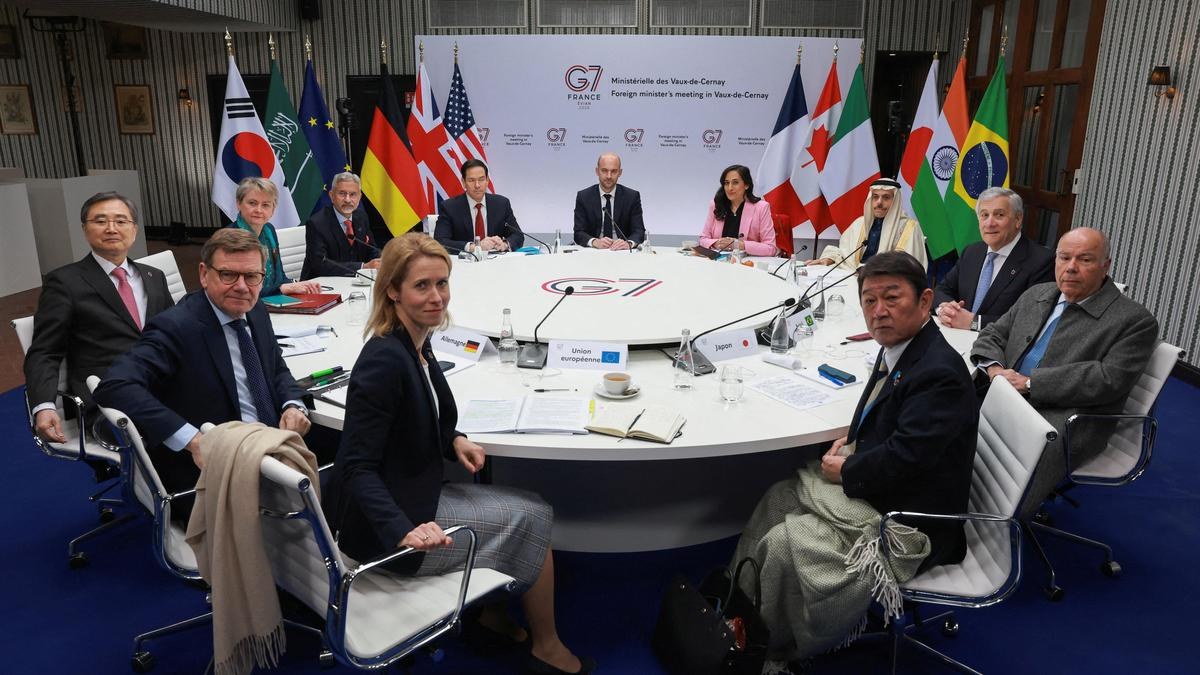
- What happened: G7 foreign ministers pressed U.S. Secretary of State Marco Rubio for clarity on Washington's Iran strategy at a Paris-area meeting on March 26, 2026, with allies raising alarm over deepening Iran-Russia cooperation and Tehran's de facto blockade of the Strait of Hormuz.
- Key facts & numbers: G7 allies pressed Secretary of State Marco Rubio for clarity on U.S. Iran plans at a meeting outside Paris, almost one month after the U.S. and Israel launched the war with Feb. 28, 2026 air strikes that killed Iranian Supreme Leader Ali Khamenei. German Foreign Minister Johann Wadephul said allies needed to know "how the U.S. will proceed" in Iran, warning that Russia and Iran are "working together in the closest way" and that G7 unity must be strengthened to counter both theaters. In a break from standard protocol, the meeting will not produce a joint communique — only a unilateral statement from the French G7 presidency — a visible signal of the widening distance between the United States and its closest allies.
- What happens next: No joint communique at a G7 foreign ministers' meeting — that almost never happens. The transatlantic crack on Iran is now structural, not just rhetoric.
- G7 allies pressed Secretary of State Marco Rubio for clarity on U.S. Iran plans at a meeting outside Paris, almost one month after the U.S. and Israel launched the war with Feb. 28, 2026 air strikes that killed Iranian Supreme Leader Ali Khamenei.
- German Foreign Minister Johann Wadephul said allies needed to know "how the U.S. will proceed" in Iran, warning that Russia and Iran are "working together in the closest way" and that G7 unity must be strengthened to counter both theaters.
- In a break from standard protocol, the meeting will not produce a joint communique — only a unilateral statement from the French G7 presidency — a visible signal of the widening distance between the United States and its closest allies.
- UK Foreign Minister Yvette Cooper warned that Iran's de facto blockade of the Strait of Hormuz has driven up global oil prices and left vessels queuing at the energy bottleneck, urging a "swift resolution" that restores regional stability.
Why It Matters
The abandonment of the standard G7 joint communique in favor of a unilateral French presidency statement signals unprecedented public distance between Washington and its allies on Iran policy. Iran's de facto Strait of Hormuz blockade is already raising global oil prices, and European ministers are simultaneously insisting that any pivot away from Ukraine must not 'play into Putin's hands.'
Sources Cited
Related Coverage
Ask SkimNews