Kim commissions Kang Kon, targets blue-water navy
The 30-Second Skim
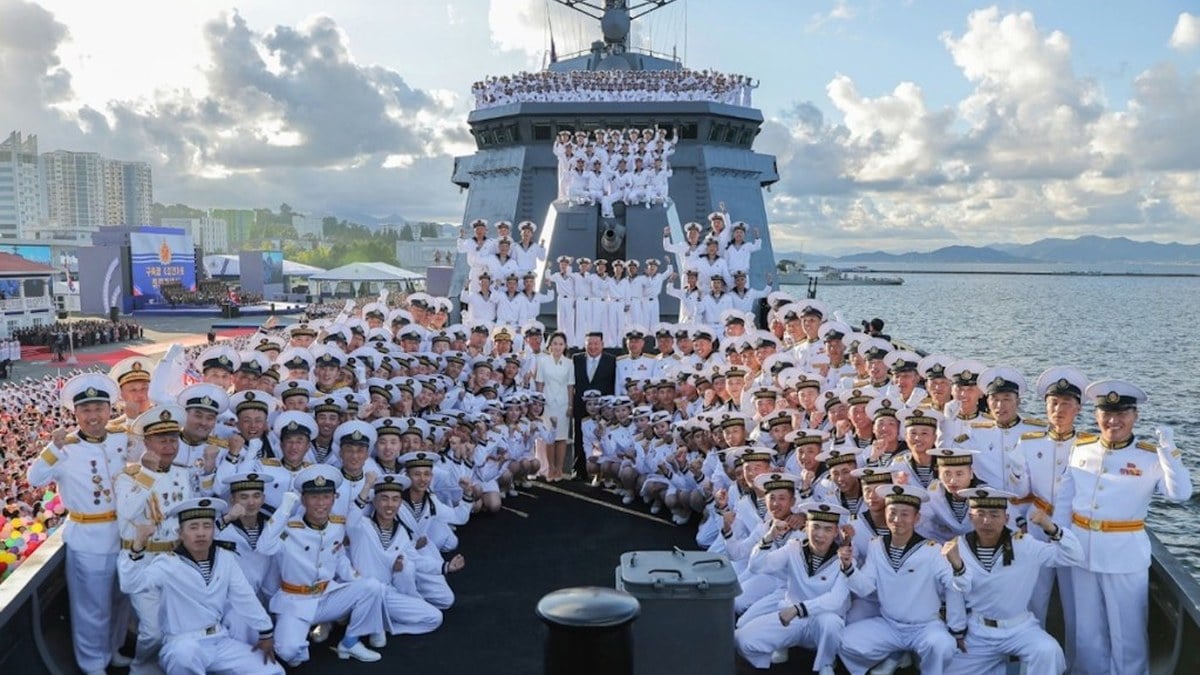
- What happened: North Korean leader Kim Jong Un commissioned the 5,000-ton Kang Kon destroyer at Wonsan on September 6, integrating it into the state nuclear response system just months after the vessel capsized during its initial May 2025 launch at Chongjin Shipyard.
- Key facts & numbers: Kim Jong Un commissioned the 5,000-ton Kang Kon at Wonsan on September 6 — North Korea's second Choe Hyon-class guided-missile destroyer — integrating it into the state nuclear response system after the vessel capsized during its May 2025 launch at Chongjin Shipyard from a sliding-mechanism failure. The 145-meter Choe Hyon-class fields up to 104 missiles across 88 VLS cells with fixed phased-array radars and Russian-design point-defense systems, but trails South Korea's Sejong the Great-class destroyers — 10,000 tons, Aegis SPY-1D radars and 128 VLS cells carrying SM-2, Hyunmoo-III and Red Shark missiles. Kim Jong Un pledged additional naval expansions within eight months — including larger cruisers and nuclear-powered submarines — positioning the Kang Kon as a stopgap sea-based nuclear delivery platform while nuclear-submarine programs grapple with propulsion and acoustic quieting challenges.
- What happens next: Ship capsized at launch in May, now integrated into the nuclear response system — the turnaround speed is the real story here.
- Kim Jong Un commissioned the 5,000-ton Kang Kon at Wonsan on September 6 — North Korea's second Choe Hyon-class guided-missile destroyer — integrating it into the state nuclear response system after the vessel capsized during its May 2025 launch at Chongjin Shipyard from a sliding-mechanism failure.
- The 145-meter Choe Hyon-class fields up to 104 missiles across 88 VLS cells with fixed phased-array radars and Russian-design point-defense systems, but trails South Korea's Sejong the Great-class destroyers — 10,000 tons, Aegis SPY-1D radars and 128 VLS cells carrying SM-2, Hyunmoo-III and Red Shark missiles.
- Kim Jong Un pledged additional naval expansions within eight months — including larger cruisers and nuclear-powered submarines — positioning the Kang Kon as a stopgap sea-based nuclear delivery platform while nuclear-submarine programs grapple with propulsion and acoustic quieting challenges.
- Deployment to the East Sea Fleet may operationalize North Korea's "hostile two-state doctrine," declared in December 2023, which abandoned unification as the organizing principle and reframed inter-Korean relations as belligerent ties between separate states.
Why It Matters
The Kang Kon gives North Korea a credible interim sea-based nuclear platform — outclassed by South Korea's 10,000-ton Sejong the Great-class destroyers but operationally sufficient to complicate US-South Korea-Japan naval planning and enable future participation in Chinese-Russian Sea of Japan drills, adding a third axis to existing bilateral exercises.
Sources Cited
Related Coverage
- North Korea commissions second destroyer as Kim calls for stronger deterrentIndia Today World
- Kim: New Destroyer Joins Nuclear Response SystemStraits Times Asia
- Kim commissions Kang Kon into nuclear strike forceAl Jazeera
- North Korea's Kim observed naval destroyer cruise missile launch, weapons tests, state media saysStraits Times Asia
Ask SkimNews