Lavrov backs Tehran, but does Russia also gain from the US-Iran crisis?
The 30-Second Skim
- What happened: Lavrov’s Tehran visit exposed a contradiction in Moscow’s Iran policy: diplomatic support for Tehran coexists with an oil windfall and US sanctions relief for Russian energy exports generated by the war.
- Key facts & numbers: Sergey Lavrov met Abbas Araghchi and President Masoud Pezeshkian in Tehran on Monday and pledged Moscow’s support; Araghchi wrote that Iran and Russia had never worked as closely as they do now. Comprehensive Strategic Partnership Treaty entered into force in October after Putin and Pezeshkian signed the 20-year pact in Moscow in January 2025, but, unlike Russia’s pact with North Korea, it contains no mutual-defense clause. Russian Foreign Ministry condemned the US-Israeli attack as “unlawful aggression,” but Moscow did not intervene militarily; US media citing intelligence reports said Russia and China supplied satellite imagery and weapons components, which Trump dismissed.
- What happens next: Both probe diplomacy; Moscow backs Iran without open military intervention, while Trump dismisses reported imagery and weapons components.
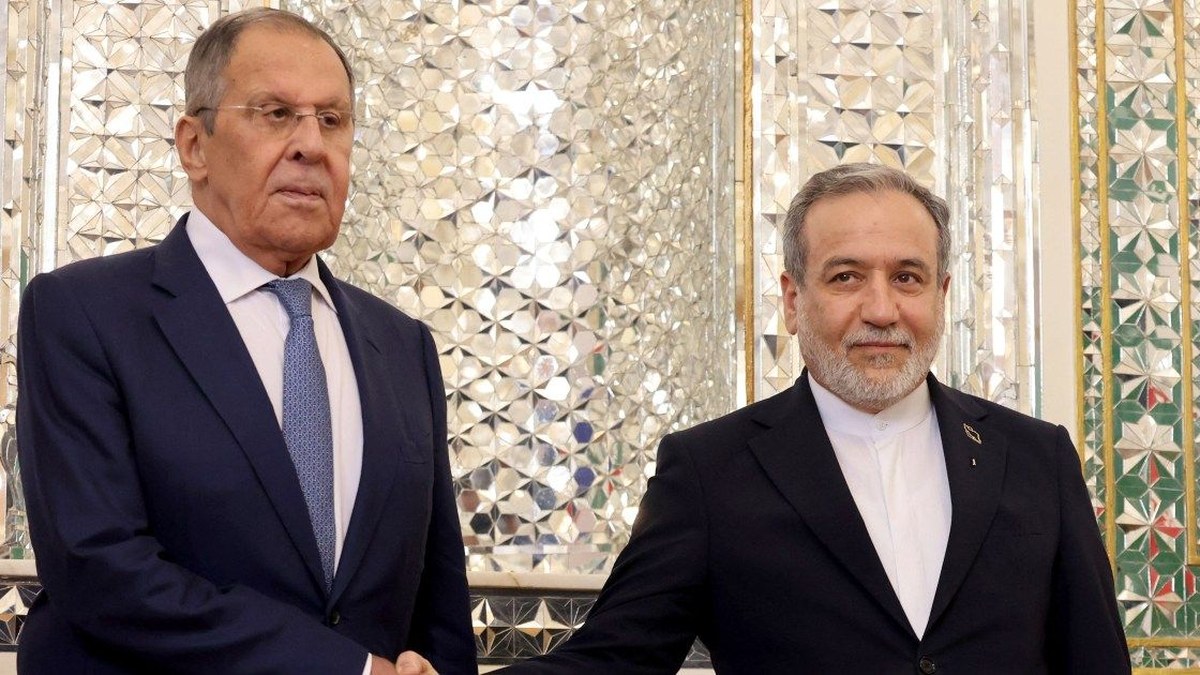
- Sergey Lavrov met Abbas Araghchi and President Masoud Pezeshkian in Tehran on Monday and pledged Moscow’s support; Araghchi wrote that Iran and Russia had never worked as closely as they do now.
- Comprehensive Strategic Partnership Treaty entered into force in October after Putin and Pezeshkian signed the 20-year pact in Moscow in January 2025, but, unlike Russia’s pact with North Korea, it contains no mutual-defense clause.
- Russian Foreign Ministry condemned the US-Israeli attack as “unlawful aggression,” but Moscow did not intervene militarily; US media citing intelligence reports said Russia and China supplied satellite imagery and weapons components, which Trump dismissed.
- Strait of Hormuz, through which one-fifth of global oil and natural-gas supplies ship in peacetime, was effectively closed after the war began; Brent rose from about $72 a barrel to as high as $120 in March and April and traded above $109 Tuesday.
Why It Matters
For Iran, Moscow’s backing stops short of a military alliance: the 20-year Putin-Pezeshkian treaty has no mutual-defense clause and Russia has not intervened openly. Russia, by contrast, generated about $9 billion in revenue from its largest oil tax by April as Brent exceeded $100, reinforcing its interest in prolonged disruption while one analyst cautioned against escalation.
Sources Cited
Related Coverage
Ask SkimNews