North Korea Building Second Yongbyon Enrichment Facility
The 30-Second Skim
- What happened: Open-source analysis and the IAEA's August 2026 board report show North Korea's nuclear program expanding on multiple fronts — uranium enrichment, plutonium production, and light-water reactor operations — without inspectors on the ground since 2009.
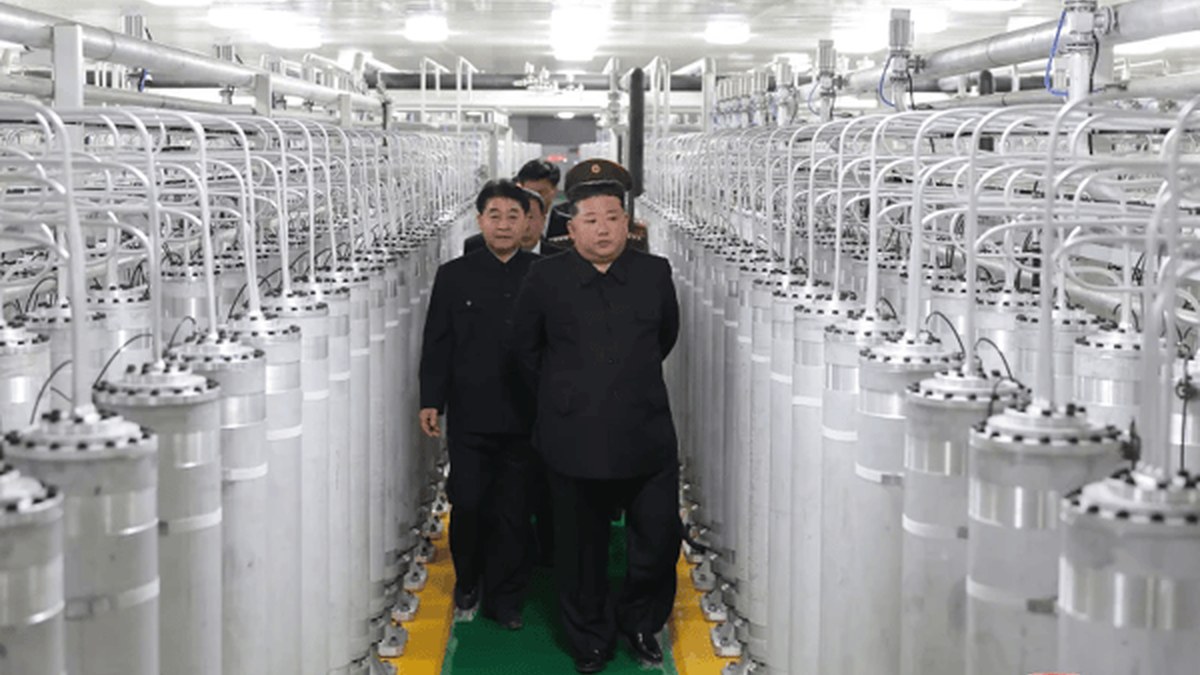
- Key facts & numbers: The IAEA documented in an August 28 report to its Board of Governors the construction of a second uranium enrichment facility at North Korea's Yongbyon complex, which could house up to 28 centrifuge cascades alongside an already-operational expanded annex at Kangson IAEA Director General Rafael Grossi told the Board that continued operation of Kangson and Yongbyon and reported expansion of weapons-grade material production was "a cause for serious concern," noting the agency has had no inspectors in North Korea since 2009 Yongbyon's 5 MWe reactor has shown near-continuous water discharge consistent with what analysts tracking the site believe is its seventh irradiation cycle since October 2024, anchoring North Korea's plutonium supply chain alongside periodic steam activity at the Radiochemical Laboratory
- What happens next: The Taechon zombie reactor could theoretically crank out 25-40 warheads a year. It's been sitting untouched since the Clinton era. Kim isn't ignoring it — he's judged it obsolete.
- The IAEA documented in an August 28 report to its Board of Governors the construction of a second uranium enrichment facility at North Korea's Yongbyon complex, which could house up to 28 centrifuge cascades alongside an already-operational expanded annex at Kangson
- IAEA Director General Rafael Grossi told the Board that continued operation of Kangson and Yongbyon and reported expansion of weapons-grade material production was "a cause for serious concern," noting the agency has had no inspectors in North Korea since 2009
- Yongbyon's 5 MWe reactor has shown near-continuous water discharge consistent with what analysts tracking the site believe is its seventh irradiation cycle since October 2024, anchoring North Korea's plutonium supply chain alongside periodic steam activity at the Radiochemical Laboratory
- The Experimental Light Water Reactor (ELWR) at Yongbyon began sustained operation in late 2023, was "likely shut down" in early August 2025 per Grossi, and is believed to have restarted again in 2026; analysts assess full-power operation would add a supplementary plutonium stream on top of the 5 MWe output
Why It Matters
North Korea has visibly doubled its Yongbyon enrichment footprint, kept the 5 MWe reactor on a steady plutonium cycle, and restarted the ELWR — all without ever touching the latent Taechon shell, signaling that Pyongyang considers building new centrifuge and light-water capacity more efficient than reviving 1994-era graphite-gas designs.
Sources Cited
- The Diplomat — Where Does North Korea’s Nuclear Program Stand in 2026?
Related Coverage
Ask SkimNews