Pakistan Builds Rocket Force Below Nuclear Threshold
The 30-Second Skim
- What happened: Pakistan is building a dedicated conventional rocket force to target Indian military assets without triggering nuclear alarm, a shift crystallized during the May 2025 crisis when it withheld Babur cruise missiles to avoid escalation signals.
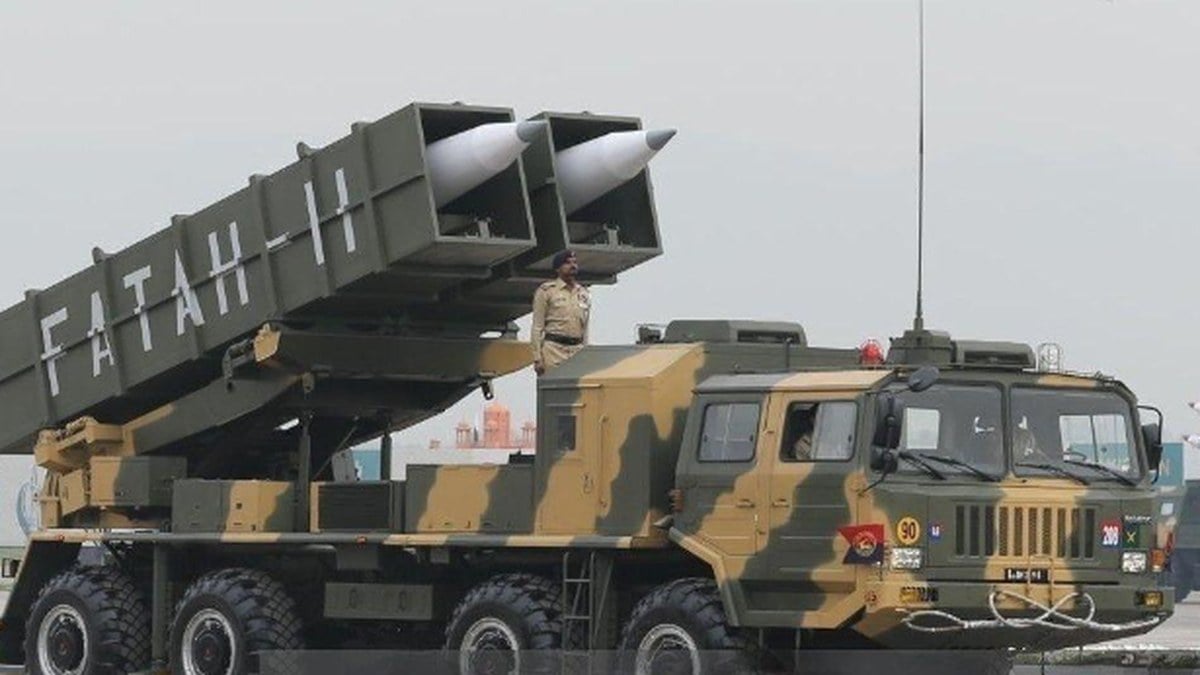
- Key facts & numbers: Pakistan withheld its Babur cruise missiles during the May 2025 India-Pakistan crisis because all Baburs sit with the Strategic Plans Division, the nuclear custodian, and readying them would have signaled imminent nuclear use to New Delhi, Washington, and other regional capitals During Operation SINDOOR (launched May 7, 2025), India struck Pakistani air bases with BrahMos supersonic missiles targeting runways, parked aircraft, and refueler tankers; Pakistan responded with drones and missiles against Indian air defense infrastructure but held back the Babur Pakistan has established the Army Rocket Force Command under General Headquarters, structurally separate from nuclear command channels, and inducted Fatah-II rockets and Fatah-IV subsonic cruise missiles with a range of up to 700 kilometers to hold Indian military targets at risk without crossing the nuclear threshold
- What happens next: The headline is about one missile, but the real story is the command structure Pakistan built to keep it sheathed. Iran war bonus lesson: multi-domain escalation spreads fast.
- Pakistan withheld its Babur cruise missiles during the May 2025 India-Pakistan crisis because all Baburs sit with the Strategic Plans Division, the nuclear custodian, and readying them would have signaled imminent nuclear use to New Delhi, Washington, and other regional capitals
- During Operation SINDOOR (launched May 7, 2025), India struck Pakistani air bases with BrahMos supersonic missiles targeting runways, parked aircraft, and refueler tankers; Pakistan responded with drones and missiles against Indian air defense infrastructure but held back the Babur
- Pakistan has established the Army Rocket Force Command under General Headquarters, structurally separate from nuclear command channels, and inducted Fatah-II rockets and Fatah-IV subsonic cruise missiles with a range of up to 700 kilometers to hold Indian military targets at risk without crossing the nuclear threshold
- The 2026 Iran war demonstrated that states can impose costs on adversaries through cross-domain integration, including ballistic missiles, one-way attack drones, and proxy networks, without crossing nuclear thresholds, though such conflicts can expand horizontally through maritime disruption and regional spillover
Why It Matters
Pakistan's conventional-nuclear entanglement has historically forced it to either escalate to the nuclear level or absorb punishment. The new Army Rocket Force Command, backed by Fatah-series rockets and 700-km cruise missiles, gives Islamabad a usable conventional option to deter India without triggering nuclear alarm, a structural shift the source says makes limited war more operationally viable but also more tempting.
Sources Cited
- War on the Rocks — Pakistan’s New Logic of Limited War May Not Keep War Limited
Related Coverage
Ask SkimNews