SCO Bishkek Summit Condemns US-Israel Iran Strikes
The 30-Second Skim
- What happened: The 26th Shanghai Cooperation Organisation summit in Bishkek condemned US-Israel strikes on Iran and endorsed Tehran's right to peaceful nuclear energy, with the bloc's declaration signaling coordinated pushback from Russia, China, and India against the Western-led order.
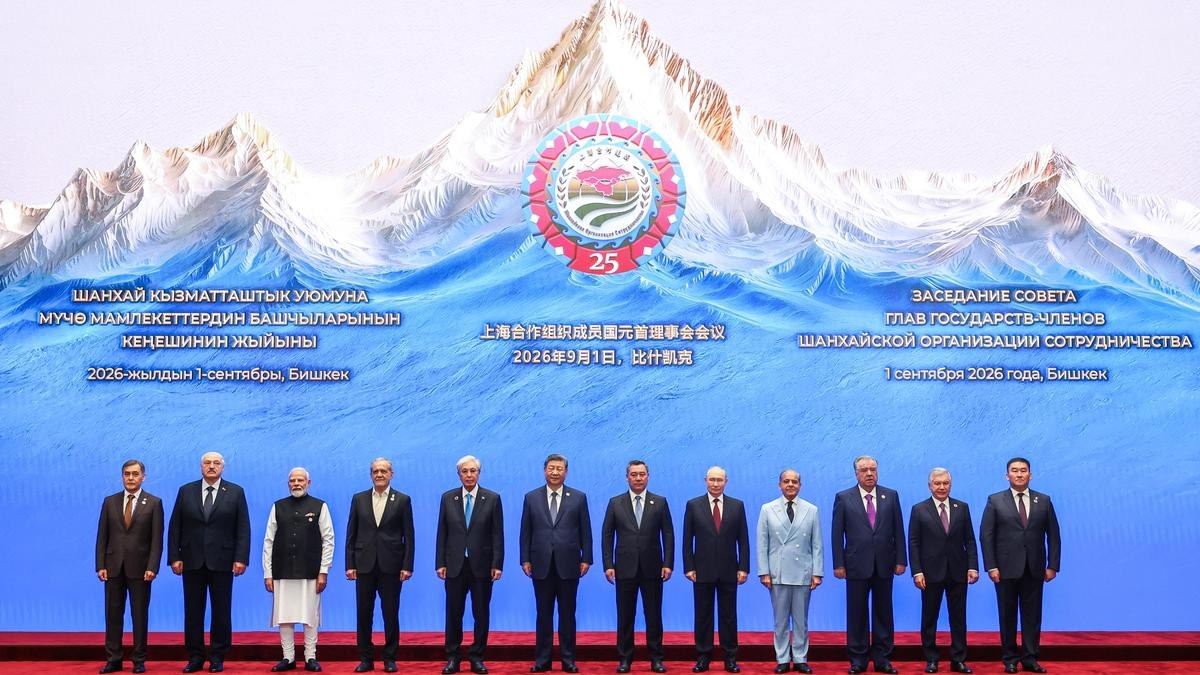
- Key facts & numbers: The Shanghai Cooperation Organisation held its 26th summit in Bishkek on August 31-September 1 — its first since the US-Israel war on Iran began on February 28, 2026 — attended by PM Modi, Putin, Xi Jinping, and Iran's President Masoud Pezeshkian. The Bishkek Declaration condemned US-Israel strikes on Iran, reaffirmed support for Iran's "sovereignty and territorial integrity," condoled the assassination of Ayatollah Ali Khamenei, and criticized violations of international law and the UN Charter. The declaration advocated members' "inalienable right" to develop "atomic energy for peaceful purposes" — an indirect backing for Iran in its nuclear negotiations with the US — and called the Palestine question the path to lasting West Asian stability.
- What happens next: The India angle is buried here: Modi used the summit to push 'no double standards' on terror, subtly jab China's CPEC, and still won't say if he'll show up in Pakistan next year.
- The Shanghai Cooperation Organisation held its 26th summit in Bishkek on August 31-September 1 — its first since the US-Israel war on Iran began on February 28, 2026 — attended by PM Modi, Putin, Xi Jinping, and Iran's President Masoud Pezeshkian.
- The Bishkek Declaration condemned US-Israel strikes on Iran, reaffirmed support for Iran's "sovereignty and territorial integrity," condoled the assassination of Ayatollah Ali Khamenei, and criticized violations of international law and the UN Charter.
- The declaration advocated members' "inalienable right" to develop "atomic energy for peaceful purposes" — an indirect backing for Iran in its nuclear negotiations with the US — and called the Palestine question the path to lasting West Asian stability.
- Prime Minister Modi demanded "no double standards" in fighting terrorism, highlighted India's relief deliveries to Taliban-controlled Afghanistan, and implicitly criticized China's CPEC by stressing that connectivity must respect "sovereignty and territorial integrity," even as India declined to endorse the BRI.
Why It Matters
The 10-nation bloc's first post-war declaration openly condemned US and Israeli military action in Iran and backed Tehran's nuclear rights — coordinated messaging signed by Russia, China, and India that pushes the SCO from a regional consultative forum toward an explicit counter-Western platform, just as Pakistan took the rotating chair and India faces a decision on whether Modi travels there next year.
Sources Cited
Related Coverage
Ask SkimNews