Ukraine Robots Capture Russian Position
The 30-Second Skim
- What happened: Ukrainian ground robots captured a Russian position for the first time in the war, but military analysts warn the milestone shouldn't be over-interpreted given the technology's serious limitations in direct infantry combat roles.
- Key facts & numbers: Zelensky announced that Ukrainian ground robots captured a Russian position, marking the first time in the war that an enemy position was taken exclusively by unmanned ground vehicles Ground robots face two major obstacles in infantry roles: terrain limitations (most rely on wheels or tracks) and the electromagnetic environment — their radio control links can be jammed, while fiber-optic cables limit range and can be severed by blasts or shrapnel Autonomous capabilities in these robots remain confined to narrow tasks like identifying enemy positions, because full autonomous navigation across complex 3D battlefields requires processing power that either adds cost and complexity onboard or reintroduces control-link vulnerabilities remotely
- What happens next: The headline is the trench, but the real story is the boring stuff: these robots are already doing medevac, resupply, and mine clearance while we've been staring at drone footage.
- Zelensky announced that Ukrainian ground robots captured a Russian position, marking the first time in the war that an enemy position was taken exclusively by unmanned ground vehicles
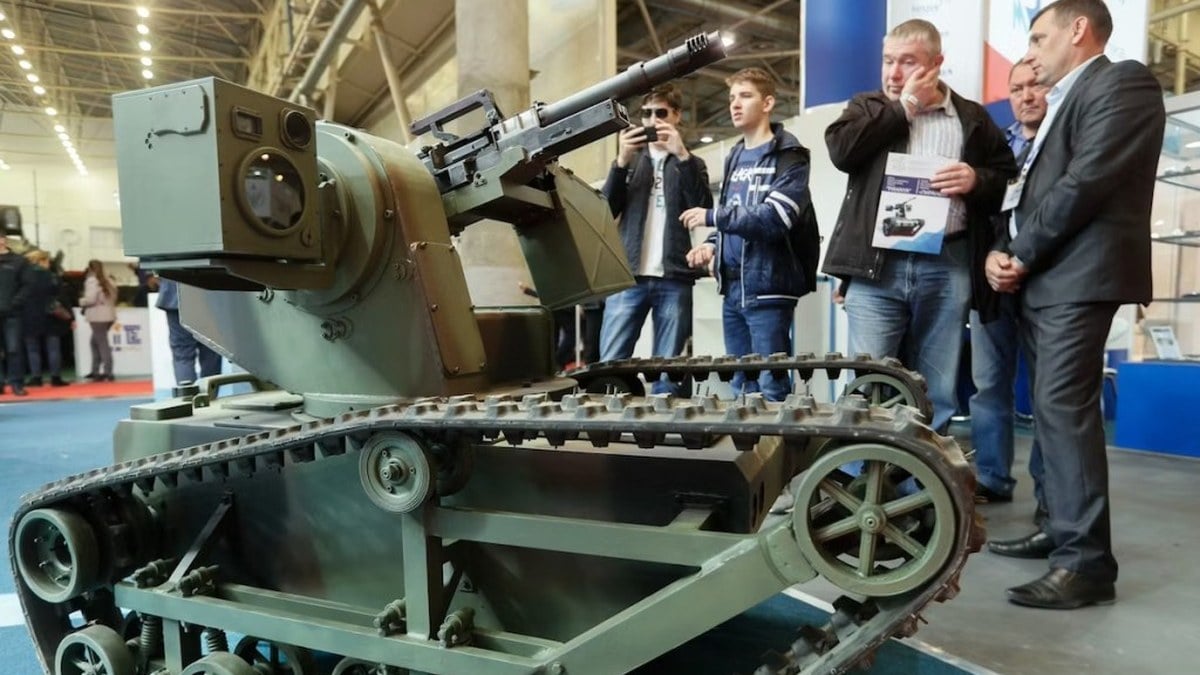
- Ground robots face two major obstacles in infantry roles: terrain limitations (most rely on wheels or tracks) and the electromagnetic environment — their radio control links can be jammed, while fiber-optic cables limit range and can be severed by blasts or shrapnel
- Autonomous capabilities in these robots remain confined to narrow tasks like identifying enemy positions, because full autonomous navigation across complex 3D battlefields requires processing power that either adds cost and complexity onboard or reintroduces control-link vulnerabilities remotely
- Ukraine has already extensively deployed ground robots for support tasks — battlefield casualty evacuation, front-line resupply, combat engineering, and mine laying and clearing — where their smaller size, lower cost, and lower profile hold clear advantages over crewed vehicles
Why It Matters
Ukraine's manpower problem against a numerically larger opponent makes ground robotics a survival technology, not just a tactical novelty. The much-hyped position capture is symbolic, but the real near-term value is in the unglamorous support roles — medevac, resupply, mine clearance — where robots already preserve lives without the headline risk of replacing infantry outright.
Sources Cited
Related Coverage
Ask SkimNews