The nuclear hexagon reshaping Asian stability
The 30-Second Skim
- What happened: US nuclear strategy remains fixated on a US-Russia-China triangle, but a broader 'nuclear hexagon'—linking China, India, Pakistan, and US allies—is now driving global arms racing and strategic instability in Asia.
- Key facts & numbers: US nuclear policy remains focused on the US-Russia-China triangle, overlooking how this framework is merging with the China-India-Pakistan dynamic into a single, interconnected nuclear hexagon. China acts as the connective node in the nuclear hexagon, where its strategic moves to counter the US or Russia trigger cascading responses from India, Pakistan, and US allies in Asia. India is shifting from minimum deterrence to canisterized, ready-to-launch nuclear postures in response to perceived Chinese counterforce capabilities, compressing regional decision timelines.
- What happens next: Everyone’s focused on US-China nukes, but the real danger is how India and Pakistan are pulled into the same loop—5-minute flight times mean no room for error.
- US nuclear policy remains focused on the US-Russia-China triangle, overlooking how this framework is merging with the China-India-Pakistan dynamic into a single, interconnected nuclear hexagon.
- China acts as the connective node in the nuclear hexagon, where its strategic moves to counter the US or Russia trigger cascading responses from India, Pakistan, and US allies in Asia.
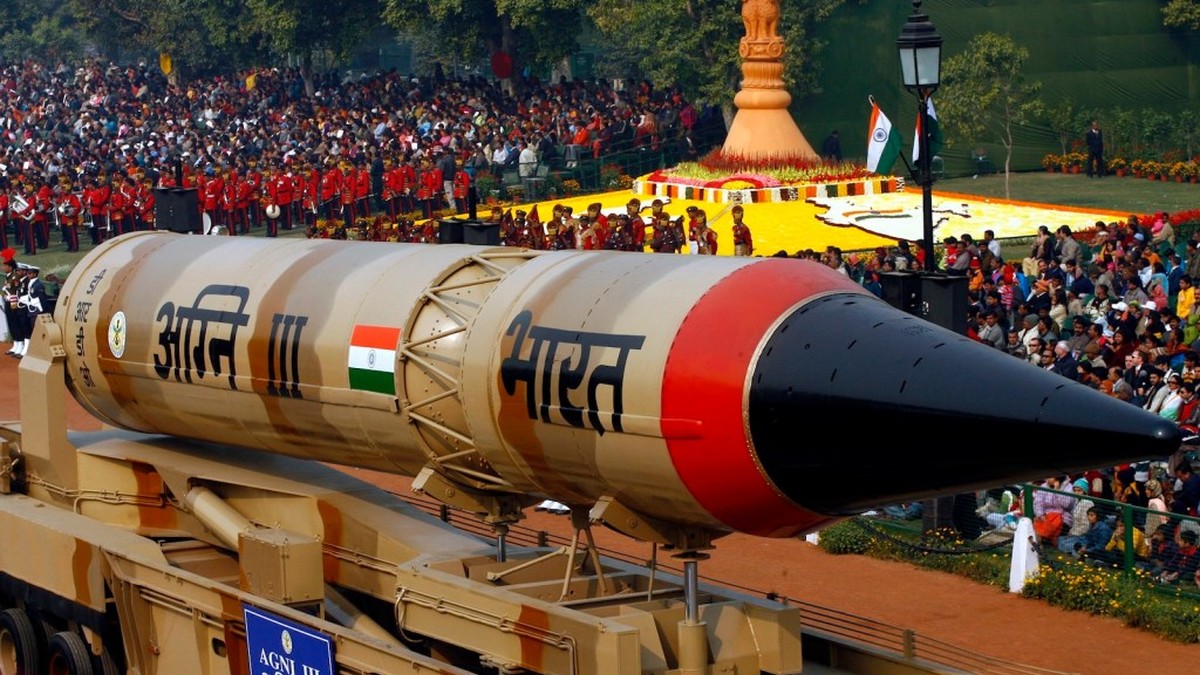
- India is shifting from minimum deterrence to canisterized, ready-to-launch nuclear postures in response to perceived Chinese counterforce capabilities, compressing regional decision timelines.
- Pakistan is expanding its nuclear arsenal and relying more on tactical weapons with lower launch thresholds, driven by its assessment of Indian and Chinese strategic postures.
Why It Matters
The US risks strategic miscalculation by treating Asia’s nuclear dynamics as separate regional issues, when in reality a single interconnected system is accelerating arms racing, compressing crisis timelines, and eroding nonproliferation norms—making accidental escalation more likely and deterrence harder to sustain.
Sources Cited
Related Coverage
Ask SkimNews