Trump and Xi Can't Fix US-China Rivalry, History Shows
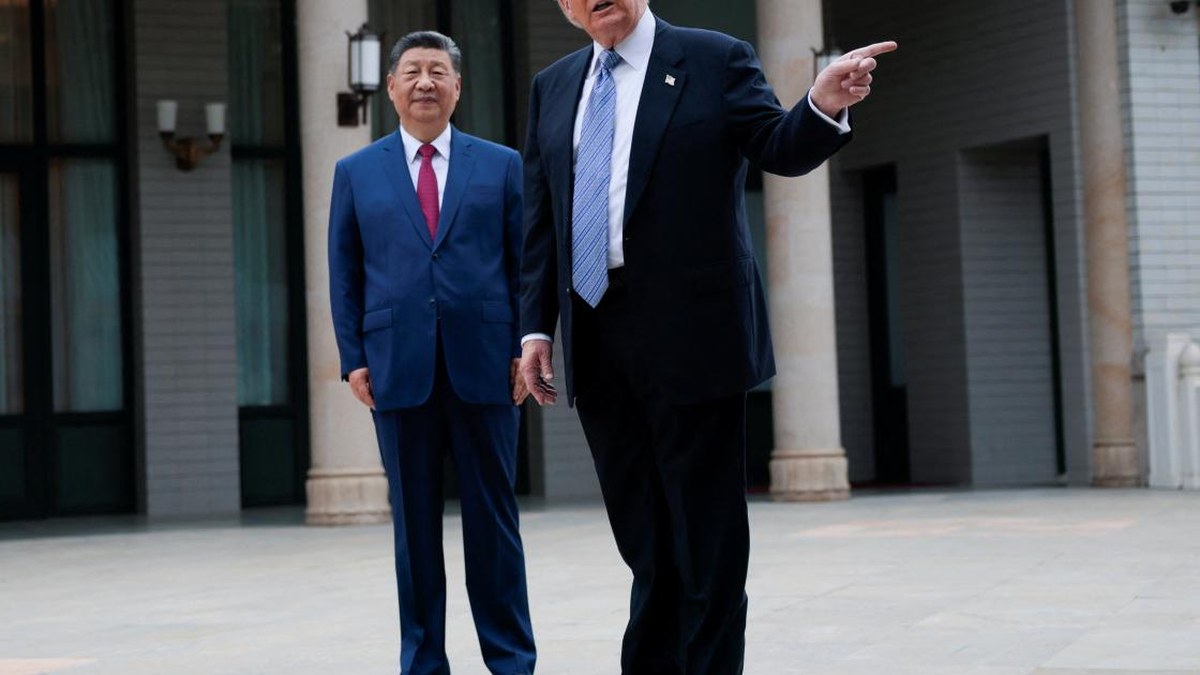
The 30-Second Skim
- What happened: An upcoming September 23 Washington summit between Trump and Xi will likely fail to resolve the structurally hostile U.S.-China relationship, as neither leader possesses the personal trust-building qualities that enabled past breakthroughs like Nixon's 1972 visit or Carter's 1979 normalization.
- Key facts & numbers: Trump-Xi summits have so far managed but not resolved the rivalry — the May Beijing summit produced only what Xi called "constructive strategic stability," while both sides continue "chokehold" diplomacy exploiting critical supply chains The September 23 Washington summit will face the same constraints that limited the May meeting, since neither leader is suited to the bargaining the rivalry demands Xi Jinping equates compromise with weakness and cannot grasp the give-a-little-to-get-a-little logic of diplomacy, while Donald Trump is "contradictory and impetuous," with his pandering side in tension with his belligerent side
- What happens next: The real story isn't the summit — it's the airport greeting. Xi sent Han Zheng, ranked 8th in the party, to meet Air Force One. That's the whole relationship in one photo op.
- Trump-Xi summits have so far managed but not resolved the rivalry — the May Beijing summit produced only what Xi called "constructive strategic stability," while both sides continue "chokehold" diplomacy exploiting critical supply chains
- The September 23 Washington summit will face the same constraints that limited the May meeting, since neither leader is suited to the bargaining the rivalry demands
- Xi Jinping equates compromise with weakness and cannot grasp the give-a-little-to-get-a-little logic of diplomacy, while Donald Trump is "contradictory and impetuous," with his pandering side in tension with his belligerent side
- Past breakthroughs depended on rare personal chemistry: Henry Kissinger's intellectual admiration for Zhou Enlai in 1971, Jimmy Carter's relaxed congeniality with Deng Xiaoping in 1979 broadcast live on Chinese television, and Bill Clinton's jovial 1998 joint appearance with Jiang Zemin after a 21-gun salute near Tiananmen Square
Why It Matters
The article argues that structural U.S.-China hostility will persist because the diplomatic breakthroughs of 1972, 1979, and 1998 required a personal chemistry — intellectual respect, humor, and genuine warmth between leaders — that Trump and Xi demonstrably lack, leaving trade frictions, supply-chain weaponization, and adversarial posturing as the default.
Sources Cited
- Foreign Affairs — Trump and Xi Can’t Stop the U.S.-China Spiral
- foreignaffairs.com — The Crumbling Defense of Europe: Trump Has Already Undermined NATO and Allied Deterrence
- Traverse City Record-Eagle — Megan Giles Cooney: Stop the spiral of U.S.-Canada trade war
- The New York Times — Trump in Beijing
- The Atlantic — Why Does Donald Trump Refuse to Defend America?
Related Coverage
Ask SkimNews