Trump’s new tariff offensive puts Indonesia in the firing line
The 30-Second Skim
- What happened: US Trade Representative findings could impose an additional 10% tariff on Indonesia over forced labor enforcement gaps, stacking with other duties to reach a potential 18% effective rate after July 24, 2026.
- Key facts & numbers: USTR released Section 301 findings on June 2, 2026 covering 60 trading partners, placing Indonesia in a group recommended for a 10% tariff over insufficient forced labor enforcement, alongside Canada, Ecuador, the EU, Mexico, and Pakistan, while Vietnam, China, India, and Brazil face 12.5%. Indonesia could face an 18% effective tariff burden through a stacking mechanism, with the forced-labor 10% duty hitting after July 24, 2026 and additional manufacturing overcapacity tariffs layered on top from a parallel Section 301 inquiry. The US Department of Labor identified forced labor indicators in Indonesia's palm oil sector ($2.06 billion in 2025 exports) and fisheries ($1.17 billion), citing debt bondage, recruitment fees, document confiscation, excessive hours and physical abuse.
- What happens next: Labor standards are now a trade weapon: the same palm oil and fisheries abuses that were once 'social issues' now carry a 10% tariff and a stacking risk to 18%.
- USTR released Section 301 findings on June 2, 2026 covering 60 trading partners, placing Indonesia in a group recommended for a 10% tariff over insufficient forced labor enforcement, alongside Canada, Ecuador, the EU, Mexico, and Pakistan, while Vietnam, China, India, and Brazil face 12.5%.
- Indonesia could face an 18% effective tariff burden through a stacking mechanism, with the forced-labor 10% duty hitting after July 24, 2026 and additional manufacturing overcapacity tariffs layered on top from a parallel Section 301 inquiry.
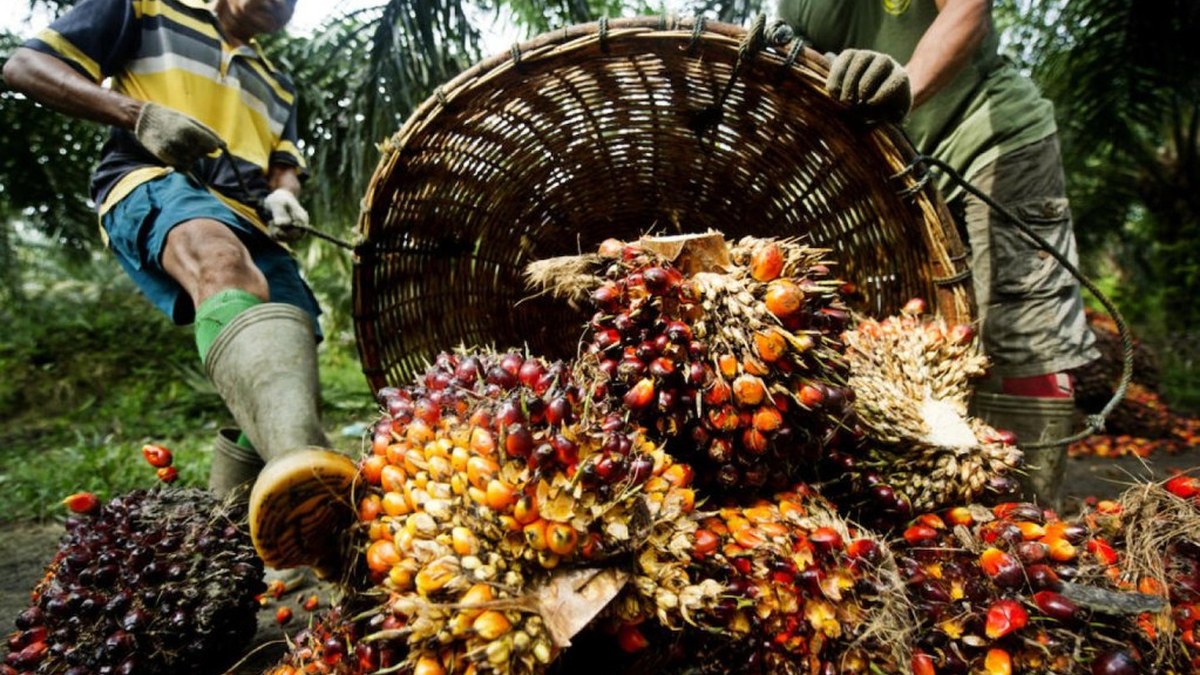
- The US Department of Labor identified forced labor indicators in Indonesia's palm oil sector ($2.06 billion in 2025 exports) and fisheries ($1.17 billion), citing debt bondage, recruitment fees, document confiscation, excessive hours and physical abuse.
- Indonesia's labor-intensive manufacturing exports — knitted garments, footwear, non-knitted apparel and furniture — generated more than $9.1 billion in US sales in 2025 and are the sectors most exposed to factory closures and layoffs if the 18% rate lands.
Why It Matters
Indonesia shipped $31.02 billion to the US in 2025 and now faces duties that could top 18% on top of a rupiah that has weakened past 18,000 per dollar. The July 6 written-comment deadline and July 7 USTR hearings are the last window to carve out exclusions for $9.1 billion in textile and footwear exports before the tariff is locked in after July 24, 2026.
Sources Cited
Related Coverage
Ask SkimNews