Biotechs Swarm to Cure Rare AATD Liver Disease
The 30-Second Skim
- What happened: Multiple biotechs — including Beam, Wave Life Sciences, Korro Bio, Tessera, and Yoltech — are racing to cure alpha-1 antitrypsin deficiency (AATD), a rare liver disorder caused by a single misspelled DNA letter, in what analysts call a multibillion-dollar opportunity.
- Key facts & numbers: Beam, Wave Life Sciences, Korro Bio, Tessera, and Yoltech are all targeting alpha-1 antitrypsin deficiency (AATD), a rare disorder in which a single misspelled DNA letter causes the liver to produce a mutant protein that fails to protect the lungs. Analysts see a multibillion-dollar potential market, with biotechs collectively spending billions to develop cures for a disease most Americans have never heard of. The race features dueling technologies, patent wars, a broken alliance, and a boiling U.S.–China competition between drug industries.
- What happens next: One misspelled DNA letter, five biotechs, billions of dollars, and a U.S.–China showdown — rare disease R&D rarely looks this crowded.
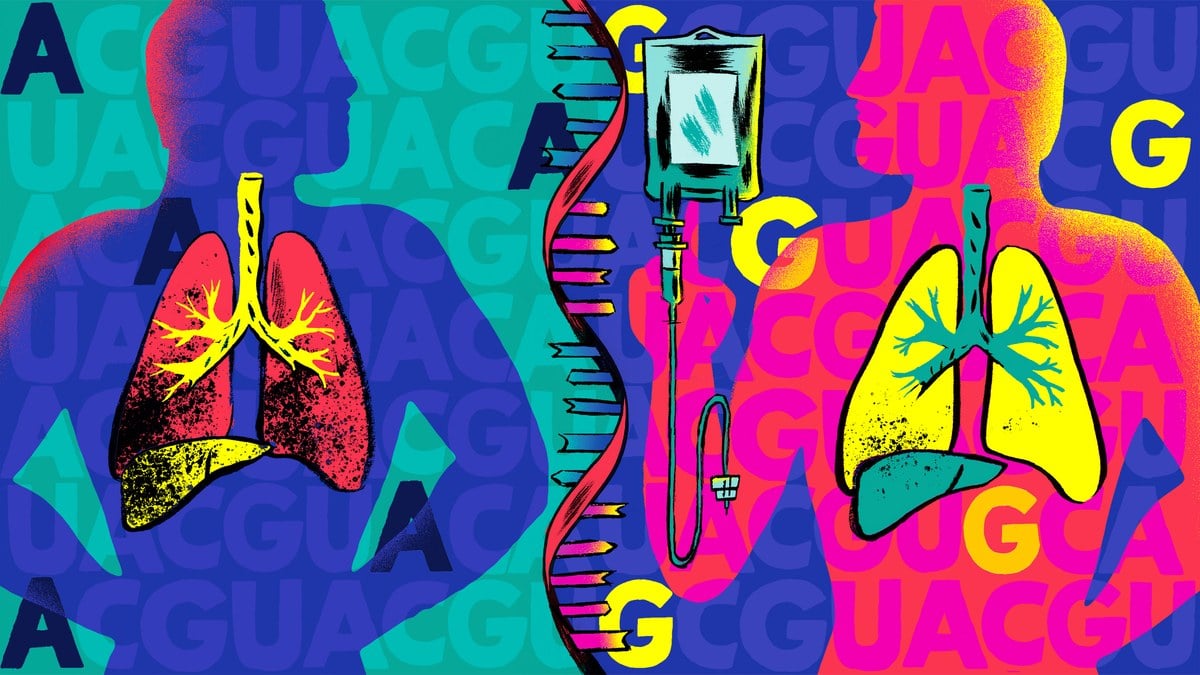
- Beam, Wave Life Sciences, Korro Bio, Tessera, and Yoltech are all targeting alpha-1 antitrypsin deficiency (AATD), a rare disorder in which a single misspelled DNA letter causes the liver to produce a mutant protein that fails to protect the lungs.
- Analysts see a multibillion-dollar potential market, with biotechs collectively spending billions to develop cures for a disease most Americans have never heard of.
- The race features dueling technologies, patent wars, a broken alliance, and a boiling U.S.–China competition between drug industries.
- AATD was long considered a "lost cause" but has become a gold rush because new gene-editing and base-editing tools are uniquely suited to correcting the single-letter DNA error at the root of the disease.
Why It Matters
Five named biotechs committing billions to a disease most Americans have never heard of signals that gene-editing technologies have crossed a tractability threshold — turning a once-marginal niche into a contested multibillion-dollar market where U.S. and Chinese drugmakers are now in direct competition for the same single-letter fix.
Sources Cited
Related Coverage
- STAT+: Gene-editing startup launches with $230 million and a Chinese licensing dealSTAT News
- STAT+: Prime Medicine claims victory in dispute over gene-editing technology with Beam TherapeuticsSTAT News
- STAT+: ARPA-H launches $160 million effort to develop custom gene editing drugsSTAT News
- STAT+: Intellia says CRISPR-based treatment for rare disease reduced swelling attacks in pivotal trialSTAT News
Ask SkimNews