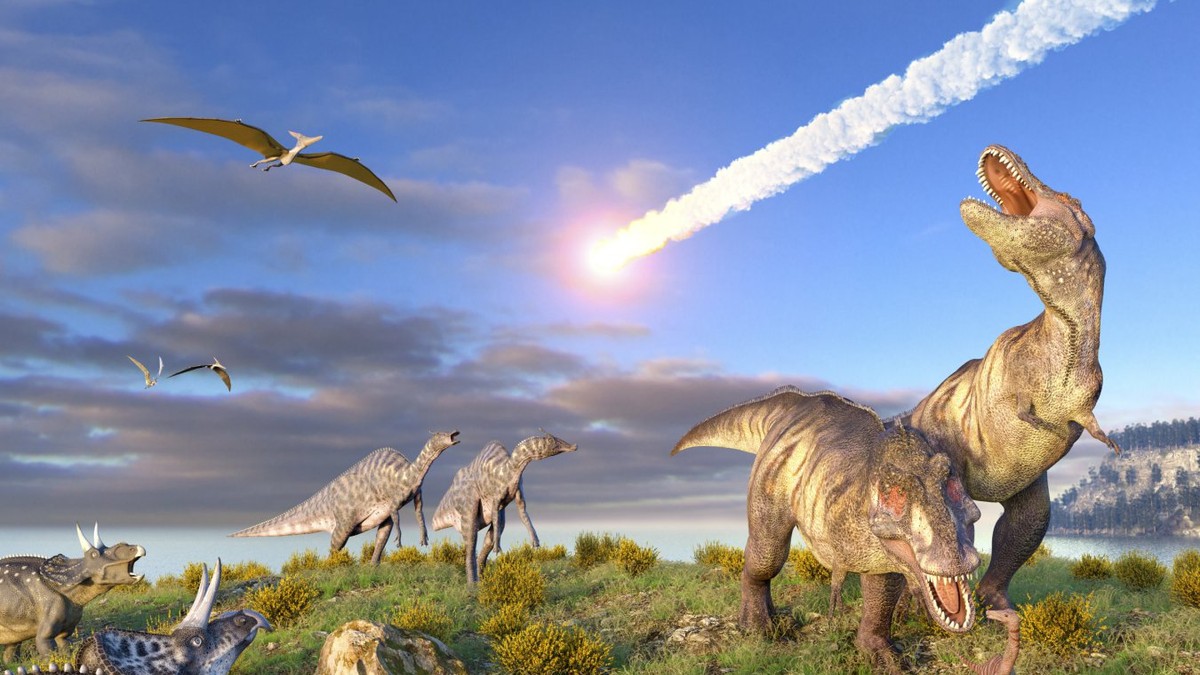
Asteroid strike caused global firestorm that incinerated the dinosaurs
The 30-Second Skim7 points
- What happenedNew simulations reveal the Chicxulub asteroid vaporized roughly five times more rock than previously estimated, launching an hour-long thermal pulse around the planet that ignited forests worldwide and baked dinosaurs to death.
- Key facts & numbersBrandon Johnson at Purdue University led simulations showing the 10–15 km Chicxulub asteroid vaporized over 1,000 cubic kilometers of rock — about five times more material than earlier estimates — within roughly one second of impact. The vapor plume was blasted tens of thousands of kilometers into space and re-condensed into 1.6 trillion tonnes of dust that blanketed the planet and trapped heat, the study published in the Journal of Geophysical Research Biogeosciences found. Heavier glassy, metallic beads called spherules re-entered the atmosphere over hours, producing an approximately hour-long pulse of thermal radiation intense enough to ignite grass, pine needles, and potentially whole trees.
- What happens nextDino BBQ alert: researchers now think the asteroid didn't just block the sun — it flash-fried the planet with reentering space debris for a solid hour.
- Brandon Johnson at Purdue University led simulations showing the 10–15 km Chicxulub asteroid vaporized over 1,000 cubic kilometers of rock — about five times more material than earlier estimates — within roughly one second of impact.
- The vapor plume was blasted tens of thousands of kilometers into space and re-condensed into 1.6 trillion tonnes of dust that blanketed the planet and trapped heat, the study published in the Journal of Geophysical Research Biogeosciences found.
- Heavier glassy, metallic beads called spherules re-entered the atmosphere over hours, producing an approximately hour-long pulse of thermal radiation intense enough to ignite grass, pine needles, and potentially whole trees.
- Cretaceous animals received 17 times the thermal radiation dose that is 100% lethal to humans, according to Johnson — enough, he says, to kill even thick-skinned dinosaurs.
Why It Matters
The study overturns the prevailing view that the dinosaurs' killer was primarily a years-long nuclear winter from sun-blocking dust, showing the impact's heat pulse alone could have ignited forests on a global scale within an hour — forcing paleontologists to re-weight which extinction mechanism killed which species.
Sources Cited
Related Coverage
Ask SkimNews
The day’s news in one short email, every morning.
Free. One email a day. Unsubscribe in one click.