Founder Uses Claude to Avoid Cancer Misdiagnosis
The 30-Second Skim7 points
- What happenedConno Christou, a health-optimized founder diagnosed with a rare non-Hodgkin's lymphoma, used AI tool Claude alongside 15+ medical opinions to select an aggressive chemotherapy regimen and ultimately avoid a false-positive PET scan that would have led to unnecessary radiotherapy.
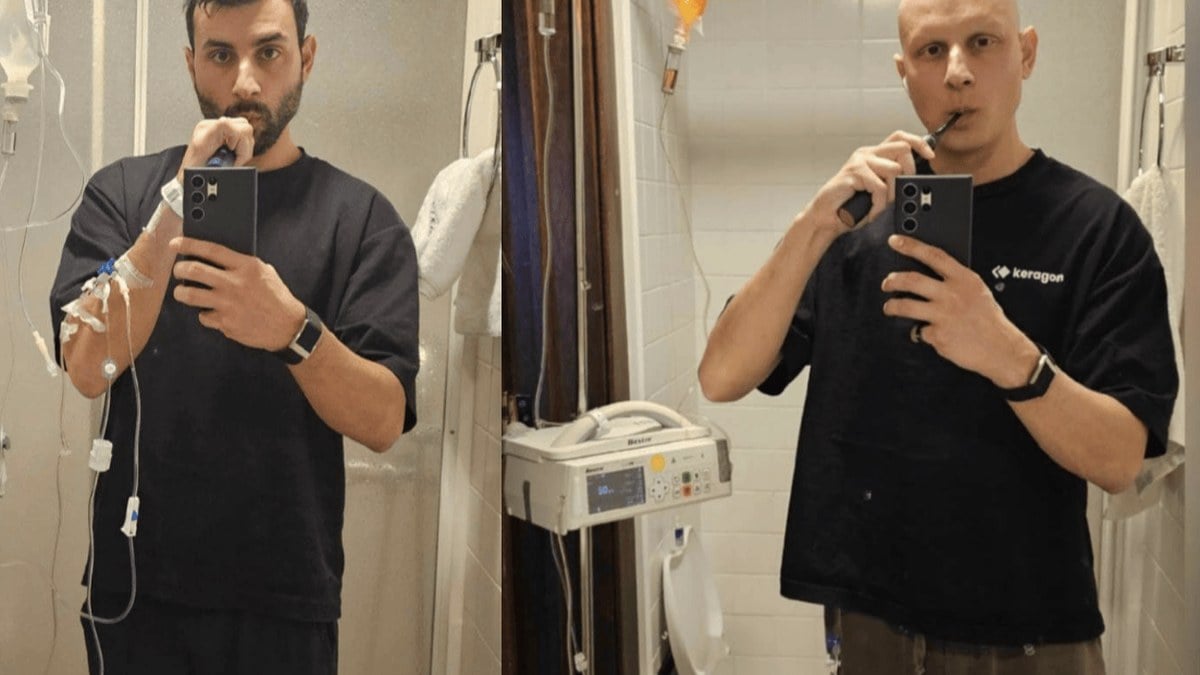
- Key facts & numbersConno Christou, 35, was diagnosed with an aggressive form of non-Hodgkin's lymphoma — affecting roughly 1 in 420,000 people — after a routine checkup revealed an 11-by-11-by-8 cm mass behind his sternum that had only existed ~3 months Christou gathered 12 oncology opinions before starting treatment; 11 recommended a harder 6-month continuous-infusion chemo regimen (~85% success rate) over the lighter option first proposed (~60% success rate) Over six months of chemo, Christou tracked his body with a Whoop band and a voice-transcribed symptom journal, then fed blood results, scan data, wearable output, and journal entries into Claude
- What happens next12 of 12 doctors picked the chemo. It was Claude that caught the false positive the oncologist was about to radiate. That 60% false-positive PET stat for his lymphoma is wild.
- Conno Christou, 35, was diagnosed with an aggressive form of non-Hodgkin's lymphoma — affecting roughly 1 in 420,000 people — after a routine checkup revealed an 11-by-11-by-8 cm mass behind his sternum that had only existed ~3 months
- Christou gathered 12 oncology opinions before starting treatment; 11 recommended a harder 6-month continuous-infusion chemo regimen (~85% success rate) over the lighter option first proposed (~60% success rate)
- Over six months of chemo, Christou tracked his body with a Whoop band and a voice-transcribed symptom journal, then fed blood results, scan data, wearable output, and journal entries into Claude
- When his final PET scan came back ambiguous and his oncologist proposed a second line of therapy including radiotherapy near his heart and lungs, Claude flagged the thymus rebound phenomenon — giving roughly a 90% probability that what looked like active disease was actually thymus reactivation in a patient under 40
Why It Matters
A third of American adults now use chatbots for health advice, per a March public poll cited in the piece, and Christou's case shows the concrete upside — a general-purpose model flagged a known thymus rebound pattern and steered him away from radiotherapy near his heart and lungs. The same article carries the counterweight: Mass General Brigham's Danielle Bitterman warns general-purpose chatbots "have not been thoroughly evaluated" for personalized diagnoses. For the ~60% of patients with his specific lymphoma who get false-positive end-of-treatment PET scans, a second-opinion AI workflow is now a demonstrable alternative to invasive follow-up.
Background & Timeline
- ContextA non-clinician using a general-purpose AI to override a specialist's PET scan reading suggests the binding constraint in oncology diagnostics is shifting from information access to interpretation — a layer consumer AI can now challenge for any sufficiently literate patient.
Sources Cited
Related Coverage
Ask SkimNews
The day’s news in one short email, every morning.
Free. One email a day. Unsubscribe in one click.