Light-Powered Method Yields Strained Housane Molecules
The 30-Second Skim
- What happened: Researchers at the University of Münster have developed a light-driven photocatalytic method to produce strained 'housane' molecules — compact ring-shaped structures prized for drug development — that were previously hard to make under harsh conventional conditions.
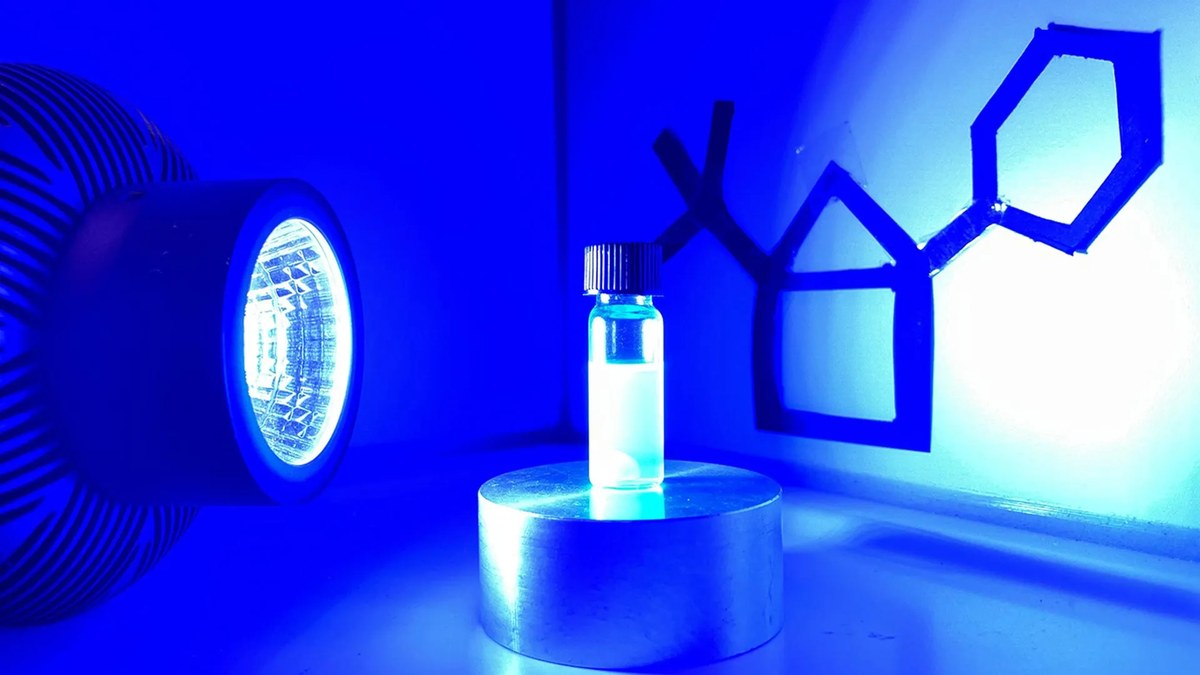
- Key facts & numbers: Frank Glorius and his team at the University of Münster's Institute of Organic Chemistry published a new method in Nature Synthesis (2026) for synthesizing strained 'housane' molecules, which resemble the shape of a simple house drawing and store high internal tension useful for driving further chemistry. Photocatalysis powers the transformation: a photocatalyst transfers light energy into the reaction, with Glorius noting the process is normally 'energetically uphill' and requires that additional energy push. 1,4-diene hydrocarbons served as the starting materials, with the team tuning their molecular side chains to suppress competing side reactions that normally plague light-exposed 1,4-dienes and prevent clean housane formation.
- What happens next: Glorius's group essentially tricked light-exposure 1,4-dienes into behaving — by tweaking side chains to block the usual side reactions, then folding the molecule into a tiny house-shaped ring.
- Frank Glorius and his team at the University of Münster's Institute of Organic Chemistry published a new method in Nature Synthesis (2026) for synthesizing strained 'housane' molecules, which resemble the shape of a simple house drawing and store high internal tension useful for driving further chemistry.
- Photocatalysis powers the transformation: a photocatalyst transfers light energy into the reaction, with Glorius noting the process is normally 'energetically uphill' and requires that additional energy push.
- 1,4-diene hydrocarbons served as the starting materials, with the team tuning their molecular side chains to suppress competing side reactions that normally plague light-exposed 1,4-dienes and prevent clean housane formation.
- Earlier housane syntheses relied on high temperatures and harsh conditions, and typically could not tolerate additional functional groups — a key limitation because those side groups dictate a molecule's properties and downstream utility.
Why It Matters
Strained small-ring molecules like housanes are prized synthetic building blocks — penicillin itself relies on one — but have been bottlenecked by harsh, functional-group-intolerant production methods. The Münster team's photocatalytic route works under mild conditions and tolerates side groups that govern a molecule's final properties, broadening the toolbox for medicinal chemists and materials researchers who previously had limited access to these high-tension structures.
Sources Cited
Related Coverage
Ask SkimNews