Huge extinct orca may have eaten other whales
The 30-Second Skim7 points
- What happenedReassessing long-neglected North Sea fossils has pushed the dolphin family’s rise as ocean top predators deep into evolutionary history, revising the timing of that niche takeover while leaving open what these early predators actually ate.
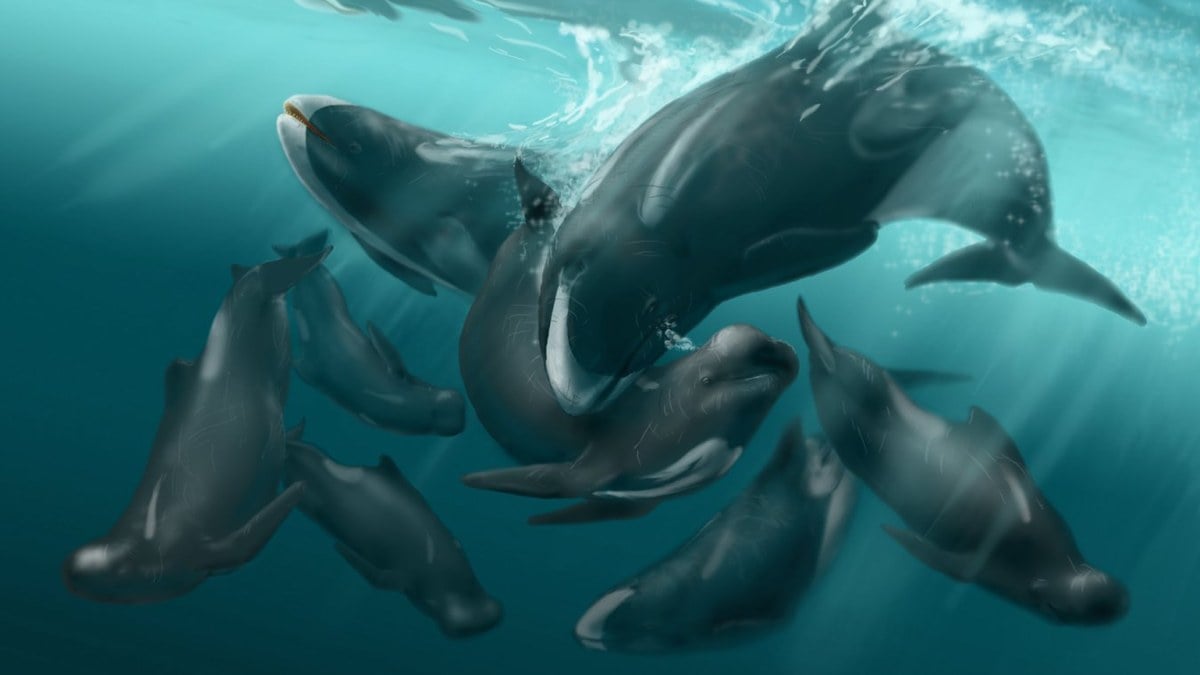
- Key facts & numbersNatural History Museum Rotterdam houses dozens of fossils attributed to large, unknown North Sea orcas, recovered by fishing vessels in 1994; Bakker and colleagues chose five informative specimens—two skull chunks, a jawbone and some vertebrae—for comparison with living and extinct dolphin-family members. North Sea orca fossils from 2.1 to 2.6 million years ago remain too fragmented to conclusively establish a new species, and the animal still has no formal species name. North Sea orca was estimated by Bakker’s team at 7.7 metres long, comparable to the largest male orcas alive today.
- What happens nextThe “whale dinner” hook hides the bigger story: five specimens push dolphins’ top-predator takeover to at least 2.5 million years ago.
- Natural History Museum Rotterdam houses dozens of fossils attributed to large, unknown North Sea orcas, recovered by fishing vessels in 1994; Bakker and colleagues chose five informative specimens—two skull chunks, a jawbone and some vertebrae—for comparison with living and extinct dolphin-family members.
- North Sea orca fossils from 2.1 to 2.6 million years ago remain too fragmented to conclusively establish a new species, and the animal still has no formal species name.
- North Sea orca was estimated by Bakker’s team at 7.7 metres long, comparable to the largest male orcas alive today.
- North Sea orca had deep, bone-reinforced tooth sockets and a relatively mobile head; researchers said those traits were consistent with gripping and tearing other dolphins or baleen whales.
Why It Matters
The five-specimen analysis places evidence of large-prey hunting among dolphin relatives at least 2.5 million years ago, shifting the family’s top-predator takeover earlier. Olivier Lambert’s two proposed checks give researchers a concrete way to test that revision: date the sperm whales’ extinction and examine chemical signatures in the fossils for diet.
Sources Cited
- New ScientistHuge extinct orca may have eaten other whales
Related Coverage
Ask SkimNews
The day’s news in one short email, every morning.
Free. One email a day. Unsubscribe in one click.