JWST Detects Unknown Substance on Titan and Pluto
The 30-Second Skim7 points
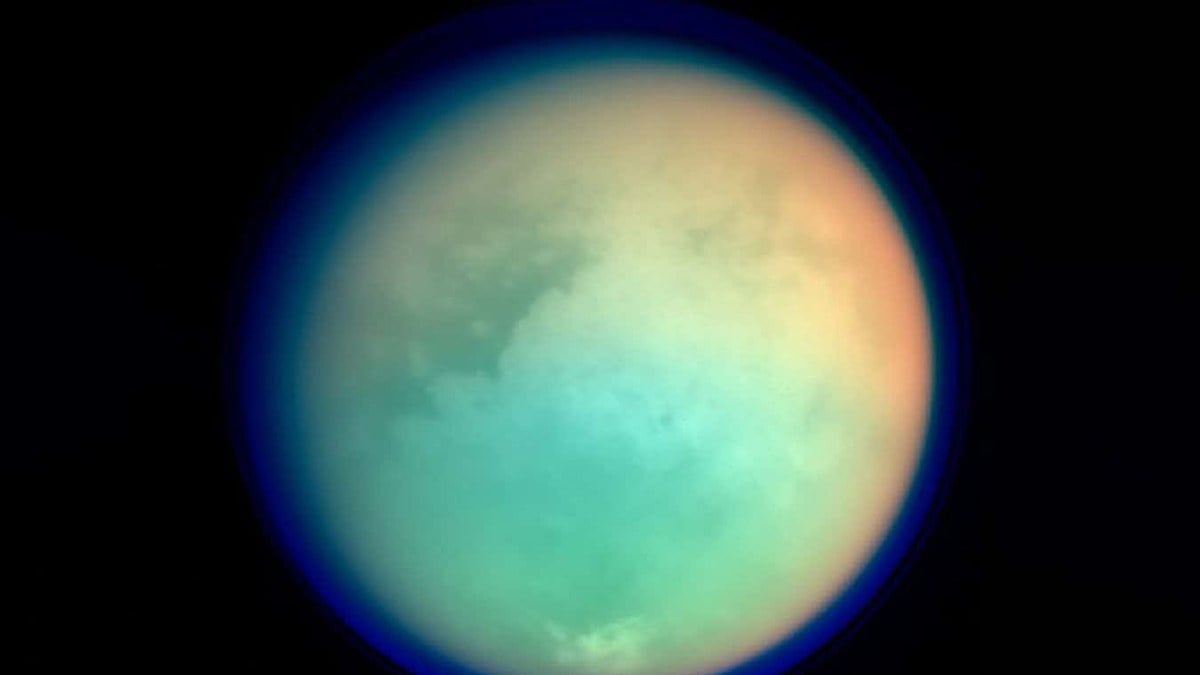
- What happenedAstronomers using the James Webb Space Telescope have detected an unidentified spectral signature on both Saturn's moon Titan and Pluto, suggesting a shared but unknown compound sits on the surfaces of two very different worlds.
- Key facts & numbersBruno Bézard at the Paris Observatory and colleagues spotted the mystery compound using JWST spectroscopy: a narrow-wavelength absorption band on Titan's surface and a broader spread of the same wavelengths on Pluto. The spectral feature matches none of the known compounds or ices the team compared it against, though a few near-matches could fit if modified or mixed with other molecules. Despite Pluto being far colder, having no surface liquid, and possessing an atmosphere roughly 15,000 times thinner than Titan's, both worlds share nitrogen-methane atmospheres that produce haze particles which 'snow' down and accumulate on the surface — the likely formation pathway, according to Bézard.
- What happens nextBézard's vibe: 'whatever it is, it will be a surprise.' The real hook isn't the mystery substance — it's that two wildly different worlds share the same unexplained spectral fingerprint.
- Bruno Bézard at the Paris Observatory and colleagues spotted the mystery compound using JWST spectroscopy: a narrow-wavelength absorption band on Titan's surface and a broader spread of the same wavelengths on Pluto.
- The spectral feature matches none of the known compounds or ices the team compared it against, though a few near-matches could fit if modified or mixed with other molecules.
- Despite Pluto being far colder, having no surface liquid, and possessing an atmosphere roughly 15,000 times thinner than Titan's, both worlds share nitrogen-methane atmospheres that produce haze particles which 'snow' down and accumulate on the surface — the likely formation pathway, according to Bézard.
- Bézard told New Scientist the substance 'will not be a simple compound' and that 'whatever it is, it will be a surprise.'
Why It Matters
Titan ranks among the solar system's most intriguing candidates for hosting alien life, and pinning down this compound's identity is a missing piece of that puzzle. NASA's Dragonfly mission — set to launch in 2028 and touch down on Titan in 2034 — gives researchers a direct path to a definitive identification, after which lab and telescopic follow-up can extend the chemistry lesson to Pluto and other haze-producing worlds.
Sources Cited
Related Coverage
Ask SkimNews
The day’s news in one short email, every morning.
Free. One email a day. Unsubscribe in one click.