Lemon Frost Geckos' Tumors Share Genes with Human Cancer
The 30-Second Skim
- What happened: University of Nottingham scientists found that lemon frost leopard geckos — which develop aggressive tumors in roughly 80% of individuals — share key cancer-driving genetic changes with humans, offering a rare natural model for studying how the disease forms and spreads.
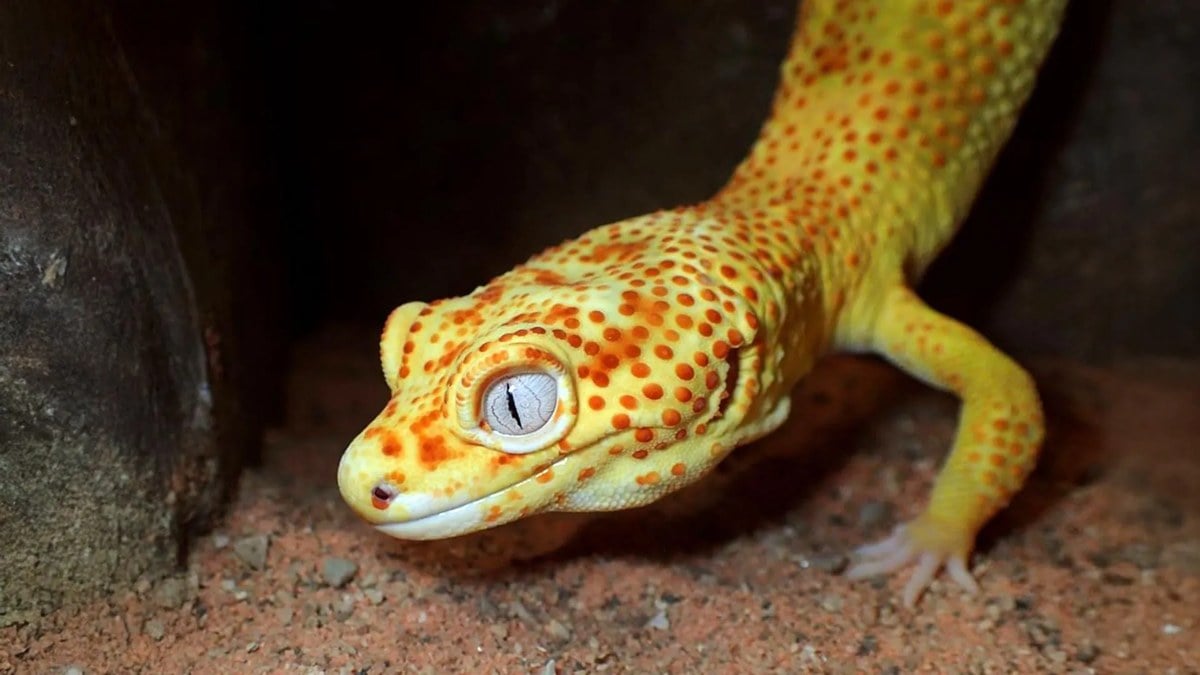
- Key facts & numbers: Lemon frost leopard geckos develop aggressive tumors naturally in about 80% of individuals, according to a University of Nottingham-led study published in BMC Biology. Whole genome sequencing of tumor and healthy tissue from the geckos identified genetic changes involving the same genes and biological pathways already linked to human cancers. The lemon frost morph originated from a spontaneous genetic mutation during selective breeding in the pet trade, where its white and yellow coloration drove popularity before breeders noticed widespread tumors.
- What happens next: Every reptile hobbyist already knows lemon frost geckos — turns out their 80% tumor rate and shared cancer genes with humans might make them medicine's next lab rat.
- Lemon frost leopard geckos develop aggressive tumors naturally in about 80% of individuals, according to a University of Nottingham-led study published in BMC Biology.
- Whole genome sequencing of tumor and healthy tissue from the geckos identified genetic changes involving the same genes and biological pathways already linked to human cancers.
- The lemon frost morph originated from a spontaneous genetic mutation during selective breeding in the pet trade, where its white and yellow coloration drove popularity before breeders noticed widespread tumors.
- Unlike laboratory mice, which require researchers to artificially induce tumors, lemon frost geckos develop cancer naturally at a relatively young age, and the tumors frequently metastasize — giving scientists a window into how cancer begins and spreads under natural conditions.
Why It Matters
Cancer researchers gain a new model where roughly 80% of subjects develop tumors naturally and young, and where those tumors metastasize — conditions that normally have to be engineered into lab mice. The cross-species genomic approach also reframes biodiversity conservation as directly relevant to medical discovery, with researchers explicitly aiming to inspire new prevention, detection, and treatment strategies in humans.
Sources Cited
- Science Daily — This pet gecko could help scientists unlock the secrets of cancer
- Medical Xpress — Scientists uncover genetic clues from a tumor-prone reptile that could advance cancer research
- Female First — Gecko species could help humans understand cancer
- Florida Today — Those orange-headed lizards are here to stay
Related Coverage
Ask SkimNews