Light-Activated Eye Drops Restore Vision in Blind Mice
The 30-Second Skim
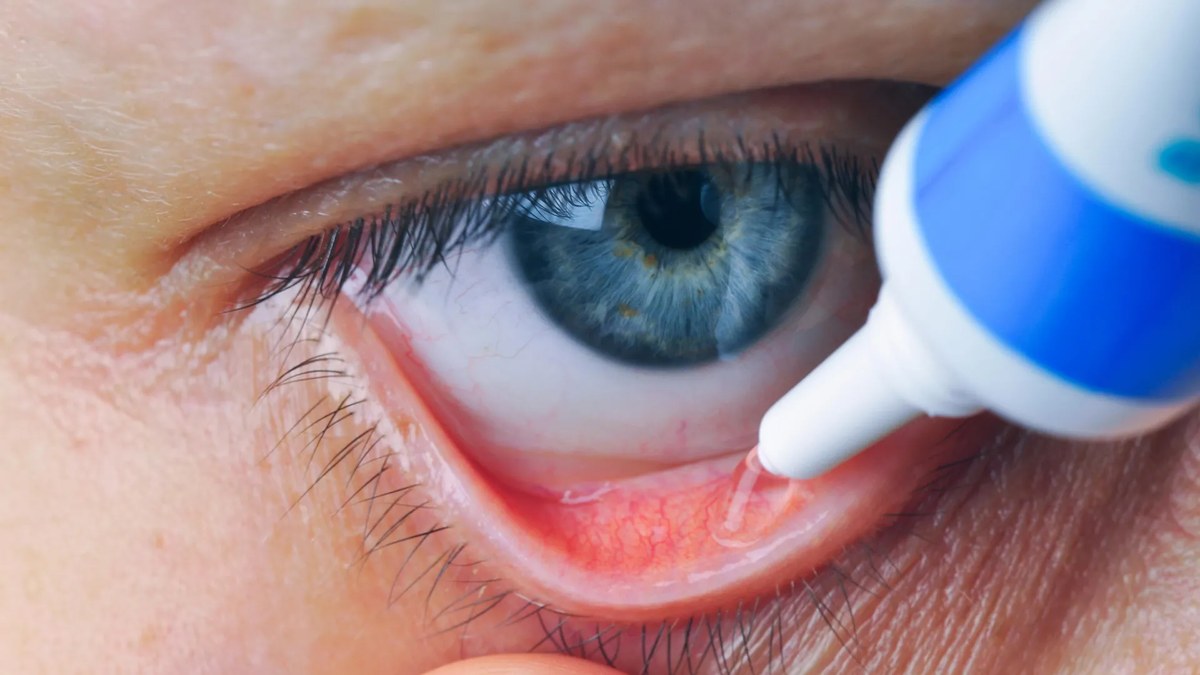
- What happened: Researchers at IBEC have developed light-activated compounds that restored light perception and visually guided behavior in blind mice, with two compounds working when administered as simple eye drops — no gene therapy, implants, or specialized lighting required.
- Key facts & numbers: Prosthe6 compounds designed by an IBEC-led consortium restored saccadic eye movements in blinded zebrafish larvae and innate light-avoidance behavior in mouse models of age-related macular degeneration and retinitis pigmentosa, according to a paper in the Journal of the American Chemical Society. Pau Gorostiza's team at IBEC showed two lead compounds — prosthe6-12 and prosthe6-15 — worked both via intraocular injection and as topical eye drops, producing restored visual behavior under ordinary indoor and overcast-day illumination. The compounds target ON-bipolar neurons via the mGlu6 protein, functioning as "molecular prostheses" that re-activate surviving retinal circuitry downstream of dead photoreceptors without genetic modification or implanted hardware.
- What happens next: Eye drops. Not injections, gene therapy, or implants. Works under regular room light. For ~200M people with retinal degeneration, that combo alone is the headline.
- Prosthe6 compounds designed by an IBEC-led consortium restored saccadic eye movements in blinded zebrafish larvae and innate light-avoidance behavior in mouse models of age-related macular degeneration and retinitis pigmentosa, according to a paper in the Journal of the American Chemical Society.
- Pau Gorostiza's team at IBEC showed two lead compounds — prosthe6-12 and prosthe6-15 — worked both via intraocular injection and as topical eye drops, producing restored visual behavior under ordinary indoor and overcast-day illumination.
- The compounds target ON-bipolar neurons via the mGlu6 protein, functioning as "molecular prostheses" that re-activate surviving retinal circuitry downstream of dead photoreceptors without genetic modification or implanted hardware.
- Pedro de la Villa's group at the University of Alcalá ran the mouse behavioral experiments, with additional collaborators from IQAC-CSIC, the University of Barcelona, UAB, IRYCIS, and Fundació Eduard Soler.
Why It Matters
AMD and retinitis pigmentosa together affect roughly 200 million people worldwide, most of whom cannot benefit from existing gene therapy because their mutations don't match approved treatments. A mutation-independent, drop-form therapy that works in ambient light could reach a far broader patient population than current options — though human trials remain years away and the compounds still require safety validation. The researchers themselves stress the approach does not reverse photoreceptor degeneration, only substitutes for lost function.
Sources Cited
- Science Daily — Experimental eye drops help blind mice see again
Related Coverage
Ask SkimNews