Mercury’s Ice Likely Deposited by Single Massive Impact
The 30-Second Skim7 points
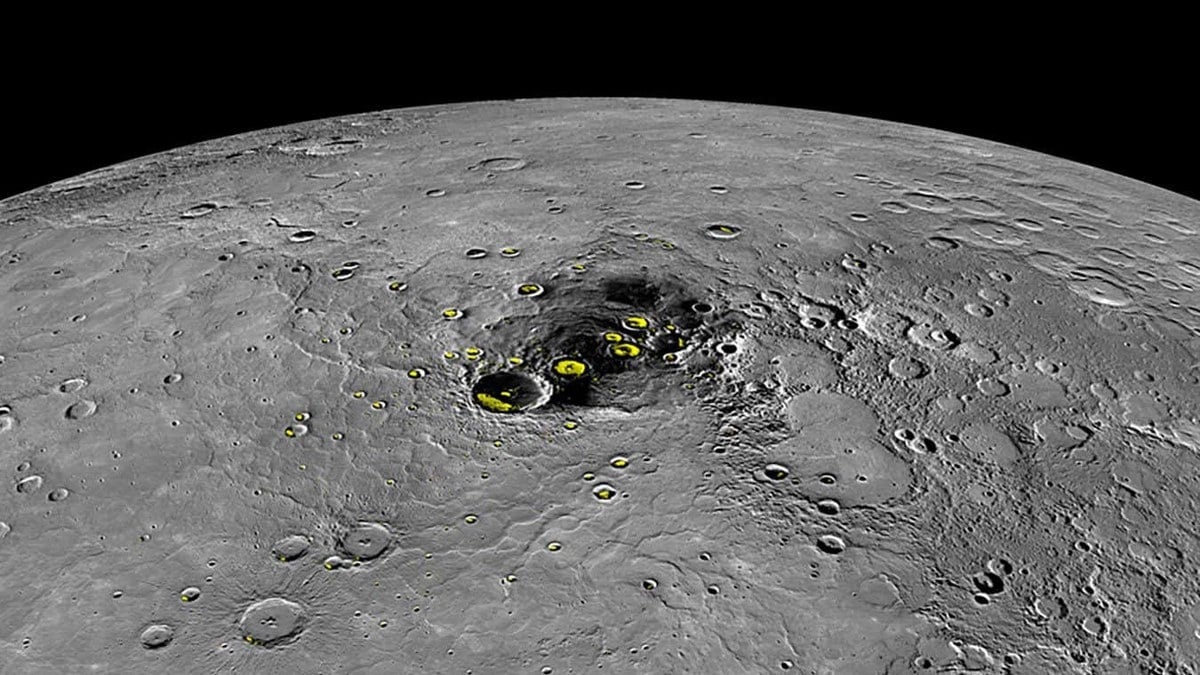
- What happenedNew simulations by Parvathy Prem’s team suggest that a single, slower impact that formed Mercury’s Hokusai crater could have vaporized a massive ice‑rich body, creating a fleeting water‑rich atmosphere. Within one Mercurian day (176 Earth days), over a fifth of that vapor may have migrated into permanently shadowed polar craters, accounting for the deep ice deposits measured by NASA’s Messenger. The finding resolves a long‑standing puzzle about Mercury’s water source and highlights an extraordinarily eventful day in the planet’s recent history.
- Key facts & numbersMercury has permanently shadowed craters at its poles containing ice several metres deep, as measured by NASA’s Messenger spacecraft. Parvathy Prem and colleagues simulated that a large, slower impactor creating the Hokusai crater could have vaporized and produced a thin water‑rich atmosphere on Mercury. Impact could have deposited over one‑fifth of its water vapor into Mercury’s poles within a single Mercurian day (176 Earth days), matching Messenger’s ice measurements.
- What happens nextTurns out one massive impact could have dumped enough water to fill Mercury’s shadowed craters in a single 176‑day swing—mind‑blowing!
- Mercury has permanently shadowed craters at its poles containing ice several metres deep, as measured by NASA’s Messenger spacecraft.
- Parvathy Prem and colleagues simulated that a large, slower impactor creating the Hokusai crater could have vaporized and produced a thin water‑rich atmosphere on Mercury.
- Impact could have deposited over one‑fifth of its water vapor into Mercury’s poles within a single Mercurian day (176 Earth days), matching Messenger’s ice measurements.
- Emily Costello noted that this event would have been the most eventful day in Mercury’s last billion years.
Why It Matters
Planetary scientists gain a concrete mechanism for Mercury’s polar ice, refining models of inner‑planet water delivery and resolving a decades‑long puzzle that will shape future mission planning for Mercury and other air bodies.
Background & Timeline
- ContextA single, large impact event may have been sufficient to deliver and sequester a significant portion of Mercury's water, suggesting that the presence of polar ice on airless bodies could be less dependent on continuous cometary bombardment than previously thought.
Sources Cited
Related Coverage
Ask SkimNews
The day’s news in one short email, every morning.
Free. One email a day. Unsubscribe in one click.